

Yes. You can use an acoustic guitar tab with an electric guitar as long as both instruments use the same tuning and standard six-string layout. Guitar tablature shows which string and fret to play, not whether the guitar is acoustic or electric.
For most players in the United States, this means a tab written for a standard-tuned acoustic guitar will work on a standard-tuned electric guitar without changing the notes. The main differences are tone, sustain, string feel, and technique. An electric guitar may also make some acoustic parts sound different or require a small adjustment.

Why Acoustic Guitar Tab Works on Electric Guitar
Guitar tab is not limited to one type of guitar. It uses six lines to represent the six strings, while numbers show the frets.
For example:
e|----------------|
B|----------------|
G|----------------|
D|--------2-------|
A|-----2----------|
E|--0-------------|
This tells you to play:
- Open low E string
- Second fret on the A string
- Second fret on the D string
The same tab works on an acoustic or electric guitar because the string and fret positions are the same.
The tab does not normally tell you:
- Whether to use an acoustic or electric guitar
- Which pickup to select
- How much distortion to use
- Which amplifier settings to choose
- How hard to pick
- How long a note will sustain
Those choices affect the sound, but not the basic notes shown in the tab.
The key condition: use the same tuning
Check the tuning before you start. Standard tuning is:
E A D G B E
The thickest string is the low E string. The thinnest string is the high E string.
An acoustic tab may use another tuning, such as:
- Drop D:
D A D G B E - DADGAD:
D A D G A D - Open G:
D G D G B D - Open D:
D A D F# A D
If the tab calls for an alternate tuning, tune the electric guitar the same way. If you do not, the tab will produce different notes.
A digital tuner or clip-on tuner can help you set the correct tuning. Tune slowly, especially when using heavier strings or a tuning that raises string pitch.
Most acoustic tabs will work directly on an electric guitar when:
- Both guitars have six strings.
- Both guitars use the same tuning.
- The tab does not depend on a special acoustic-only effect.
- The electric guitar can reach the required frets.

How an Acoustic Part May Sound Different on Electric Guitar
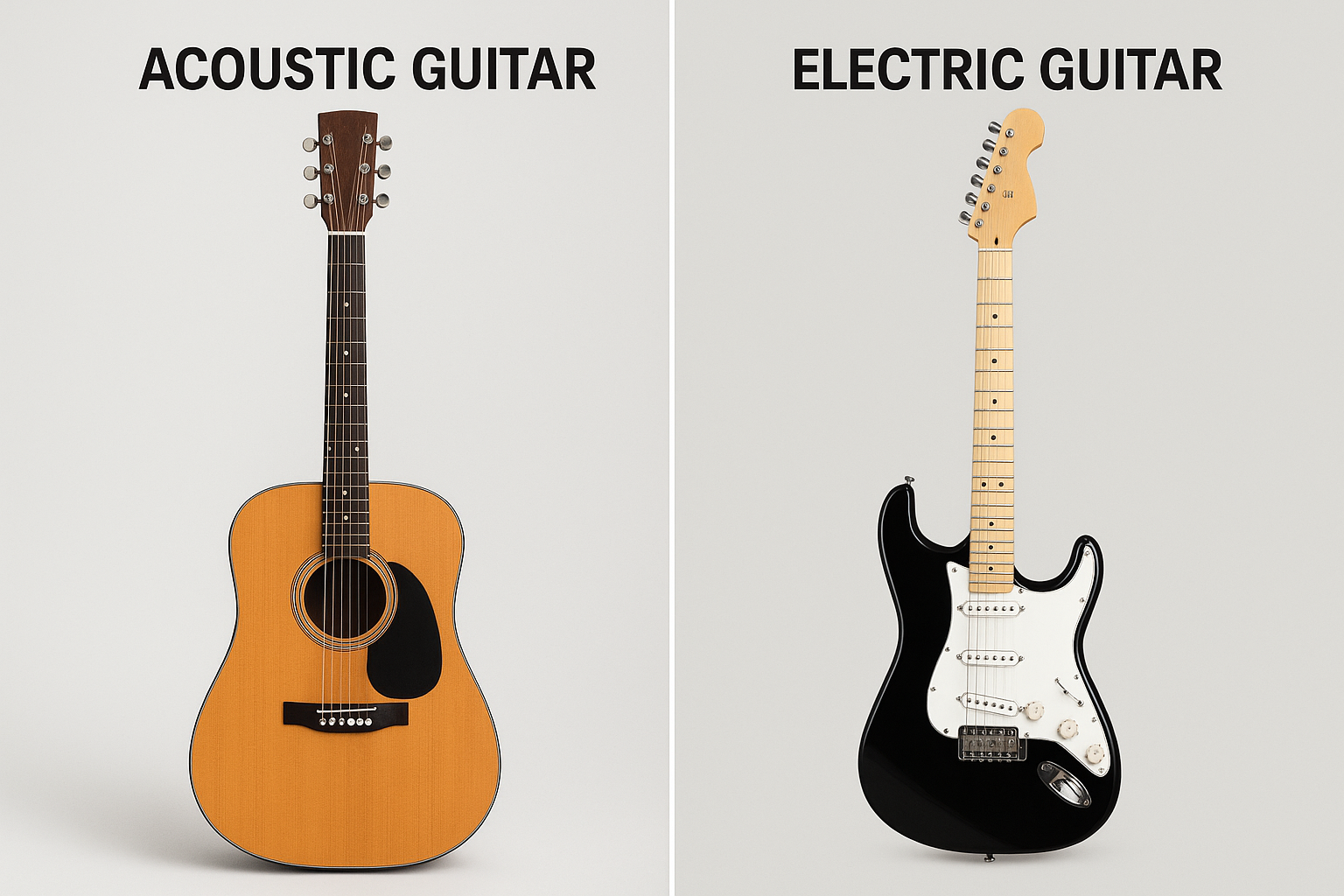
The notes may be correct, but the sound can change a lot. Acoustic guitars use a hollow body and often have steel strings with a different feel. Electric guitars use magnetic pickups, a solid or semi-hollow body, and usually lighter strings.
This changes four main things.
Tone
An acoustic guitar often has a broad, natural sound with a clear attack. An electric guitar can sound clean, warm, bright, compressed, or heavily distorted.
To get closer to an acoustic-style sound on electric guitar:
- Use the neck pickup or a middle pickup setting.
- Select a clean amp channel.
- Lower the gain.
- Add a small amount of reverb.
- Use a light pick or fingerstyle technique.
- Pick nearer the bridge for more brightness.
- Pick nearer the neck for a softer sound.
Some electric guitar amplifiers include an acoustic simulator or acoustic-style setting. This can help, but it will not make every electric guitar sound exactly like an acoustic guitar.
Sustain
Electric guitars often sustain notes longer, especially with amplification. An acoustic part may use short notes, muted notes, or pauses that feel more open on an acoustic guitar.
On electric guitar, control extra sustain by:
- Lifting your fretting finger slightly after the note.
- Muting unused strings.
- Using your picking hand to stop ringing.
- Lowering gain and compression.
- Following the written rhythm instead of letting every note ring.
A note that technically has the right pitch can still sound wrong if it rings too long.
String tension and feel
Electric guitars often use lighter strings than acoustic guitars. This can make bends, vibrato, and fast passages easier.
The same tab may feel:
- Softer under the fingers
- Easier to bend
- More sensitive to excess finger pressure
- More likely to produce accidental buzzing or sharp notes
Press only as hard as needed to make the note clear. Pressing too hard can pull the note sharp, especially with light electric strings.
Volume and dynamics
Acoustic guitar parts often depend on changes in picking strength. An electric guitar can make those changes more dramatic, especially with distortion.
Try the part clean first. This helps you hear:
- Missed notes
- Extra string noise
- Poor muting
- Incorrect rhythm
- Uneven picking
Add effects only after the notes and timing feel right.

How to Adapt Acoustic Tab for Electric Guitar
You usually do not need to rewrite the tab. Start with the original part, then adjust your technique and sound.
Step 1: Check the tuning
Look at the tuning information near the top of the tab. If no tuning is listed, the tab may use standard tuning, but do not assume this when the notes sound wrong.
Tune the electric guitar before playing the part. If the song uses a capo, place the capo on the same fret. A capo changes the pitch of every open string and can affect how the part feels.
Step 2: Read the rhythm
Many tabs show fret numbers but give little rhythm information. If the tab includes standard notation above the tab, use it. If it does not, listen to the recording.
Watch for:
- Quarter notes
- Eighth notes
- Rests
- Ties
- Chords played together
- Muted hits
- Repeated patterns
The notes tell you what to play. The rhythm tells you when to play it.
Step 3: Play the part clean
Use a clean tone with little or no distortion. This is the best way to check whether the part works on your electric guitar.
Play slowly and listen for:
- Notes that do not ring clearly
- Strings that ring by accident
- Open strings that should be muted
- Chords that sound too full
- Notes that sustain longer than expected
Step 4: Match the picking method
Acoustic tabs often use fingerstyle, flatpicking, or a mix of both.
Common signs include:
p,i,m, andafor right-hand fingersTfor the thumb- Arpeggiated chord patterns
- Bass notes played with the thumb
- Treble notes played with the fingers
You can use a pick if the part allows it, but some fingerstyle arrangements rely on separate thumb and finger parts. In those cases, fingerstyle may sound more natural and make the pattern easier to control.
Step 5: Add electric guitar techniques only when they fit
An electric guitar makes it easy to add bends, vibrato, slides, hammer-ons, and pull-offs. Do not add them just because the instrument allows them.
Follow the tab and recording first. Add a technique only when:
- The tab marks it.
- The recording clearly uses it.
- It helps reproduce the intended phrase.
- It does not change the song’s character.
A plain acoustic melody can lose its sound if every note becomes a wide electric-guitar bend.
Step 6: Shape the tone
Once the part sounds correct, adjust the electric guitar setup.
For a clean acoustic-like part, try:
- Neck pickup for a rounder sound
- Bridge pickup for more attack
- Low to moderate gain
- Moderate treble
- Light reverb
- Little or no delay
For a rock version of an acoustic part, add gain carefully. Too much distortion can blur bass notes and make open chords sound muddy.

Acoustic Tab Techniques That Need Extra Attention
Some acoustic guitar techniques transfer easily. Others depend on the guitar’s body, string response, or playing style.
| Acoustic tab feature | Will it work on electric guitar? | What to watch for |
|---|---|---|
| Open chords | Yes | Electric tone may sound too full or bright |
| Single-note melodies | Yes | Sustain may be longer |
| Arpeggios | Yes | Control unwanted string noise |
| Hammer-ons and pull-offs | Yes | Lighter strings may respond more easily |
| Bends | Yes | The tab may expect a different string feel |
| Palm muting | Yes | Distortion changes the amount of mute |
| Harmonics | Usually | Harmonic strength varies by guitar and fret |
| Percussive taps | Sometimes | A solid-body electric may not respond like an acoustic |
| Slapping the guitar body | Not in the same way | The body shape and construction are different |
| Acoustic feedback effects | No | Electric guitar feedback behaves differently |
Fingerstyle patterns
Fingerstyle patterns usually work well on electric guitar. The challenge is control, not compatibility.
Use your thumb for the lower strings and your fingers for the higher strings when the pattern calls for separate parts. Keep unused strings quiet. An amplified electric guitar can make small touches and string noise much louder than expected.
Percussive effects
Acoustic arrangements sometimes include taps, knocks, scratches, or hits on the guitar body. These sounds may not transfer well to an electric guitar.
You can replace them with:
- Muted string strikes
- A light tap on the guitar top
- A kick or snare sound from a loop
- A clean percussive pickup technique
- A simpler rest
The goal is to preserve the rhythm, not to copy a body sound that the electric guitar cannot produce naturally.
Harmonics
Natural harmonics are available on both acoustic and electric guitars. However, amplification can make them more prominent and sustain them longer.
Artificial harmonics, pinch harmonics, and tapped harmonics may also sound different. Use a clean tone while learning them. Distortion can hide whether you are touching the string at the correct point.
Chords with open strings
Open chords can sound larger on electric guitar because amplification adds sustain. If the result is muddy, try:
- Muting unused strings
- Playing fewer strings
- Using a lighter gain setting
- Picking only the strings shown in the tab
- Moving the part to a higher position
- Using a different pickup
Do not automatically strum all six strings just because the chord shape allows it.

When an Acoustic Tab May Not Translate Exactly
An acoustic tab can be technically playable on electric guitar but still sound different from the original. This usually happens when the arrangement depends on acoustic-specific details.
The biggest exceptions include:
The tab uses a special guitar body technique
A part may include knocks, slaps, thumb hits, or other sounds made on the acoustic guitar’s top. An electric guitar may not produce the same volume or tone.
The arrangement depends on acoustic string response
Some players use strong fingerpicking, nail attack, or fast brush strokes to create a specific acoustic sound. Electric guitar strings and pickups may respond differently.
The original uses a 12-string acoustic guitar
A 12-string acoustic guitar has doubled strings and a wider, shimmering sound. A six-string electric guitar can play the same notes, but it will not naturally reproduce the doubled-string effect.
You can imitate some of it with:
- Chorus
- Short delay
- Octave effects
- Layered recording
- A 12-string electric guitar
These are sound choices, not changes to the tab itself.
The tab is for a baritone or extended-range guitar
Check the instrument used in the original recording. A baritone guitar, seven-string guitar, or other extended-range instrument may use a different scale, tuning, or string range.
An electric guitar can play the part only if it reaches the required notes. You may need to move some notes to another position or transpose the part.
The original uses a capo and open-string resonance
A capoed acoustic part may rely heavily on open strings ringing together. You can use the same capo on an electric guitar if it fits the neck and does not pull the strings too sharp.
A poorly fitted capo may cause tuning problems. Check the tuning again after placing it.

Acoustic Tab vs. Electric Tab
There is no separate universal system for “acoustic tab” and “electric tab.” Both use the same basic tab format.
The difference is usually the performance information around the notes.
| Detail | Acoustic guitar tab | Electric guitar tab |
|---|---|---|
| String and fret numbers | Same | Same |
| Tuning | May include alternate tunings | May include alternate tunings |
| Chords | Common | Common |
| Fingerstyle | Common | Common |
| Bends | Possible | Very common |
| Vibrato | Possible | Very common |
| Distortion settings | Rarely listed | Often listed |
| Pickup instructions | Rarely listed | Sometimes listed |
| Palm muting | Common in some styles | Very common |
| Power chords | Less common | Common |
| Percussive body effects | More likely | Less likely |
Electric guitar tabs often use symbols such as:
hfor hammer-onpfor pull-off/for slide up\for slide downbfor bendrfor bend release~for vibratoxfor muted notePMfor palm muting
These symbols describe technique. They do not mean that a tab can only be played on an electric guitar.
Common Problems and Quick Fixes
The notes sound wrong
Check the tuning first. A wrong tuning is the most common reason a familiar tab sounds incorrect.
Then check:
- Whether the tab uses a capo
- Whether you read the strings from the correct direction
- Whether the tab requires a different number of strings
- Whether the recording uses a transposed version
In standard tab, the top line usually represents the highest-pitched string, the high E string.
The chord sounds muddy
Use less gain and check your muting. Let only the intended strings ring.
You can also try the neck pickup, lower the bass on the amplifier, or play fewer strings. Electric guitar chord parts often sound cleaner when you control every string instead of letting all six strings ring.
The part sounds too bright
Turn down the guitar tone control slightly, switch to the neck pickup, or pick closer to the neck. A clean amplifier setting can also reduce harshness.
The part sounds too weak
Raise the amplifier volume before adding heavy distortion. Add only enough gain to support the part.
If the original has a full acoustic sound, a single electric guitar may need light chorus, reverb, or layered recording to fill the same space.
The strings buzz
Check your fretting hand, picking force, and action. A note may buzz because you are not pressing close enough to the fret, or because the guitar needs setup work.
If buzzing continues across many frets, or if the neck looks warped, ask a qualified guitar technician to inspect the instrument. Do not make major truss-rod adjustments without the right tools and knowledge.
The electric guitar goes into feedback
Feedback is usually caused by high volume, high gain, or pointing the guitar toward the amplifier. Lower the gain, move away from the amp, change your position, or use a different pickup.
Feedback can be useful as an effect, but uncontrolled feedback can make a clean acoustic-style part difficult to play.

Best Settings for Playing Acoustic Tabs on Electric Guitar
Start with a simple clean setup:
| Control | Starting point |
|---|---|
| Pickup | Neck or middle position |
| Gain | Low |
| Bass | Moderate |
| Mid | Moderate |
| Treble | Moderate |
| Reverb | Light |
| Delay | Off or very low |
| Compression | Light or off |
These are starting points, not fixed rules. A bright electric guitar may need less treble. A dark-sounding guitar may need more treble or the bridge pickup.
The right setting depends on:
- Your guitar’s pickups
- The amplifier or modeling unit
- The room
- The arrangement
- Whether you play with a band
- Whether the part is fingerstyle or strummed
For recording, listen in the full mix. A tone that sounds thin alone may fit well with bass, drums, and vocals.

Can You Use Acoustic Guitar Strings on an Electric Guitar?
Usually, you should not put standard acoustic guitar strings on an electric guitar unless the guitar maker specifically supports them.
Electric guitars are designed for strings that work with magnetic pickups. Acoustic guitar strings may have different construction and tension. They can feel wrong, sound weak through magnetic pickups, or place unsuitable stress on the instrument.
Use strings made for electric guitar. If you want a thicker or warmer feel, choose a suitable electric-guitar gauge and have the instrument adjusted if needed.
The reverse is also true: electric guitar strings may not provide the correct response or volume on an acoustic guitar.
A Simple Practice Method
Use this five-minute process when moving an acoustic tab to electric guitar:
- Confirm the tuning. Match the tab exactly.
- Play the notes clean. Use no distortion at first.
- Check the rhythm. Listen to the original if the tab lacks timing.
- Mute unwanted strings. Control both hands.
- Match the tone. Add pickup selection and effects after the part is accurate.
You know the transfer is working when:
- The notes match the recording.
- The chord changes happen at the right time.
- Unused strings stay quiet.
- The part does not sound muddy or harsh.
- Your tone supports the original style.
- You can play the part without relying on heavy distortion to hide errors.

Frequently Asked Questions
Can I play an acoustic song on an electric guitar?
Yes. You can play the same chords, riffs, and melodies on an electric guitar. Use a clean or lightly driven tone if you want to stay close to the original acoustic sound.
Do I need a special acoustic tab for electric guitar?
No. Standard guitar tab works on both instruments. You only need to check the tuning, capo position, number of strings, and any techniques marked in the arrangement.
Will acoustic chords sound the same on electric guitar?
No. The notes can be the same, but the tone, sustain, attack, and volume will differ. A clean amp setting and careful muting can bring the sound closer to the acoustic version.
Can I use a capo on an electric guitar?
Yes, if the capo fits the neck and does not pull the strings too sharp. Tune the guitar before and after placing the capo.
Is electric guitar easier than acoustic guitar for playing acoustic tabs?
It depends on the part. Lighter electric strings may make bends and fast notes easier, but amplified sound makes string noise, poor muting, and timing problems more noticeable.
Conclusion
You can use an acoustic guitar tab with an electric guitar in most cases. The tab tells you the notes and frets, while the guitar and amplifier shape the sound.
Match the tuning, follow the rhythm, play the part clean first, and control unwanted sustain and string noise. If the arrangement uses percussive acoustic effects or a 12-string sound, you may need to adapt the technique or use effects, but the core notes will usually remain the same.
The best next step is simple: tune your electric guitar to the tab, select a clean tone, and play the first section slowly before adding effects.