

In the United States, most used electric guitars are worth somewhere between $100 and several thousand dollars, but the exact value depends on the brand, model, year, condition, originality, and current demand. A common beginner guitar may sell for less than $200, while a desirable vintage Fender, Gibson, Gretsch, or PRS can be worth far more.
The best estimate comes from comparing your guitar with recent completed sales in the US, not from active listings alone. Sellers often list guitars above their true market value, while sold prices show what buyers actually paid.
This guide explains how to identify your guitar, check comparable sales, adjust for condition, and estimate both the asking price and the amount you may actually receive.

Quick answer: what is my electric guitar worth?
Your electric guitar is usually worth the price that similar guitars have recently sold for in comparable condition.
As a rough US guide:
| Guitar type | Common private-sale range |
|---|---|
| Generic or entry-level electric guitar | $50–$200 |
| Used beginner model from a known brand | $100–$350 |
| Mid-range modern guitar | $250–$900 |
| Professional modern guitar | $700–$2,500 |
| Common vintage guitar | $500–$3,000 |
| Rare, collectible, or highly original vintage guitar | $3,000–$100,000+ |
These are broad ranges, not appraisals. A specific model can fall well outside them. A heavily damaged vintage guitar may sell for less than a clean modern model. A rare guitar with strong demand may sell for much more than its original retail price.
The value also changes based on the selling method:
- Private sale: Usually the highest price, but it takes more time and effort.
- Local music store sale: Faster, but the store must leave room for profit.
- Online consignment: May bring a good price, but fees reduce your proceeds.
- Trade-in: Often gives the lowest cash value, although the trade credit may be higher.
- Auction: Useful for rare instruments, but the final price is uncertain and fees may apply.
The key distinction is between market value and your net proceeds. A guitar that sells for $1,000 may leave you with less after shipping, payment fees, platform fees, repairs, or sales tax obligations.
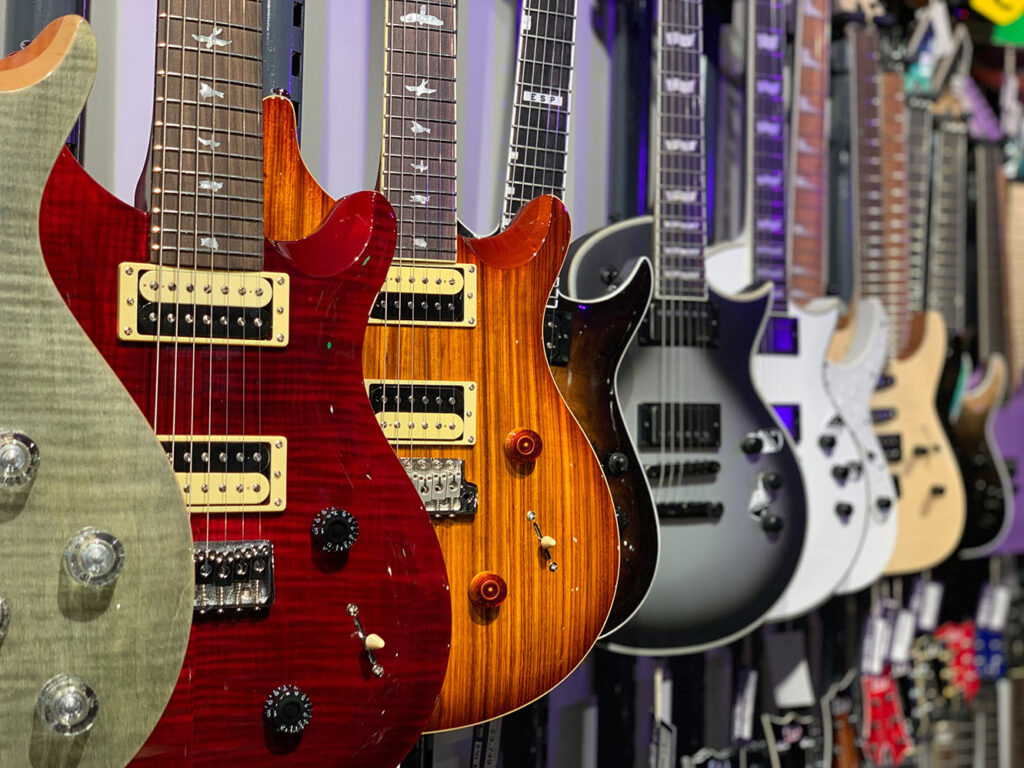
Identify the guitar before estimating its value
You cannot price a guitar accurately until you know exactly what it is. “A 1970s Fender” is not enough. A Fender Stratocaster from 1971, 1976, or 1979 may have a different design, production history, and market price.
Record these details:
- Brand
- Model
- Serial number
- Approximate production year
- Country of manufacture
- Body and neck materials, if documented
- Finish color
- Pickup type and layout
- Hardware
- Original case or gig bag
- Modifications and repairs
- Visible damage
Look for the model name on the headstock, truss rod cover, neck plate, bridge, pickup area, or control cavity. Some guitars have the model printed on a label inside the body. Others require a serial-number lookup or comparison with manufacturer catalogs.
Use the serial number carefully
A serial number can help identify a production period, but it does not always provide an exact year. Brands may reuse number ranges, change systems, or manufacture guitars in more than one country at the same time.
Check the manufacturer’s official support pages first. Useful records may also appear in reputable guitar reference books, specialist databases, and documented vintage catalogs.
Do not post a complete serial number publicly if you are concerned about ownership records or fraud. A partial serial number is often enough for general discussion.
Separate the original parts from replacement parts
Original parts can strongly affect the value of a vintage guitar. Check whether the following parts match the period and model:
- Pickups
- Tuners
- Bridge
- Tailpiece
- Potentiometers
- Knobs
- Pickguard
- Frets
- Nut
- Finish
- Case
A replacement part does not always reduce value. A modern tuner may improve function. A professional refret may make a guitar easier to play. But collectors may pay less for a guitar that no longer has its original parts.
The most important question is not simply whether the guitar works. It is whether the guitar remains original, documented, and desirable to the buyers who want that model.

Check recent US sales, not just asking prices
Recent completed sales are the strongest practical evidence for estimating a used guitar’s value. Search for the exact brand, model, year range, finish, and condition.
Useful places to check include:
- Reverb sold listings and price data
- eBay completed or sold listings
- Local listings on Craigslist or Facebook Marketplace
- Used inventory from major US music retailers
- Specialist vintage guitar dealers
- Auction records for rare instruments
Active listings show what sellers hope to receive. Sold listings show what buyers accepted. Those numbers can be very different.
Build a small comparison set
Try to find at least five similar sales. The best comparison matches your guitar in this order:
- Exact model
- Similar production year
- Similar condition
- Same or similar finish
- Similar originality
- Same market region
- Similar accessories
Do not compare a standard production model with a Custom Shop, limited-edition, artist-signature, or historically rare version. The names may look similar, but the values can differ greatly.
Remove unusual sales
Exclude sales that appear abnormal, such as:
- An incomplete project guitar
- A fake or questionable listing
- A guitar sold with a large amplifier package
- A charity auction
- A damaged guitar sold for parts
- An unusually cheap local sale
- A celebrity-owned instrument without proof
- A dealer listing with an unusually high price
One extreme result can distort your estimate. A median price is often more useful than the highest or lowest sale.
Use a simple median
Suppose five comparable guitars sold for:
- $850
- $925
- $975
- $1,050
- $1,400
The median is $975. That is a better starting point than using the $1,400 sale simply because it is the highest number.
Next, adjust the median for your guitar’s condition, originality, finish, accessories, and location.

Adjust the estimate for condition
Condition is one of the largest factors in electric guitar value. Buyers usually care about both appearance and function.
A practical condition scale looks like this:
| Condition | Description | Typical effect |
|---|---|---|
| Mint or near mint | Very little wear, original, fully working | Highest value |
| Excellent | Light marks, no major repairs, fully working | Near top of market |
| Very good | Normal wear, minor repairs or replaced parts | Moderate reduction |
| Good | Clear wear, dents, finish damage, or upgrades | Lower value |
| Fair | Major wear or repair needs, but usable | Significant reduction |
| Project or parts | Not fully working or missing major parts | Lowest value |
These labels are not universal. One seller’s “excellent” may be another buyer’s “good.” Use clear photographs and specific descriptions instead of relying on a label alone.
Functional problems that reduce value
Check whether the guitar has:
- Working pickups
- Clean volume and tone controls
- A stable neck
- Usable frets
- A working truss rod
- A functional bridge and tailpiece
- Stable tuning machines
- No serious cracks
- No loose neck joint
- No electrical noise beyond normal single-coil hum
A small setup issue may reduce the price by less than a major structural problem. A twisted neck, broken headstock, water damage, or damaged truss rod can reduce value sharply.
Do not force a truss rod or attempt a repair if you do not know what you are doing. A qualified guitar technician can inspect structural problems and provide a repair estimate.
Cosmetic damage is not all equal
Normal play wear may be acceptable, especially on older guitars. However, the following issues usually matter more:
- Headstock breaks
- Neck cracks
- Body cracks
- Severe buckle rash
- Large finish repairs
- Overspray
- Refinished body
- Corrosion
- Missing original parts
- Water or smoke damage
A professional repair can preserve playability, but it may not restore full collector value. Collectors often value originality more than repair quality.

Originality, modifications, and repairs can change the price
A modified guitar may be worth more to a player but less to a collector. This is a common source of confusion.
For example, upgraded pickups, locking tuners, a replacement bridge, or a new wiring harness may improve the guitar’s sound or performance. Buyers may still discount the instrument because they must pay to restore it to factory condition.
Common modifications that affect value
- Replaced pickups
- New tuners
- Changed bridge
- Routed body
- Refinished body
- Replaced neck
- Added a kill switch
- Changed pickup configuration
- Non-original pickguard
- Changed electronics
- Enlarged control or pickup cavities
Keep every original part you have. A guitar with upgraded parts and the original parts included is usually easier to sell than one with only the upgrades.
Vintage originality deserves special care
On a modern guitar, a changed pickup may have a small effect on value. On a valuable vintage guitar, the same change could reduce the price by thousands of dollars.
If you suspect that your guitar is rare or vintage, do not sand, refinish, drill, or replace parts before getting an evaluation. An irreversible “improvement” can remove evidence that helps establish the guitar’s identity and value.

Calculate a realistic asking price and net value
Use this basic formula:
Estimated market value = median comparable sale price ± condition and originality adjustments
Then calculate your likely net proceeds:
Net proceeds = sale price − platform fees − payment fees − shipping − repairs − discounts
Hypothetical example
Assume comparable US sales produce a median price of $1,200.
Your guitar has:
- Minor finish wear: −$75
- A replaced pickup: −$100
- Original hard case: +$100
- Fresh professional setup: +$50
The estimated private-sale value would be:
$1,200 − $75 − $100 + $100 + $50 = $1,175
You might list it at about $1,250 to allow room for negotiation, with a realistic target near $1,150 to $1,200.
The correct listing price depends on how quickly you want to sell. A high price may be reasonable if you can wait. A lower price may make sense for a fast local sale.
Sale method comparison
| Sale method | Likely price | Speed | Main trade-off |
|---|---|---|---|
| Private local sale | Medium to high | Medium | More messages and safety concerns |
| Online marketplace | Medium to high | Medium | Fees, shipping, and fraud risk |
| Consignment | Medium to high | Slow to medium | Commission reduces proceeds |
| Music store sale | Low to medium | Fast | Store needs resale margin |
| Trade-in | Low cash value, higher trade credit | Fast | Best only if buying another item |
| Specialist auction | Variable | Slow | Better for rare items, with fees |
A store may offer 50% to 70% of expected retail value, but the exact offer varies by inventory, demand, condition, and local market. Treat this as a general business model, not a guaranteed percentage.

Choose the right selling route
The best route depends on whether you value price, speed, convenience, or risk control.
Sell privately when the guitar is common or moderately valuable
A private sale can produce more money because there is no store margin. Use a clear title, detailed photos, and an honest condition report.
Meet buyers in a safe public place. A music store, police-station exchange area, or another monitored location may be safer than a private residence. For high-value instruments, consider a secure payment method and verify that funds have cleared before handing over the guitar.
Use a dealer or consignment shop for rare guitars
A reputable vintage dealer may help with authentication, photography, buyer questions, packing, and shipping. The cost is a commission or lower purchase offer.
Ask these questions before signing:
- What is the commission?
- Who pays for repairs?
- Who pays for shipping and insurance?
- What happens if the guitar is damaged?
- Can the dealer discount the price without approval?
- When will you be paid?
- What happens if the guitar does not sell?
Read the agreement. Do not rely only on a verbal promise.
Use a local store for speed
A local store is often the simplest choice if you need cash quickly. Before accepting an offer, check several stores if possible. Ask whether the quote is for cash or trade credit, since trade credit may be higher.
Take the guitar, case, accessories, and any ownership or repair records. A clean, complete instrument is easier for a store to assess.
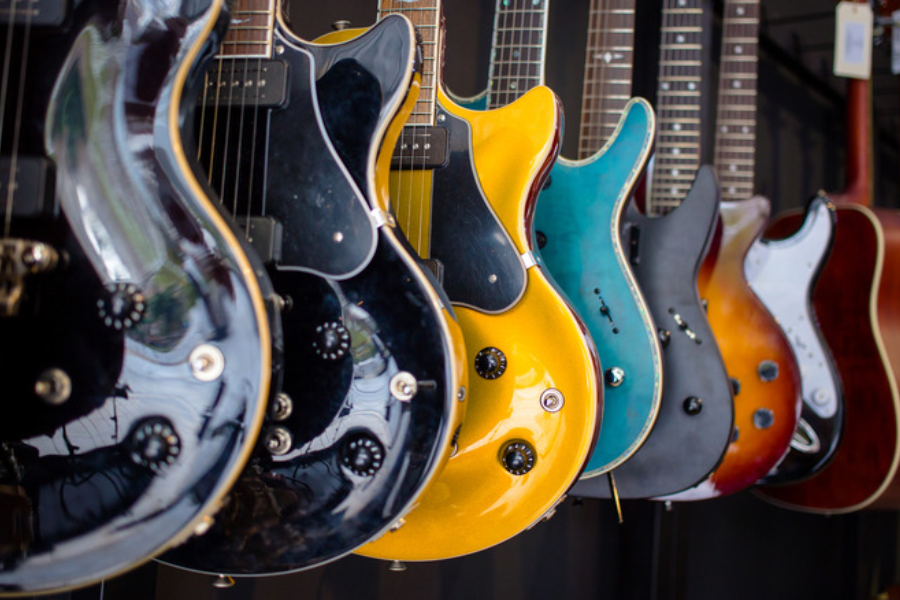
Document the guitar before you list it
Good documentation can increase buyer confidence and reduce disputes.
Take well-lit photos of:
- Front and back
- Headstock front and rear
- Serial number
- Neck joint
- Frets
- Bridge and tailpiece
- Pickups
- Control cavity, if accessible
- Any cracks, dents, or repairs
- Case and included accessories
Photograph flaws clearly. Hiding damage may lead to a return, payment dispute, or loss of trust.
Include the following details in the listing:
- Exact model
- Serial number or partial serial number
- Country of manufacture
- Approximate year, if verified
- Weight
- Scale length, if known
- Pickup layout
- Modifications
- Repairs
- Fret condition
- Whether the electronics work
- Included case or accessories
- Shipping and return terms
Avoid claiming that a guitar is “all original” unless you have a strong basis for that statement. Say “appears original” when you are not certain.
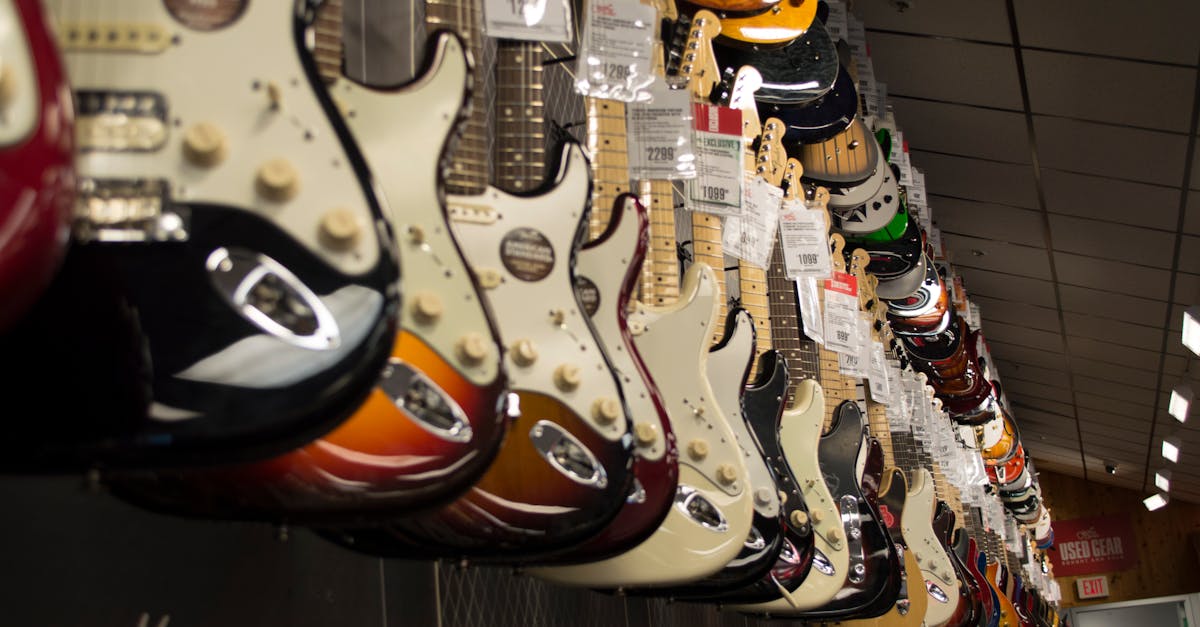
Watch for fake, stolen, and misidentified guitars
High-value guitars attract fraud. A copied serial number does not prove that an instrument is genuine. Some counterfeit guitars use real brand logos and altered hardware.
Warning signs include:
- A price far below similar sold examples
- Pressure to pay outside the platform
- Refusal to provide serial-number photos
- Stock photos instead of instrument-specific photos
- Inconsistent model details
- A seller who will not allow inspection
- A request for gift cards, wire transfers, or cryptocurrency
- A story that changes during the sale
For a valuable vintage guitar, pay for an inspection from a qualified vintage-guitar specialist before making a major purchase or setting a final price.
Check the guitar’s history when possible. Receipts, prior listings, repair invoices, photographs, and original paperwork can support ownership and authenticity. They do not guarantee value, but they can reduce uncertainty.

Common mistakes that lead to a wrong guitar valuation
Using the original retail price
The price paid when the guitar was new does not establish its current used value. Some guitars depreciate sharply. Others gain value because of scarcity or demand.
Copying the highest online listing
An expensive unsold listing is not evidence that buyers will pay that amount. Base the estimate on completed sales.
Ignoring country and model differences
A US-made model, a Mexican-made model, a Japanese model, and an import model may share a brand name but have different construction and values.
Treating every old guitar as vintage
Age alone does not make a guitar collectible. Demand, rarity, condition, originality, and historical importance matter more.
Adding repair costs dollar for dollar
A $500 repair does not always add $500 to the guitar’s resale value. Repairs may preserve value, restore function, or prevent a larger loss, but buyers do not always reimburse the full cost.
Overlooking shipping risk
Large or valuable guitars need strong packaging and suitable insurance. A damaged shipment can erase the profit from a sale. Photograph the guitar and packaging before shipping, and follow the carrier’s insurance rules.

Frequently asked questions
How much is a used electric guitar worth?
A used electric guitar may be worth $50 to more than $10,000 in the US. The exact amount depends on the model, year, condition, originality, and recent sold prices. Common entry-level instruments often sell for $100 to $350, while professional and vintage models can be worth much more.
Are old electric guitars worth more?
Not automatically. Older guitars are worth more when they are desirable, rare, original, and in good condition. A common damaged guitar from the 1970s may be worth less than a clean modern guitar from a respected series.
How much will a guitar store pay for my guitar?
A store will usually offer less than the expected private-sale price because it must cover overhead, repairs, inventory risk, and profit. The offer can be higher as trade credit than as cash. Request separate cash and trade-in quotes.
Do guitar modifications lower the value?
They can. Players may like upgraded pickups or tuners, but collectors often prefer original parts. Keep removed parts and disclose every change. A professional modification may help playability while still lowering collector value.
Should I get an appraisal?
An appraisal may be worthwhile for a rare, vintage, insured, inherited, or disputed guitar. Choose an appraiser or dealer with experience in the exact brand and period. A general online estimate is not a substitute for an in-person inspection when the value is high.
Does the original case increase guitar value?
Usually, yes, especially when the case is correct for the model and period. A damaged or incorrect case may add little. For vintage guitars, an original case can matter more than a modern replacement.
[CodeImg is intentionally omitted here because this is the FAQ section.]
Key takeaways
- Identify the exact brand, model, year range, and country of manufacture.
- Compare at least five recent US sold listings.
- Use the median comparable price rather than the highest listing.
- Adjust for condition, originality, repairs, modifications, and accessories.
- Separate private-sale value from store, trade-in, and net cash value.
- Keep original parts and document all repairs.
- Use an experienced specialist for rare or high-value guitars.
- Be honest about flaws, and protect yourself during payment and delivery.
Conclusion
To find out how much your electric guitar is worth, start with accurate identification and recent completed sales in the US. Then adjust the comparison price for condition, originality, repairs, modifications, accessories, and your chosen selling method.
Your next step is simple: photograph the guitar, record its model and serial details, find five comparable sold listings, and calculate the median. That will give you a more realistic estimate than an old receipt, a high online asking price, or a quick guess based only on the brand name.