

Introduction
Yes, you can use an electric guitar amp with an acoustic guitar, especially if the guitar has a pickup. The amp will make the guitar louder, but it may not produce a clear, natural acoustic tone.
Across the United States, many players use an electric amp as a temporary solution for practice, small jam sessions, or emergencies. It is usually safe when you connect the guitar to the amp’s instrument input and keep the volume at a sensible level.
The main trade-off is sound quality. An electric guitar amp shapes tone for magnetic electric-guitar pickups. An acoustic guitar pickup often needs a wider, cleaner sound system, such as an acoustic amp, PA speaker, or powered monitor.

Can you plug an acoustic guitar into an electric amp?
You can plug an acoustic-electric guitar into an electric guitar amp if the guitar has a working pickup and output jack.
Use a standard 1/4-inch instrument cable:
- Turn the amp volume all the way down.
- Plug the cable into the guitar’s output jack.
- Plug the other end into the amp’s input.
- Turn on the amp, if required.
- Raise the volume slowly.
- Adjust the guitar and amp tone controls.
This setup will not work with a regular acoustic guitar that has no pickup. A microphone placed in front of the guitar is a different setup and should connect to a suitable microphone input, mixer, or PA system.
An electric amp will often produce a usable sound at low volume. However, the result depends on the pickup type, the amp’s tone controls, and the design of the guitar.
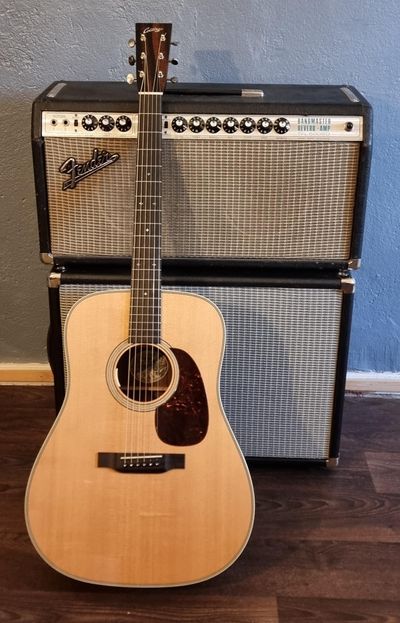
What sound will an acoustic guitar have through an electric amp?
An acoustic guitar through an electric amp may sound bright, thin, nasal, compressed, or “electric.” These effects are not always faults. They happen because the amp is designed to color the signal rather than reproduce the full acoustic range.
The pickup also changes the result.
| Acoustic guitar setup | Likely result through an electric amp |
|---|---|
| Passive piezo pickup | Often quiet, thin, or sharp |
| Active piezo pickup with preamp | Usually louder and easier to control |
| Magnetic soundhole pickup | Often works well because it behaves more like an electric-guitar pickup |
| Internal microphone pickup | May sound natural but can feed back quickly |
| Guitar with no pickup | Cannot connect directly |
A piezo pickup senses pressure under the guitar’s bridge. It can produce a strong attack and a hard, glassy tone when connected to equipment that does not suit it.
A magnetic soundhole pickup usually responds better to an electric guitar amp. It senses the movement of metal strings in a way similar to an electric guitar pickup. The sound will still not be the same as a miked acoustic guitar, but the connection is normally practical.
An acoustic guitar with an onboard preamp gives you more control. You can often lower the treble, add some bass or mids, and send a stronger signal to the amp.
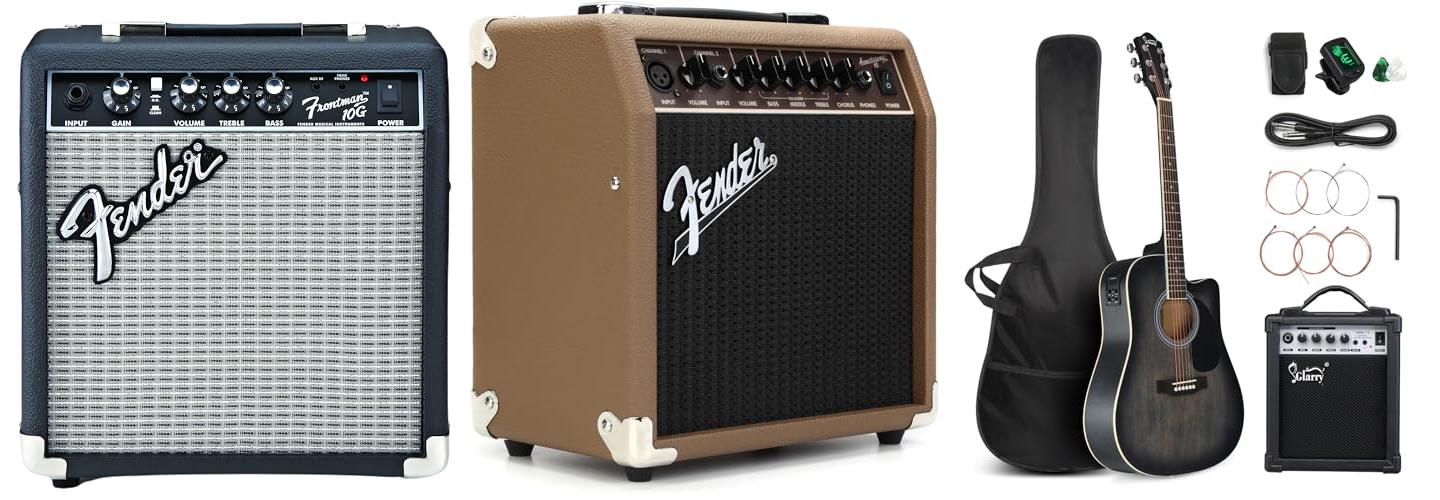
Is it safe for the guitar and amp?
Yes, connecting a guitar output to an electric guitar amp input is normally safe. The guitar sends a low-power instrument signal, and the amp’s input is designed to receive that type of signal.
The key safety rule is simple: never connect an amplifier’s speaker output to a guitar, pedal, mixer, or another amplifier input.
Use only:
- The guitar’s output jack
- The amp’s instrument input
- A normal instrument cable
- The amp’s speaker output connected to its intended speaker or cabinet
Do not use a speaker cable from the output of one amp into the input of another amp. A speaker output carries much more power than an instrument input can handle and may damage equipment.
Also check the guitar battery if it has an active preamp. Many acoustic-electric guitars use a 9-volt battery. A weak battery can cause low volume, distortion, crackling, or a signal that cuts out.
If the guitar has no sound, test the cable and battery before assuming the amp is defective.
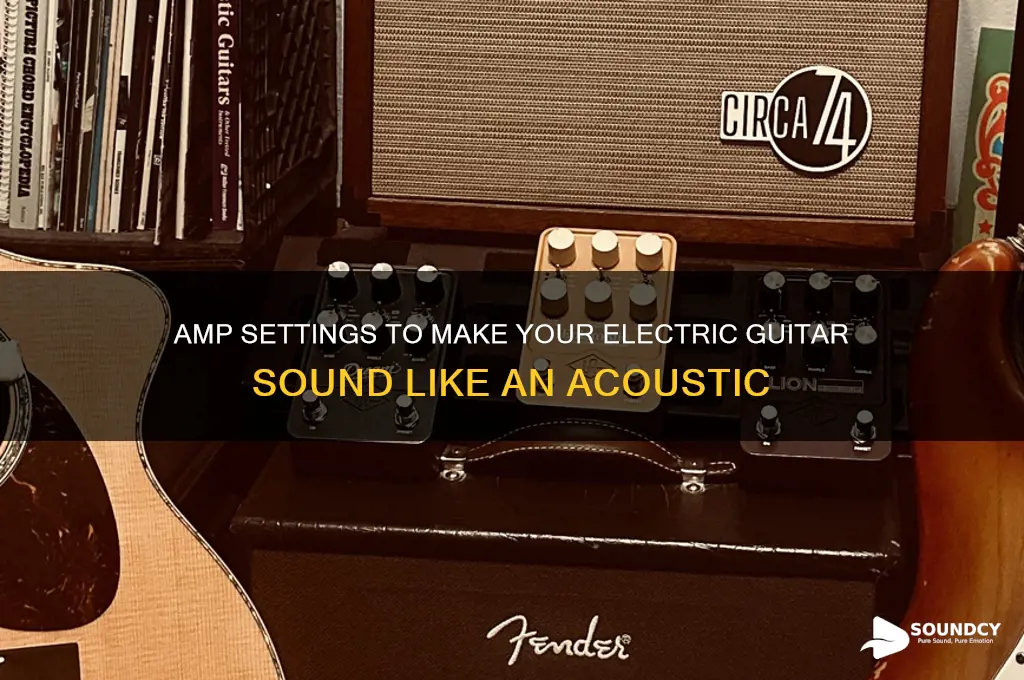
How to get a better acoustic sound from an electric amp
You can improve the sound with careful setup. The goal is to reduce harsh highs, avoid heavy distortion, and leave enough clean headroom.
1. Use the clean channel
Choose the clean channel rather than an overdrive or distortion channel. Acoustic guitar usually sounds clearer with little or no gain.
If the amp has a gain control, keep it low. Raise the master volume only as much as needed.
2. Start with a flat EQ
Set the bass, middle, and treble controls near the center position. Then make small changes.
Try these adjustments:
- Lower treble if the sound is sharp or brittle.
- Add a little bass if the guitar sounds thin.
- Reduce mids if the tone sounds nasal.
- Avoid excessive bass if the sound becomes muddy.
- Reduce presence or brilliance controls if available.
Every guitar and amp is different, so use these settings as a starting point rather than a fixed formula.
3. Add only light effects
A small amount of reverb can make the sound feel less dry. Chorus may also work for certain styles, but too much can make the guitar lose focus.
Avoid heavy distortion unless you want an intentionally electric sound. Distortion can increase feedback and exaggerate harsh pickup noise.
4. Keep the amp pointed away from the guitar
Feedback occurs when amplified sound re-enters the guitar or its pickup and creates a loop.
Place the amp:
- In front of you rather than directly behind the guitar
- Away from the guitar’s sound hole
- At a moderate distance
- At ear level or aimed toward your ears when possible
Do not simply turn up the volume to overcome a poor position. Moving the amp often helps more than adding power.

When is an acoustic amp or PA system a better choice?
An acoustic amp or PA system is usually better when you want the guitar to sound natural. These systems are built to reproduce a wider range of the instrument’s sound with less intentional coloration.
An acoustic amp may include:
- A high-impedance instrument input
- A preamp suited to piezo pickups
- Notch or anti-feedback controls
- Separate microphone and instrument channels
- A balanced output for a PA
- Reverb designed for acoustic instruments
A PA speaker can also work well, particularly when you need to amplify vocals and guitar together. Many acoustic-electric guitars can connect to a mixer or powered speaker through a direct box, preamp, or suitable instrument input.
Choose an acoustic amp or PA when:
- You perform in public
- You need a clean, natural tone
- You use a piezo pickup
- You sing through the same system
- You need more volume without harsh distortion
- Feedback control matters
An electric amp remains useful when you want a colored tone, already own one, or use a magnetic soundhole pickup.
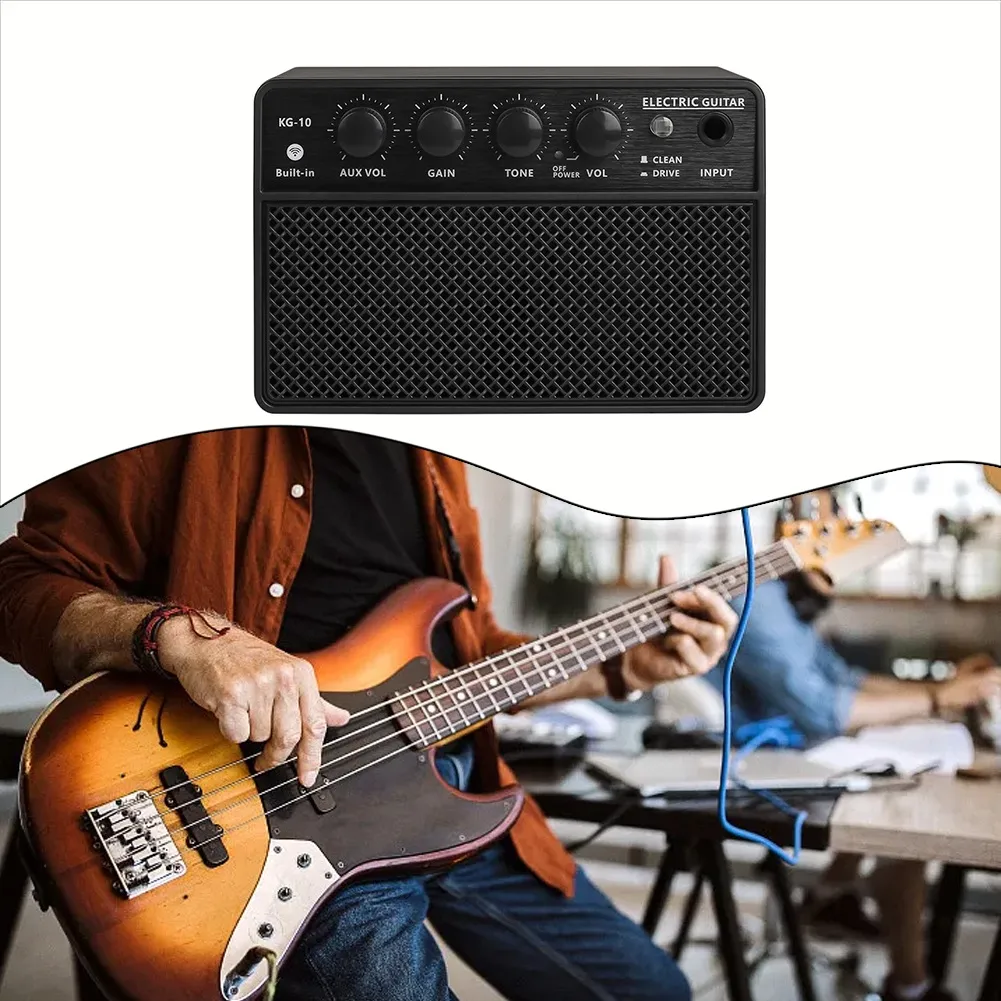
Electric amp versus acoustic amp
The right choice depends on your goal rather than the word “acoustic” on the guitar.
| Factor | Electric guitar amp | Acoustic guitar amp |
|---|---|---|
| Main design goal | Shape an electric-guitar signal | Reproduce an acoustic signal clearly |
| Usual tone | Colored and mid-focused | Cleaner and wider |
| Piezo pickup performance | Can sound harsh or thin | Usually more suitable |
| Magnetic soundhole pickup | Often a good match | Also works well |
| Built-in distortion | Common | Less common |
| Feedback control | May be limited | Often included |
| Vocal input | Uncommon | More common |
| Best use | Practice, effects, electric-style tones | Performing and natural acoustic tone |
This does not mean every acoustic amp sounds better in every situation. A player seeking blues, rock, or lo-fi textures may prefer an electric amp. A player seeking a realistic strummed or fingerpicked tone will usually prefer an acoustic amp, PA, or full-range speaker.

How to connect an acoustic guitar to an amp step by step
Follow this sequence for a safe first test.
Before you start
You need:
- An acoustic-electric guitar or an acoustic guitar with a pickup
- A working 1/4-inch instrument cable
- An electric guitar amp
- A fresh battery if the guitar has an active preamp
Connection steps
- Turn the amp off or set its volume to zero.
- Set the amp to its clean channel.
- Turn off distortion and high-gain effects.
- Insert the cable into the guitar’s output jack.
- Insert the other end into the amp’s instrument input.
- If the guitar has an active preamp, turn it on by inserting the cable fully.
- Turn on the amp.
- Strum the guitar softly.
- Raise the amp volume in small steps.
- Adjust the guitar’s tone controls first, then adjust the amp.
You should hear a clean signal without loud hum, crackling, or sudden volume jumps.
If you hear nothing, check the cable, guitar battery, pickup volume, and output jack. If the signal is very weak, the pickup may be passive and may benefit from an acoustic preamp or a dedicated direct box.

Common problems and practical fixes
The guitar sounds too quiet
A passive pickup may produce a lower signal than an active pickup. Check the guitar’s volume control and replace the battery if the guitar uses one.
A clean boost, acoustic preamp, or suitable direct box can raise the signal. Do not use a random power supply unless the guitar or pedal maker specifies the correct voltage and polarity.
The sound is harsh or brittle
Lower the amp’s treble and presence controls. If the guitar has an onboard EQ, reduce its treble as well.
A different amp may help more than extreme EQ changes. Electric amps often emphasize the midrange and add their own speaker coloration.
The sound is muddy
Reduce bass and low mids. Keep the amp away from corners and walls, since nearby surfaces can increase low-frequency buildup.
Check whether an effect, such as chorus or reverb, is making the sound less clear.
The guitar feeds back
Lower the volume first. Then move the amp away from the guitar and point it away from the sound hole.
If the guitar has a microphone pickup, feedback may occur sooner than with a piezo or magnetic pickup. An acoustic amp with a notch filter or phase switch may provide better control.
The amp distorts unexpectedly
Turn down the guitar’s output or the amp’s gain control. A weak battery can also cause strange distortion in some active systems.
Make sure you are using the input jack, not a line-level or speaker connection that is unsuitable for the guitar.
There is hum or buzzing
Test another cable and move away from possible sources of electrical noise, such as phone chargers, fluorescent lights, and computer power supplies.
If the buzz remains loud, stop using the setup until the cable, guitar, and amp can be checked. Do not defeat the safety ground on electrical equipment.

Can you use pedals with an acoustic guitar and electric amp?
Yes, most standard guitar pedals can be used between an acoustic guitar and an electric amp. The best choices depend on the sound you want.
Useful options include:
- Tuner
- Compressor
- Equalizer
- Reverb
- Delay
- Looper
- Clean boost
An equalizer pedal can reduce harsh treble or add body. A compressor can make picking more even, but too much compression may increase feedback.
Distortion, fuzz, and overdrive pedals can create interesting sounds, but they will move the guitar farther from a natural acoustic tone. Use them at low gain first.
If the guitar has an active preamp, try connecting the guitar directly to the amp before adding pedals. This makes it easier to identify the source of noise or distortion.

Can you use an acoustic guitar with a tube electric amp?
You can, but a tube electric amp may color the sound more strongly than a clean solid-state amp.
A tube amp can produce pleasing warmth at low gain. As you raise the volume, it may add compression and overdrive. That can work well for blues, roots music, and rock, but it may not suit clean fingerstyle playing.
Start with:
- The cleanest available channel
- Low gain
- Moderate volume
- Flat EQ
- Little or no overdrive
The same connection rules apply. Connect the guitar to the amp input and keep the speaker connected as required by the amplifier’s design. Never run a tube amp without the proper speaker load unless the manufacturer specifically allows that setup.

What is the best temporary solution?
If you already own an electric guitar amp, use its clean channel and adjust the EQ gently. This is the simplest solution for home practice or a short rehearsal.
If the guitar sounds weak or harsh, place an acoustic preamp or equalizer between the guitar and amp. This may improve the signal, but it cannot fully change the character of the amp’s speaker.
For a performance, a PA system or acoustic amp is normally the better choice. It gives the guitar a cleaner sound and may offer better feedback control.
A magnetic soundhole pickup is the exception. Since it produces a signal closer to an electric guitar pickup, it often performs well through a normal electric amp.

Frequently asked questions
Can I plug a regular acoustic guitar into an electric amp?
Not directly. A regular acoustic guitar has no electrical output. You need a pickup, an external microphone, or a soundhole pickup. A microphone should connect to equipment designed for microphone signals.
Can an electric amp damage an acoustic-electric guitar?
A normal instrument input should not damage an acoustic-electric guitar. Use the guitar output and amp input only. Avoid speaker outputs, incorrect power supplies, and damaged cables.
Why does my acoustic guitar sound bad through an electric amp?
The pickup and amp may not suit each other. Piezo pickups can sound sharp through an electric amp, while electric amps may color the signal too much. Lower the treble, use the clean channel, and try an acoustic preamp or acoustic amp.
Can I use an acoustic amp for an electric guitar?
Usually, yes. An acoustic amp can amplify an electric guitar, especially with a clean tone. It may not create the same overdrive or speaker compression as an electric guitar amp.
Do I need a preamp for an acoustic guitar?
Not always. An acoustic guitar with an active preamp usually has enough output for an amp or PA. A passive pickup may benefit from a preamp for more volume, better tone shaping, and improved impedance matching.
Conclusion
An electric guitar amp can be used with an acoustic-electric guitar, and the connection is normally safe. Use the clean channel, start with low volume, and connect only to the amp’s instrument input.
The result may sound colored, bright, or thin because an electric amp is not designed to reproduce an acoustic guitar’s full sound. For the most natural tone, choose an acoustic amp, PA system, or full-range powered speaker.
For a quick home setup, your electric amp is fine. For performances or clean acoustic tone, dedicated acoustic amplification is the better long-term choice.