

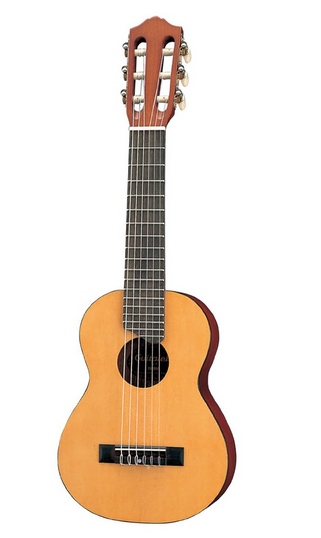
Small guitars are commonly called travel guitars, parlor guitars, 3/4-size guitars, or ukuleles.
If you are asking what are the small guitars called, the answer depends on the instrument’s size, shape, tuning, and purpose. A travel guitar is made for portability, while a parlor guitar has a smaller traditional body. A 3/4-size guitar is often built for children, beginners, or players with smaller hands. This guide explains the key differences so you can choose the right instrument with confidence.
What are the small guitars called?
The phrase “small guitar” can describe several different instruments. Guitar makers use terms such as travel guitar, mini guitar, 3/4-size guitar, parlor guitar, and short-scale guitar.
These names do not always mean the same thing. Some refer to the body size, while others describe the neck length or the guitar’s main use.
The most common small guitar types include:
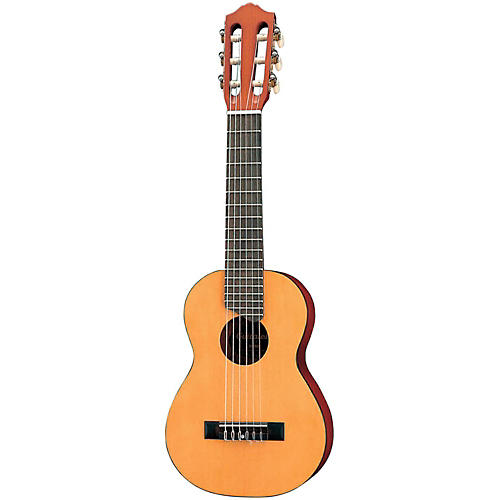
• Travel guitar: A compact guitar made for trips and easy storage.
• Mini guitar: A very small guitar, often designed for children or casual players.
• 3/4-size guitar: A guitar built at about three-quarters of a standard guitar’s size.
• Parlor guitar: A small-bodied acoustic guitar with a classic, narrow shape.
• Short-scale guitar: A guitar with a shorter distance between the nut and bridge.
• Backpacker guitar: An extra-compact guitar designed for hiking, camping, and travel.
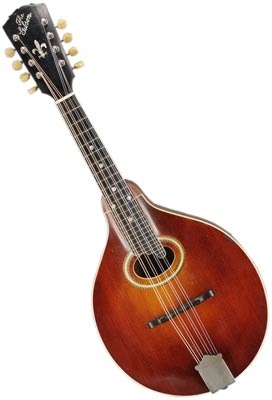
• Ukulele: A small, four-string instrument that looks like a tiny guitar but has different tuning and construction.
So, if someone asks what are the small guitars called, “travel guitar” is often the best general answer. However, the correct name depends on the exact model.

Small guitar types explained
Understanding the main types makes shopping much easier. Each design has a different sound, feel, and purpose.
Travel guitars
Travel guitars are made for portability. They usually have a smaller body, a shorter scale, or both. Many fit in compact gig bags and work well for road trips, flights, camping, and practice away from home.
A travel guitar may have six strings and standard guitar tuning. This makes it easier to switch between a full-size guitar and a smaller model.
Some travel guitars use a full-length neck with a small body. Others shorten the scale to reduce the overall length. The design varies by brand, so always check the measurements before buying.
Mini guitars
Mini guitars are among the smallest true guitars. They often have a short neck and a small acoustic body. Many use lighter strings and are aimed at children or beginners.
A mini guitar can be a good first step for a young player. It feels less bulky and may be easier to hold while learning basic chords.
However, not every mini guitar uses standard tuning. Some are tuned higher than a standard guitar. Check the manufacturer’s tuning guide before learning songs from standard guitar lessons.
3/4-size guitars
A 3/4-size guitar is smaller than a full-size guitar but still feels like a traditional guitar. It normally has six strings and can be acoustic, electric, or classical.
These guitars are popular with children, young learners, and adults who prefer a smaller instrument. They can also serve as practice guitars for experienced players.
The term “3/4-size” is not perfectly uniform. One company’s 3/4-size model may be slightly larger or smaller than another company’s model. Compare scale length, body depth, and total length rather than trusting the label alone.
Parlor guitars
Parlor guitars are small-bodied acoustic guitars with a long history. They often have a narrow waist, a compact body, and a warm, focused tone.
Many adult players choose parlor guitars because they are comfortable to hold. Their smaller body can also suit fingerpicking, folk music, blues, and light strumming.
A parlor guitar is not always shorter from end to end. Some models have a near-standard scale length. Their small feel mainly comes from the body shape and depth.
Short-scale guitars
A short-scale guitar has less distance between the nut and the bridge. This measurement is called the scale length.
A shorter scale can make the strings feel softer. Chords may require less stretching, which can help players with small hands, sore fingers, or limited reach.
Short-scale guitars come in many styles. You can find acoustic, electric, bass, and even baritone models with shorter scales.

Small guitars versus ukuleles
Many people confuse small guitars with ukuleles. They look similar, but they are different instruments.
A standard guitar has six strings. A ukulele usually has four strings and is much smaller. Ukuleles also use different tuning, often G–C–E–A.
The guitar family includes acoustic guitars, electric guitars, classical guitars, and many compact versions. The ukulele belongs to a related but separate instrument family.
Here are the main differences:
• Strings: Most guitars have six strings, while ukuleles usually have four.
• Tuning: Guitars and ukuleles use different note patterns.
• Sound: A guitar has a deeper, fuller sound. A ukulele has a bright, light tone.
• Chords: Some guitar chord shapes do not work the same way on a ukulele.
• Playing style: Both instruments support strumming and fingerpicking, but the techniques are not identical.
If you want to play guitar songs with normal guitar chord charts, choose a compact guitar rather than a ukulele. If you want a very portable instrument with simple chord shapes, a ukulele may be a better fit.

Why do people choose small guitars?
Small guitars offer clear benefits for many players. They are not only for children.
Easier handling
A smaller body can feel more natural against your chest and stomach. This matters when you are learning posture, strumming, or fingerpicking.
A full-size guitar can feel like a large suitcase for a beginner. A small guitar often feels more manageable from the first lesson.
Better portability
Small guitars are easier to carry through airports, offices, classrooms, and city streets. They also take up less room in a bedroom or apartment.
Travel players often choose compact guitars because they can practice without bringing a large case. A good padded gig bag adds extra protection.
Comfortable for smaller players
Children and adults with smaller frames may find a small guitar easier to reach around. A shorter neck can also reduce hand strain.
This does not mean every small-handed player needs a small guitar. Hand position, neck shape, and setup matter too. Still, a compact design can remove an early physical barrier.
Useful for practice
A small guitar can stay near your desk, couch, or bed. When an instrument is easy to reach, you may practice more often.
In my experience, convenience often beats size. A modest guitar that gets played every day is more useful than an expensive full-size guitar that stays in its case.
A distinct tone
Small acoustic guitars often produce a focused, clear sound. Their tone may have less bass than a large dreadnought guitar, but this can help vocals and fingerstyle playing stand out.
Parlor guitars are especially popular for their balanced midrange. They can sound intimate rather than loud and boomy.
Limitations of small guitars
Small guitars are useful, but they are not perfect for every player or style.
Less low-end power
A smaller acoustic body usually moves less air. As a result, it may produce less bass and volume than a large dreadnought or jumbo guitar.
This is not always a weakness. A softer, balanced voice can work well in a small room. It may also be easier to record.
Different string tension
Short-scale guitars often feel more flexible. Some players enjoy this, but others prefer the firm response of a full-scale instrument.
Very light strings can also cause fret buzz if the guitar is not set up well. A professional setup can solve many problems.
Smaller fret spacing
A shorter scale reduces the distance between frets. This helps some players, but it may feel crowded to people with larger hands.
Try playing common chords before buying. Pay attention to the first three frets, where beginners spend much of their time.
Limited low-quality options
The small guitar market includes many inexpensive models. Some are good values, but others may have poor tuning stability, sharp fret ends, or weak construction.
Price alone does not prove quality. Look for solid hardware, smooth frets, a straight neck, and reliable reviews from players.
How to choose the right small guitar
The best small guitar depends on your body, goals, music style, and budget. Use these steps before making a purchase.
1. Decide who will play it
For a young child, a 1/2-size or 3/4-size guitar may be suitable. For an adult traveler, a travel guitar or parlor guitar may offer a better balance.
Do not choose only by age. Arm length, height, hand reach, and comfort are more useful factors.
2. Check the scale length
Scale length is one of the most important measurements. Common compact guitar scales may range from about 22 to 24 inches, while many full-size guitars measure around 24.75 to 25.5 inches.
Shorter does not always mean better. Choose a scale that lets you form chords without pain or excessive stretching.
3. Think about your music
Choose a small-bodied acoustic guitar for folk, blues, fingerstyle, and songwriting. Choose a compact electric guitar for rock, pop, jazz, or amplified practice.
A travel guitar works well when size matters most. A parlor guitar may be better when tone and comfort matter more than maximum portability.
4. Test the neck
Hold the guitar in a normal playing position. Check whether your thumb rests comfortably behind the neck.
Try these basic shapes:
• E major
• A major
• D major
• G major
• E minor
If your fingers feel cramped or your wrist bends sharply, try another model.
5. Inspect the build
Look closely at the instrument before buying. Check for:
• Smooth fret edges
• A straight neck
• Low but comfortable string action
• Tuners that turn smoothly
• No cracks around the bridge
• A bridge that sits flat
• A comfortable strap button
A beginner may not spot every problem. If possible, ask a guitar teacher or repair technician to inspect the instrument.
6. Consider the case
A compact guitar still needs protection. A padded gig bag is usually enough for local travel, but frequent air travel may require a stronger case.
Measure the guitar before ordering a replacement bag. Small guitars come in many shapes, and one “universal” bag may not fit well.

Small guitar sizing guide
The labels below offer a useful starting point. They are general ranges, not strict industry rules.
| Guitar type | Typical use | Common player |
|---|---|---|
| 1/2-size guitar | Early learning | Young children |
| 3/4-size guitar | Practice and lessons | Children and smaller adults |
| Travel guitar | Trips and compact storage | Travelers and casual players |
| Parlor guitar | Fingerstyle and folk | Adult players |
| Short-scale guitar | Easier reach and softer feel | Beginners and smaller-handed players |
| Backpacker guitar | Hiking and outdoor travel | Campers and adventurers |
A 1/2-size guitar is usually much smaller than a 3/4-size model. A 3/4-size guitar is closer to a standard instrument, so it may remain useful as the player grows.
For adults, a parlor or short-scale guitar often feels more natural than a child-sized guitar. The instrument should be compact without making the fretboard feel toy-like.
Do small guitars sound good?
Yes, small guitars can sound excellent. Their tone is often more focused, direct, and balanced than the sound of a large guitar.
Body materials have a major effect. Solid wood can develop a rich tone, while laminate wood can offer strength and lower cost. Bracing, strings, neck design, and setup also shape the sound.
A small guitar may not fill a large room like a jumbo guitar. But it can sound warm and clear in a bedroom, studio, classroom, or coffeehouse.
In recording sessions, compact guitars can fit into a mix without overwhelming vocals. This is one reason many songwriters enjoy parlor and travel-sized instruments.
Are small guitars good for beginners?
Small guitars can be excellent for beginners when the size matches the player. A comfortable instrument makes it easier to sit correctly, press strings, and practice basic chords.
However, comfort is only one part of the decision. The guitar must also stay in tune and have a playable setup.
A common mistake is buying the cheapest small guitar without checking its quality. If the strings sit too high, the neck feels rough, or the tuning slips, learning can become frustrating.
For a beginner, prioritize:
• Comfortable size
• Standard tuning when possible
• Smooth fret edges
• Stable tuning machines
• Reasonable string height
• A return policy
Personal tips for using a small guitar
I have found that small guitars work best when players understand their limits. They are easy to carry, but they still need regular care and proper setup.
One mistake I often see is treating a small guitar like a toy. Compact instruments need fresh strings, correct humidity, and gentle handling just like full-size guitars.
Another common mistake is assuming every small guitar uses standard tuning. Always read the manual or check the manufacturer’s website. A different tuning can make familiar chord lessons sound wrong.
These practical habits help:
Tune before every practice session.
Use a clip-on tuner when traveling.
Keep the guitar in a padded bag.
Replace worn strings before they sound dull.
Ask a technician to check the setup if the guitar buzzes.
Practice with a strap if the body feels unstable.
Compare the small guitar with a full-size model before buying.
A small guitar should feel like a comfortable pair of shoes. It does not need to be the biggest or most powerful instrument. It needs to support the way you play.
Frequently asked questions about what are the small guitars called
What is the most common name for a small guitar?
The most common names are travel guitar, mini guitar, 3/4-size guitar, and parlor guitar. The right term depends on the guitar’s body size, scale length, and intended use.
Is a 3/4-size guitar good for adults?
Yes, many adults enjoy 3/4-size guitars because they are light and easy to hold. They can be especially comfortable for travel, casual practice, and players with smaller hands.
Are small guitars easier to play?
Small guitars can be easier to hold and reach around, but the setup matters greatly. A poorly adjusted small guitar may feel harder to play than a well-set-up full-size guitar.
Is a ukulele a small guitar?
No, a ukulele is a separate string instrument. It usually has four strings and different tuning, while a standard guitar normally has six strings.
Can small guitars use regular guitar strings?
Some small guitars use regular guitar strings, while others need strings made for shorter scales or special tunings. Check the manufacturer’s recommended gauge and tuning before changing strings.
Do small guitars sound worse than full-size guitars?
Not necessarily. Small guitars often have less bass and volume, but they can offer a clear, warm, and focused tone that suits folk, blues, fingerstyle, and songwriting.
What small guitar is best for travel?
A travel guitar or backpacker guitar is usually the best choice for travel. Look for a strong gig bag, stable tuners, comfortable construction, and a size that fits your transport needs.
Conclusion
Small guitars can be called travel guitars, mini guitars, 3/4-size guitars, parlor guitars, short-scale guitars, or backpacker guitars. Each type offers a different balance of comfort, tone, portability, and playability.
Choose based on scale length, body shape, tuning, music style, and build quality. If possible, play the instrument before buying and test a few basic chords.
The best small guitar is the one you feel eager to pick up. Visit a local music store, compare compact models, and share your experience with other players in the comments.