

Replace the broken string, secure it at the bridge and tuner, then tune it slowly to pitch.
Learning how to fix a string on a guitar is a basic skill every player should know. A broken string can stop a practice session or ruin a live set, but the repair is usually simple with the right string, a tuner, and a few careful steps. This guide explains how to fix a string on a guitar safely, avoid common mistakes, and make the new string stay in tune.
What You Need to Fix a Guitar String
Before learning how to fix a string on a guitar, gather the right tools. You do not need a large repair kit, but a few simple items make the job faster and safer.
You will need:
- A replacement guitar string with the correct gauge
- A chromatic guitar tuner
- String cutters or wire cutters
- A string winder, if available
- A soft cloth
- A bridge pin puller for most acoustic guitars
- A small ruler or measuring guide, if you want to check string height later
Match the new string to the old one. Guitar strings are sold by gauge, such as extra light, light, medium, or heavy. A wrong gauge may change the guitar’s tone, tension, action, and tuning stability.
Electric guitars often use nickel-plated steel strings. Acoustic guitars usually use bronze or phosphor bronze strings. Classical guitars use nylon strings and need a different tying method. Never put steel strings on a classical guitar, because the extra tension can damage the instrument.
If you are unsure, check the guitar’s manual or look at the string package used before. Many beginner acoustic guitars use a light set, often ranging from about .012 to .053 inches. Electric guitars commonly use a lighter set, such as .010 to .046 inches.

Identify the Broken String
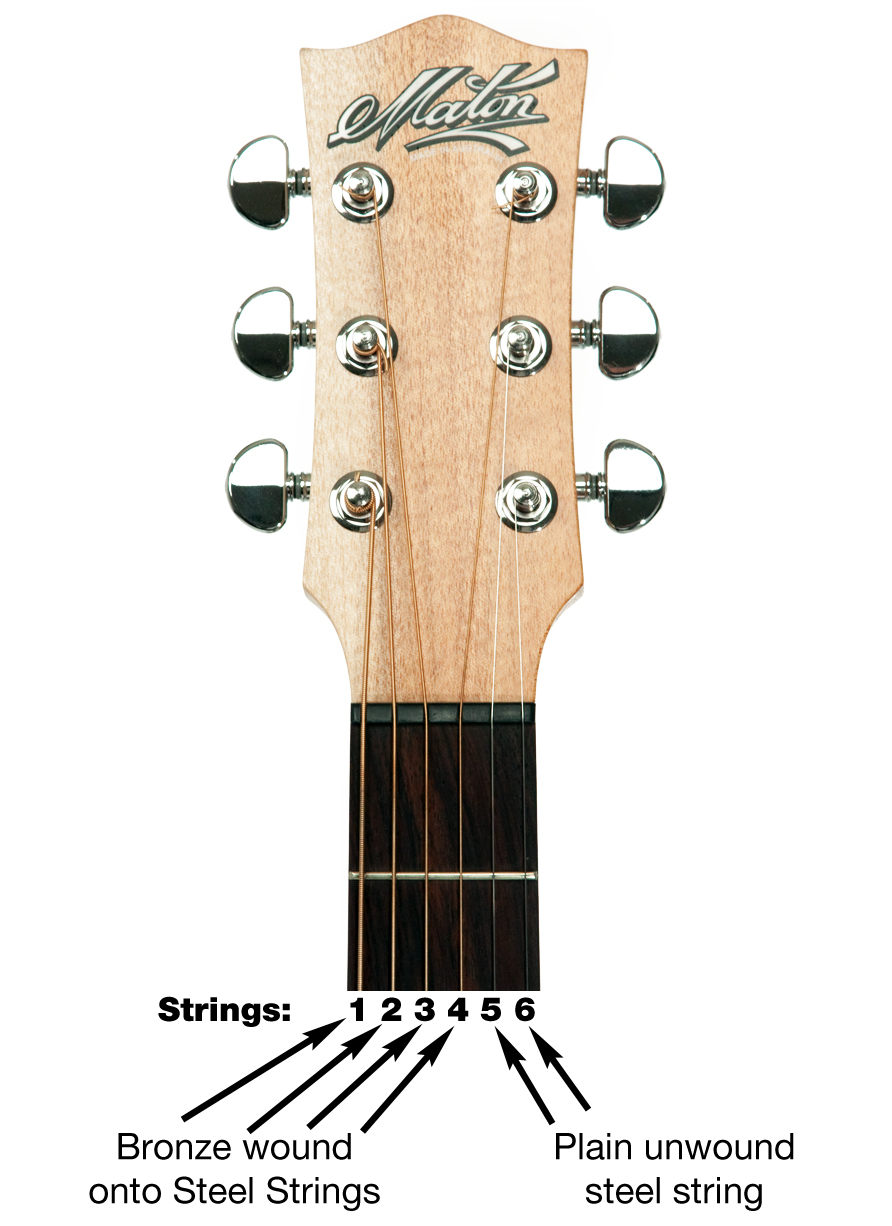
The first step in learning how to fix a string on a guitar is identifying which string needs replacement. Guitar strings are numbered from the thinnest to the thickest.
From the player’s view, the strings are:
- High E, the thinnest string
- B string
- G string
- D string
- A string
- Low E, the thickest string
A broken string is easy to spot, but a string can also fail near the bridge, tuning post, or ball end. If the string feels rough, shows rust, or has deep bends, replace it even if it has not snapped.
Do not replace a high E string with a B string simply because they look similar. Their diameters and pitches are different. The wrong string may sound dull, feel loose, or break again during tuning.
If only one string breaks during a performance, replacing that string is fine. However, if the whole set is old, replacing all six strings may give you a more even tone. A new single string can sound brighter than the older strings beside it.

How to Fix a String on an Acoustic Guitar
Replacing a string on an acoustic guitar is usually straightforward. Most steel string acoustic guitars hold the string at the bridge with a small bridge pin.
Remove the broken string
loosen the broken string with the tuning key. Turn the key until the string has no tension. Never cut a fully tight string without loosening it first. A released string can whip back and cause a small hand or eye injury.
Once the tension is gone, cut the string near the sound hole or tuning head. Pull the string out of the tuning post. Then remove the bridge pin with a pin puller or the notch on a string winder.
Place a cloth under the bridge while working. This helps protect the guitar’s finish and catches small parts.
Install the new string at the bridge
Take the new string from its packet and unwind it carefully. The ball end goes into the bridge hole.
Follow these steps:
- Push the ball end into the correct bridge hole.
- Place the bridge pin over the string.
- Press the pin down while gently pulling the string upward.
- Check that the ball end is caught under the bridge plate.
- Make sure the string leaves the bridge in a smooth, straight line.
The ball end should not sit directly under the bridge pin. It should rest against the bridge plate inside the guitar. If it sits under the pin, the string may pop out or damage the bridge plate.
Attach the string to the tuning post
Run the free end toward the correct tuning machine. Leave about 2 to 3 inches of extra string beyond the tuning post for the thinner strings. Leave slightly more for the thicker strings.
Bend the string at a right angle just past the tuning post. Start turning the tuning key so the string wraps neatly around the post.
Keep the wraps below the string hole when possible. Two or three wraps are enough for thick strings. Three to five wraps often work well for thinner strings. Too many wraps can make tuning unstable.

How to Fix a String on an Electric Guitar
Electric guitars use several bridge designs. The exact process depends on whether the instrument has a stop tailpiece, a tremolo bridge, a wraparound bridge, or a string through body.
Remove the old string
Loosen the string fully with the tuning key. Cut it into smaller sections if needed. This makes the old string easier to remove and reduces the chance of scratching the guitar.
Pull the string from the bridge or tailpiece. On many electric guitars, the ball end passes through the tailpiece. On a string through body guitar, the string may pass through holes on the back of the instrument.
Wipe the fingerboard and bridge area while the string is off. This is a good chance to remove dust and light grime. Avoid soaking the fingerboard with cleaner.
Install the replacement string
Push the new string through the bridge or body until the ball end stops. Then guide the string across the saddles and over the nut.
Make sure the string sits in the correct saddle groove. It should also rest properly in the matching nut slot. A string that sits beside the groove may buzz, slip, or create poor intonation.
Thread the string through the tuning post. Leave enough slack for several neat wraps. Then bend the string and turn the tuning key while keeping light pressure on the string.
If the guitar has a floating tremolo bridge, replace strings one at a time when possible. Removing every string at once can change the bridge angle and make setup more difficult. For a first repair, one string at a time is the safer approach.

How to Tie a String on a Classical Guitar
Classical guitars use nylon strings. They do not have metal ball ends, so the strings must be tied at the bridge and tuning machines.
The bridge tie is the main difference. Place the string through the bridge hole and leave several inches of slack. Wrap the free end around the bridge tie block, then pass it under the string and through the loop.
For the plain nylon strings, make a secure wrap with at least two passes. The wound bass strings may need one or two clean wraps. Pull each knot tight by hand before tuning.
At the tuning machine, pass the string through the post and wrap it neatly. Nylon stretches more than steel, so a classical guitar may need repeated tuning for several days.
Take extra care with the bridge. A loose knot can slip and damage the guitar’s top. If you are not confident with classical guitar knots, ask a teacher or repair technician to demonstrate the correct method.

Wind the String Correctly
A clean winding pattern is one of the most important parts of learning how to fix a string on a guitar. Poor winding can cause slipping, tuning problems, and repeated breakage.
Use this method:
- Pull the string through the bridge and nut.
- Leave the correct amount of slack at the tuning post.
- Bend the string sharply near the post hole.
- Turn the tuning key so the first wrap locks the string.
- Guide each new wrap below the previous wrap.
- Keep the coils close together without crossing them.
- Stop when you have enough wraps.
The wraps should look like a small, tidy coil. They should not stack randomly or overlap in a messy knot.
For a standard guitar, the tuning posts on the headstock may face different directions. Always turn the key so the string winds toward the center of the headstock. This usually creates a straighter path from the nut to the tuning post.
Avoid leaving a long loose tail. Once the string is tuned and stable, cut the excess wire with string cutters. Cover the sharp end or bend it inward so it does not scratch your hand.

Tune and Stretch the New String
After installing the string, tune it slowly. Bring it close to the correct note rather than raising it quickly from a very low pitch.
Use a chromatic tuner and check the string several times. New strings stretch as they settle. This is normal, especially with nylon strings and thin steel strings.
To help the string settle, gently stretch it:
- Tune the string close to pitch.
- Place one finger under the string near the middle of the neck.
- Pull the string upward slightly.
- Move along the string and repeat in several places.
- Tune again.
- Repeat until the pitch stays more stable.
Use only gentle pressure. You are helping the string settle around the tuning post and bridge. You are not trying to pull it far away from the guitar.
When I replace a high E string, I pay special attention to the first few bends. Thin strings can break if they have a sharp bend at the tuning post or a rough spot at the bridge saddle. A slow tune-up often prevents that frustrating second break.
Check the Nut, Bridge, and Tuning Post
If you need to know how to fix a string on a guitar that keeps breaking, inspect the contact points. A new string may not be the real solution if the guitar has a sharp edge or damaged part.
Check these areas:
- Nut slot: The slot should be smooth and wide enough for the string.
- Bridge saddle: Look for a sharp groove or rough edge.
- Tuning post: Check for burrs around the string hole.
- String tree: On some electric guitars, this small guide can catch the string.
- Frets: A raised or sharp fret may cut into the string.
- Tuning angle: The string should move in a straight path through the nut.
Breakage location can reveal the problem. A string that breaks near the bridge may point to a rough saddle. A string that breaks near the nut may indicate a sharp nut slot. A string that breaks at the tuning post may have a burr or a harsh bend.
Do not file the nut or saddle unless you know how much material to remove. Removing too much can create buzzing, low action, or permanent setup problems. A guitar technician can smooth the part safely.

Common Mistakes to Avoid
Many string problems come from small installation errors. Knowing how to fix a string on a guitar also means knowing what not to do.
Avoid these mistakes:
- Installing the wrong string gauge
- Tuning the new string far above its intended note
- Leaving the bridge pin loose
- Placing the ball end under the bridge pin
- Using too many wraps around the tuning post
- Letting wraps cross over one another
- Cutting a tight string without loosening it
- Pulling a nylon string with excessive force
- Ignoring rust, sharp edges, or damaged parts
- Reusing a kinked or badly bent string
A common beginner mistake is leaving too much slack. The player then makes many loose wraps around the post. The string may look secure, but the extra coil acts like a spring and causes poor tuning stability.
Another mistake is failing to check the bridge pin. If the pin rises as you tune, stop immediately. Loosen the string, reseat the ball end, and press the pin down while pulling the string gently upward.

How to Fix a String on a Guitar Without a String Winder
A string winder saves time, but it is not essential. You can turn the tuning key by hand.
Use your fingers to guide the string while turning the key slowly. Keep light tension on the string so the wraps stay close and even. Do not twist the string sharply near the nut.
A pair of string cutters is also helpful, but household scissors may cut only the thinnest strings. Do not use a kitchen knife. It can slip, damage the guitar, and injure your hand.
If you do not have a bridge pin puller, use your fingers first. Avoid prying aggressively with metal tools. A metal object can chip the bridge or scratch the finish.
A small amount of preparation makes the repair much easier. Keep a spare set of strings, a clip-on tuner, and a basic string winder in your guitar case. That small kit can save a practice session, rehearsal, or performance.
How Long Does a New Guitar String Take to Settle?
A steel string may settle within a few minutes of careful stretching and tuning. It can continue to drift slightly during the first day. Nylon strings often take longer and may need regular tuning for several days.
The time depends on the string type, guitar design, tuning, temperature, and playing style. A new string installed on a floating tremolo guitar may take longer to stabilize than one installed on a fixed bridge.
Do not judge the string by its first few minutes. Tune it, stretch it gently, and check it again after playing. If it continues to drop sharply in pitch, inspect the wraps, bridge, and nut.
Temperature changes can also affect tuning. Let the guitar adjust before making major setup decisions. Moving from a cold car into a warm room may cause temporary pitch changes.
When to Ask a Guitar Technician for Help
Most players can replace a single string at home. Some problems, however, need professional attention.
Ask a qualified guitar technician for help if:
- The bridge is lifting from the guitar top
- The bridge pin will not stay in place
- The string breaks repeatedly at the same spot
- The tuning post has a sharp or damaged edge
- The nut is cracked
- The guitar has severe buzzing after the repair
- A floating tremolo will not return to pitch
- You are unsure about classical guitar knots
- The guitar has visible cracks or structural damage
A technician can inspect the nut, saddle, frets, bridge, and neck relief. This is often cheaper than repeatedly buying strings or accidentally damaging the instrument.
There are limits to any home guide. Replacing a string is simple, but repairing a bridge, filing a nut, or correcting a neck problem requires specialized tools and experience.
Frequently Asked Questions About How to Fix a String on a Guitar
Can I replace only one broken guitar string?
Yes, you can replace only the broken string. This is useful during practice or a performance, but an old set may sound uneven when one new string sounds much brighter than the rest.
How do I know which guitar string to buy?
Match the string type and gauge used on your guitar. Check the package from your current set, the guitar manual, or the manufacturer’s specifications before buying a replacement.
Why does my new guitar string keep going flat?
The string may still be stretching, or it may be slipping at the tuning post, bridge, or nut. Check the winding pattern, bridge pin position, and string path before assuming the string is defective.
Can I use steel strings on a classical guitar?
No. Classical guitars are designed for nylon strings and lower tension. Steel strings can damage the neck, bridge, or top of a classical guitar.
How many wraps should a guitar string have?
Most strings need about two to five neat wraps, depending on their thickness and the tuning post. Thin strings usually need more wraps than thick strings, but too many can reduce tuning stability.
Should I stretch a new guitar string?
Yes, gentle stretching helps a new string settle. Tune it first, stretch it lightly along the neck, and tune it again until the pitch remains steady.
Why does my guitar string break near the bridge?
A sharp saddle edge, rough bridge groove, incorrect string angle, or excessive bending may cause breakage near the bridge. If the same string keeps breaking there, have the saddle inspected.
Conclusion
Knowing how to fix a string on a guitar gives you confidence and keeps small problems from stopping your playing. Choose the correct string, loosen the old one safely, secure the replacement at the bridge, wind it neatly, and tune it slowly.
Always inspect the nut, saddle, tuning post, and bridge if a string breaks more than once. With a few spare strings and a tuner in your case, you can handle most basic repairs at home. Practice the process on your own guitar, explore more guitar maintenance guides, and share your string-changing tips in the comments.