

For most players, restringing a guitar is easy once you learn the basic steps.
If you are wondering, “is it hard to restring a guitar?” the honest answer is no for most guitars. The first attempt may feel slow, but the job becomes simple with the right strings, a tuner, and a calm method. This guide explains the process, common mistakes, string types, and when professional help makes sense.
Is it hard to restring a guitar?
For most beginners, restringing a guitar is not hard. It usually takes 15 to 30 minutes the first time and less than 10 minutes after some practice. The main challenge is learning how to remove the old strings, attach the new ones, and wind them neatly around the tuning posts.
A guitar string has strong tension, but it is not dangerous when handled with care. The biggest risks are small cuts, loose string ends, and tuning problems caused by poor winding.
Restringing feels much like changing a tire on a bicycle. The task seems unfamiliar at first, but each step follows a clear order. After two or three string changes, most players feel comfortable doing it alone.
The answer can change based on the guitar type:
• Acoustic guitars often use bridge pins that require extra care.
• Electric guitars may have a fixed bridge, tremolo bridge, or strings that pass through the body.
• Classical guitars use nylon strings and need a different knot at the bridge.
• Guitars with locking tremolo systems can take much longer to restring and tune.
So, is it hard to restring a guitar? It is usually easy on a standard acoustic or electric guitar, but complex bridges can raise the difficulty.

What makes restringing a guitar difficult?
Several small details can make the process confusing. None of them are impossible, but they can lead to tuning trouble if you rush.
The most common challenge is knowing how much string to leave before winding it around the tuning post. Too little string may not hold well. Too much string creates messy coils and makes the guitar harder to tune.
Another challenge is keeping the bridge and tuning posts organized. On an acoustic guitar, removing all the strings at once can make the bridge pins easier to lose. On some guitars, the bridge may shift slightly when all string tension disappears.
Here are the main factors that affect difficulty:
• Guitar design: A simple fixed bridge is easier than a floating tremolo bridge.
• String type: Steel strings and nylon strings use different attachment methods.
• String gauge: Heavy strings need more tension and may require setup changes.
• Experience: A first attempt takes longer because each step is new.
• Tool quality: A string winder and wire cutter make the work faster and cleaner.
One lesson many guitar technicians repeat is that neat winding matters more than speed. A careful restringing job gives stable tuning. A rushed job often creates slipping strings, sharp bends, or broken strings.
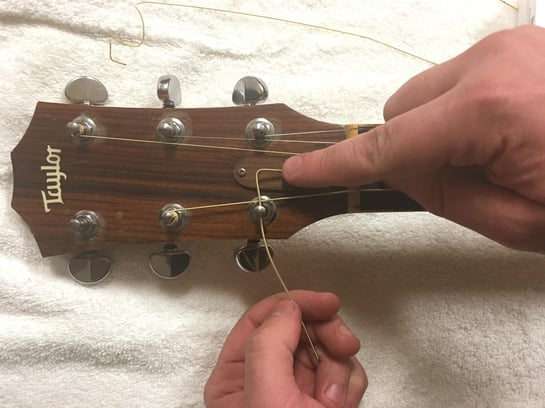
Tools you need to restring a guitar
You do not need a large tool kit. A few basic items make the job easier and safer.
• A new set of guitar strings with the correct gauge
• A digital guitar tuner
• A string winder
• A wire cutter
• A clean cloth
• A guitar stand or stable work surface
• A small container for bridge pins, if needed
A string winder is not essential, but it saves time. A tuner is essential because new strings stretch and will not stay in tune right away.
Check the guitar maker’s recommended string gauge before buying strings. Common electric guitar sets include .009 to .042 or .010 to .046. Acoustic guitar sets often range from light to medium gauge. Classical guitars need nylon strings, not steel strings.
Using the wrong string type can damage a guitar. Steel strings can place too much tension on many classical guitars. Nylon strings may not fit or sound correctly on a steel-string acoustic guitar.
Before you begin, place the guitar on a padded surface. A folded towel can protect the finish from scratches. This small step prevents many avoidable marks.

How to restring an acoustic guitar
An acoustic guitar is one of the most common instruments for a first restringing job. The bridge pins are the main feature that needs attention.
1. Loosen and remove the old strings
Turn each tuning peg until the string becomes loose. You can then unwind the string from the tuning post and remove it from the bridge.
Some players remove one string at a time. This keeps neck tension more stable and helps preserve the guitar’s current setup. Others remove all six strings so they can clean the fingerboard. Both methods can work on most guitars.
If you remove all the strings, place the bridge pins in a safe container. They are small and easy to knock onto the floor.
2. Clean the guitar
Use a dry, soft cloth to wipe dust from the body and fingerboard. Avoid household cleaners unless they are made for guitar finishes.
If the fingerboard is unfinished rosewood, ebony, or another porous wood, a small amount of suitable guitar fingerboard conditioner may help. Maple fingerboards often need different care. When unsure, follow the guitar maker’s care instructions.
3. Insert the new string
Put the ball end of the string into the correct bridge hole. Press the bridge pin into place while guiding the string’s ball end under the pin.
Pull the string gently to make sure the ball is seated correctly. If the ball rests against the bottom of the pin instead of the bridge plate, the pin may pop out when you tune the guitar.
4. Wind the string
Guide the other end to the correct tuning post. Leave about two to three inches of extra string for the thicker wound strings. Leave a little more for the thinner plain strings.
Bend the string slightly near the tuning post. Wind it downward in clean coils. The coils should move toward the headstock rather than stacking randomly.
5. Tune and stretch the string
Bring the string close to pitch with a tuner. Then pull it gently away from the fingerboard at several points. Tune it again and repeat the process until the pitch becomes more stable.
Do not pull hard. Gentle stretching is enough. Excessive force can break a new string or damage the bridge.
This process shows why people ask, “is it hard to restring a guitar?” The steps are simple, but small details such as bridge pin placement and winding direction affect the result.
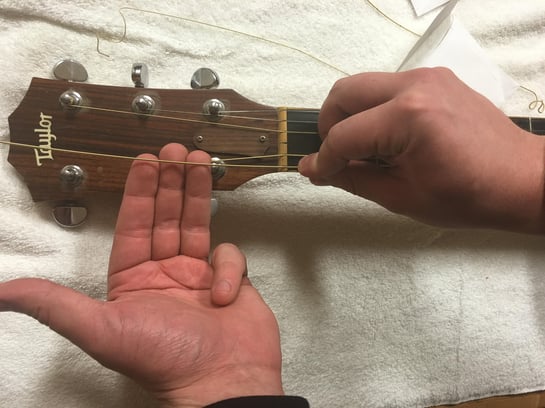
How to restring an electric guitar
Electric guitars come with several bridge designs, so the process depends on the model. A fixed bridge is usually simple. A tremolo bridge can be more demanding.
Fixed-bridge electric guitar
Loosen and remove the old strings. Feed each new string through the bridge or through the body, depending on the guitar design.
Pull the string toward the headstock and leave enough slack for several clean wraps. Insert the string into the tuning post, bend it, and wind it downward.
Tune each string gradually. This helps the neck adjust smoothly and makes the final tuning process easier.
Tremolo bridge
A standard tremolo bridge may move when you remove the strings. Replacing all six strings at once can change the bridge angle and make tuning frustrating.
For a first attempt, replace one string at a time. This keeps the bridge closer to its normal position.
A locking tremolo, such as a double-locking system, has extra clamps at the nut and bridge. You may need an Allen wrench, careful tension balancing, and more time. Many beginners find this type of guitar restringing difficult.
If the bridge tilts sharply forward or backward, stop and check the string gauge and tuning method. Do not force the bridge into place.

How to restring a classical guitar
Classical guitars use nylon strings, and the bridge attachment is different from a steel-string acoustic guitar. The strings usually need a small knot or loop at the bridge.
The bass strings have a wound surface. The treble strings are often clear or colored nylon. Each string must be tied securely so it does not slip through the bridge.
Leave enough string at the tuning post to create several wraps. Nylon stretches more than steel, so new classical guitar strings may need repeated tuning for several days.
Never put steel strings on a classical guitar unless a qualified repair professional confirms that the instrument can handle them. The extra tension may damage the neck, bridge, or top.
Is it hard to restring a guitar with nylon strings? It can be slightly harder at first because the bridge knot takes practice. Once you learn the knot, the process becomes routine.

Step-by-step tips for better results
A few habits can make restringing faster and more reliable.
Confirm the string order before removing anything. The thickest string is usually the low E, while the thinnest is the high E.
Match each string to the correct tuning post.
Keep the windings neat and moving downward.
Avoid crossing the string over itself.
Tune slowly during the first pass.
Stretch each string gently.
Check the bridge and tuning posts before playing.
Cut excess string only after the string holds its pitch.
The number of windings depends on the guitar and string. Too few wraps may cause slipping. Too many wraps can create a crowded tuning post and make tuning less precise.
A useful rule is to leave more slack for thin strings and less slack for thick strings. The goal is enough winding to hold the string securely without creating a large coil.
When I review common restringing mistakes, the same pattern appears: people focus on speed instead of alignment. A neat string path from bridge to tuning post usually solves many tuning problems.

Common restringing mistakes to avoid
Even when you understand the steps, mistakes can happen. Most are easy to correct.
Winding the string upward
The string should usually wind downward on the tuning post. Upward winding can increase the break angle and make tuning less stable.
Leaving too much slack
Extra slack creates many loose wraps. The string may take longer to settle and can feel difficult to tune.
Failing to seat the bridge pin
On an acoustic guitar, the string ball must sit against the bridge plate. If it sits under the bridge pin, the pin may rise or the string may pop out.
Cutting the string too early
Do not cut the extra length until the string is attached and holding tension. Cutting too soon can leave you with a string that is too short.
Tuning too high
New strings can break if you tune past the correct note. Use a digital tuner and turn the peg slowly.
Mixing string gauges
A mixed set can change the feel and setup of the guitar. It may also affect neck relief, intonation, and bridge tension.
Ignoring the guitar’s setup
Changing from light to heavy strings can alter the neck and action. A major gauge change may require a truss rod or intonation adjustment by a qualified technician.
These mistakes explain why some people think restringing is hard. The task itself is simple, but accuracy matters.

How long does it take to restring a guitar?
A beginner may need 20 to 40 minutes. An experienced player can often restring a standard guitar in 10 to 15 minutes.
The time depends on the bridge, string type, and whether you clean the guitar at the same time. A floating tremolo or locking system may take much longer.
New strings also need time to settle. They may go out of tune several times during the first playing session. This does not always mean the restringing job was done incorrectly.
Tune the guitar, stretch the strings gently, and tune it again. Repeat this cycle until the strings hold pitch.
If the guitar still loses tune after a day or two, inspect the wraps, bridge, nut, and tuning machines. A worn nut or slipping tuner may be the real cause.
When should you ask a professional for help?
Most players can restring a regular acoustic or electric guitar at home. Professional help is useful when the instrument has a complex bridge or shows signs of damage.
Consider visiting a guitar technician if:
• The bridge is lifting from the guitar top.
• The neck has a severe bow or twist.
• The tuning machines slip or feel damaged.
• The guitar uses a locking tremolo system you have never serviced.
• You want to change to a much heavier or lighter string gauge.
• The strings sit unusually high above the fingerboard.
• The guitar buzzes badly after the string change.
A technician can also inspect neck relief, action, intonation, nut slots, and bridge condition. Restringing does not replace a full setup.
There is no shame in asking for help. A professional setup can protect an expensive instrument and teach you how the guitar should feel when adjusted correctly.
Benefits of learning to restring your guitar
Learning this basic skill saves time and gives you more control over your instrument.
You can replace a broken string before a rehearsal or performance. You can also clean the guitar more often and notice problems before they become serious.
Other benefits include:
• Lower maintenance costs
• Better understanding of tuning stability
• Faster string changes before shows
• More confidence with guitar care
• Easier testing of different string gauges
• A cleaner and more consistent sound
Fresh strings often sound brighter and feel more responsive. The change is not magic, but old strings can collect dirt, lose clarity, and feel rough under the fingers.
Many players also learn more about their instrument by changing strings. You begin to notice the nut, bridge, tuning machines, neck relief, and fret condition.
How often should you restring a guitar?
There is no single schedule for every player. A casual player may change strings every two to three months. A daily player may need new strings every few weeks.
Change them sooner if they feel rough, look corroded, sound dull, or will not stay in tune. Sweat and humidity can shorten string life.
Coated strings may last longer for some players, but they can feel different and cost more. The best choice depends on tone, comfort, budget, and playing habits.
Wipe the strings with a clean cloth after playing. Store the guitar in a stable environment and wash your hands before playing. These simple habits can extend string life.
Frequently Asked Questions About Is It Hard to Restring a Guitar
Is it hard to restring a guitar for a complete beginner?
No. A beginner can usually learn the process with a standard acoustic or electric guitar in one careful session. The first attempt may take longer, but the basic steps are easy to repeat.
How long does it take to restring a guitar?
A first attempt may take 20 to 40 minutes. With practice, many players can restring a simple guitar in about 10 to 15 minutes.
Should I replace all guitar strings at once?
Replacing all strings at once is common and allows the guitar to receive a fresh, balanced set. If your guitar has a floating tremolo, replacing one string at a time may make tuning easier.
Can I restring a guitar without a string winder?
Yes. You can turn the tuning pegs by hand, but a string winder makes the job faster. You still need a tuner and wire cutters for the best results.
Why do new guitar strings keep going out of tune?
New strings stretch as they settle. Tune them several times and stretch them gently by hand; if the problem continues, check the wraps, bridge, nut, and tuning machines.
Is restringing a classical guitar different?
Yes. Classical guitars use nylon strings that often require a bridge knot or loop. They also stretch more than steel strings, so they may need repeated tuning during the first few days.
Can restringing damage a guitar?
It can cause problems if you use the wrong string type, force a bridge, or make a large gauge change without a setup. Careful work with the correct strings is safe for most guitars.
Conclusion
So, is it hard to restring a guitar? For most standard acoustic and electric guitars, it is a simple skill that takes patience more than special talent. Use the correct strings, wind them neatly, seat the bridge properly, and tune slowly.
Complex tremolo systems, nylon-string bridges, damaged parts, and major gauge changes deserve extra care. Start with a simple guitar, follow each step, and give yourself time to learn.
Try your next string change at home, keep a tuner nearby, and save this guide for reference. With practice, you will make restringing part of your normal guitar care routine.