

Yes, there are left handed guitars, made with reversed controls, strings, and body shapes for left handed players.
If you are left handed, you do not need to force your hands into an awkward playing position. As a guitar teacher and long-time player, I have seen how the right left handed guitar can improve comfort, chord changes, picking control, and confidence from the first lesson.
What Is a Left Handed Guitar?
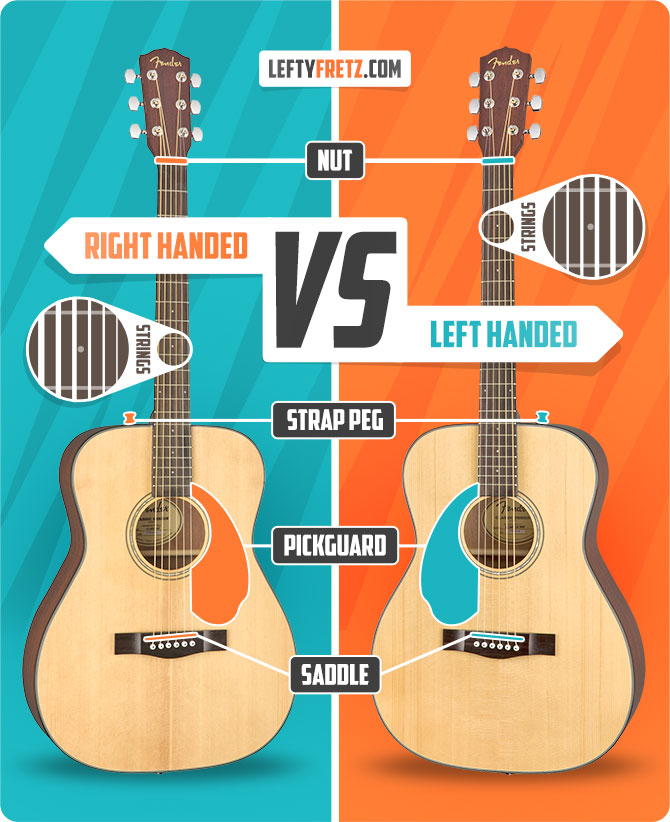
A left handed guitar is built for a player who holds the neck with the right hand and strums or picks with the left hand. Its body, strings, controls, bridge, nut, and pickup layout are designed to match that position.
On a standard right handed guitar, the thickest string sits at the top when you hold the guitar in the usual playing position. On a left handed guitar, the string order is reversed so the low E string remains in the correct place for left handed playing.
This design is more than a body flipped from one side to the other. A true left handed guitar may include:
• A reversed body shape
• Reversed volume and tone controls
• A left handed pickguard
• A left handed bridge and saddle
• A nut cut for the correct string order
• A reversed cutaway for easier access to upper frets
• Internal bracing suited to the guitar’s orientation

Are There Left Handed Guitars in Every Style?
Yes, there are left handed guitars in most popular styles. However, the number of choices may be smaller than it is for right handed players.
You can find left handed versions of many:
• Electric guitars
• Classical guitars
• Bass guitars
• Seven string guitars
• Travel guitars
• Semi-hollow guitars
• Baritone guitars
Popular guitar brands often make left handed versions of their best-known models. Still, not every color, pickup setup, or limited-edition model is available for both hand positions.
Electric guitar players often have the widest selection. Models based on classic single-cut, double-cut, and offset designs are commonly sold in left handed versions. Acoustic players also have good options, though the range can be more limited at lower price points.
A local shop may have only a few left handed guitars in stock. That does not mean they are rare. It often means the store expects more demand for right handed models and orders left handed instruments only when a customer requests one.

How Does a Left Handed Guitar Differ From a Right Handed Guitar?
The biggest difference is the direction of the instrument’s working parts. A left handed guitar is designed so your left hand strums, picks, or controls a bowing technique, while your right hand forms notes on the fretboard.
Here are the main differences to check.
String Direction
The strings must be arranged in the correct order. The low E should be closest to your head when the guitar is held in the left handed position, while the high E should be closest to the floor.
This order affects chord shapes, scales, riffs, and picking patterns. If the strings are arranged incorrectly, common lessons and chord charts will not feel natural.
Body Shape
Many electric guitars have a strong visual direction. The cutaway, waist, horn, and control plate may all be reversed on a left handed model.
Some simple body shapes are nearly symmetrical. Others, such as offset or single-cut designs, can feel very different when played upside down.
Controls and Pickups
On a true left handed guitar, the volume and tone controls are placed for comfortable access. Pickup selector switches may also be moved or reversed.
This matters during live playing. You should not have to reach across the strings or hit the wrong control while changing pickups or adjusting volume.
Bridge and Nut
A guitar nut has slots made for specific string thicknesses. The low E slot is wider than the high E slot. A left handed guitar needs a nut cut for its reversed string arrangement.
Acoustic guitar saddles can also have angled compensation. This helps each string play in tune as you move up the neck. Reversing a standard saddle may cause poor intonation.

Can You Turn a Right Handed Guitar Into a Left Handed Guitar?
Sometimes, but the result depends on the guitar. A simple, symmetrical guitar may be converted with a new nut, a setup, and possibly a new pickguard.
A professional guitar technician may need to:
Replace or recut the nut
Reverse or replace the bridge saddle
Change the string direction
Move or replace the pickguard
Adjust the pickups
Set the neck relief and action
Correct the intonation
Move the strap button if needed
A right handed electric guitar with a symmetrical bridge may be easier to convert. An acoustic guitar with unusual bracing, a directional bridge, or a shaped top may be a poor candidate.
Simply changing the strings is usually not enough. The nut slots may be wrong, the saddle may face the wrong direction, and the controls may be difficult to reach. The guitar may play, but it may not feel or sound as it should.
I once saw a beginner buy a right handed guitar because it was heavily discounted. The player strung it backward and tried to learn from standard chord charts. The low strings felt wrong, the intonation was poor, and practice became frustrating. The lesson was simple: saving money at checkout can cost more after repairs and setup work.

Are Left Handed Guitars More Expensive?
They can be, but not always. The price depends on the brand, materials, production volume, and availability.
A manufacturer may produce fewer left handed guitars. That smaller production run can raise the price or reduce discounts. Some shops may also charge more to special-order a left handed model.
Other costs may include:
• Shipping from another store
• A professional setup
• A left handed case or gig bag
• Replacement parts
• Custom colors or pickups
• Import fees for specialty models
Do not assume every left handed guitar costs more. Many beginner and mid-range instruments are priced close to their right handed versions.
It is wise to compare the full cost, not just the tag. A slightly more expensive guitar that fits your body and plays well may be a better value than a cheap guitar that needs several repairs.

What Are the Benefits of Playing a Left Handed Guitar?
The main benefit is natural control. Your stronger or more coordinated hand handles the strumming and picking motion, which can make rhythm feel easier to develop.
A properly fitted left handed guitar can also provide:
• Better wrist comfort
• More natural picking control
• Easier reach across the strings
• Less shoulder and arm tension
• A more relaxed learning position
• Better access to left handed lessons and chord shapes
Many beginners worry that their fretting hand must be the stronger hand. In practice, both hands need training. The picking hand controls timing, attack, rhythm, muting, and dynamics. For some players, keeping that work in the left hand feels much more natural.
Comfort also affects motivation. If the instrument feels like a chair built for the wrong side of your body, you may avoid practice. A comfortable guitar invites you to pick it up.

Are There Left Handed Guitars for Beginners?
Yes, there are left handed guitars made for beginners. The best beginner model should feel comfortable, stay in tune, and have an easy-playing neck.
For a first guitar, focus on these features:
• A comfortable body size
• Low but clean string action
• Stable tuning machines
• A straight neck
• Good fret finishing
• A reliable warranty
• Easy access to replacement strings
A beginner does not need the most expensive instrument. However, extremely cheap guitars can create problems. High string action, sharp fret ends, and poor tuning stability can make learning feel harder than it needs to be.
For children, body size is especially important. A full-size guitar may be too large for a young player. A three-quarter-size or short-scale left handed guitar can make practice more comfortable.
Try several guitars if possible. Sit with the instrument for at least a few minutes. Check whether your shoulder stays relaxed and whether your wrist bends sharply. These small details matter over months of practice.

How Should You Choose a Left Handed Guitar?
Start with your playing goals. An acoustic guitar suits songwriting, folk, country, and simple unplugged practice. An electric guitar may be better for rock, blues, metal, jazz, or players who want lighter strings and more sound options.
Use this simple buying process:
Decide whether you want acoustic, electric, classical, or bass.
Choose a realistic budget that includes accessories.
Check the scale length and body size.
Confirm that the instrument is a true left handed model.
Inspect the nut, frets, bridge, and tuning machines.
Plug in an electric model and test every pickup and control.
Check that the guitar stays in tune during basic chords.
Ask whether the store provides a setup.
Compare the return policy before ordering online.
For electric guitar players, also check the cable jack and control placement. Some designs place the jack in a way that feels different when reversed.
For acoustic players, look closely at the pickguard and saddle. A decorative detail may be reversed, but the internal construction should also support the left handed orientation.

Where Can You Buy Left Handed Guitars?
You can buy left handed guitars from local music stores, online retailers, used marketplaces, and directly from some manufacturers.
A local shop lets you test the neck, body shape, action, and balance before buying. This is valuable because two guitars with the same measurements can still feel very different.
Online stores offer a larger selection. Before ordering, check:
• Detailed left handed product photos
• The exact model number
• Return shipping rules
• Warranty coverage
• Setup policies
• Customer reviews from left handed players
Used guitars can offer excellent value. Inspect the neck, frets, bridge, electronics, and truss rod before buying. Ask for clear photos of the headstock, body, neck joint, and fretboard.
Be careful with listings that say “lefty conversion” without explaining the work. A converted instrument may be perfectly usable, but you should know whether the nut, saddle, bridge, and controls were professionally changed.
Do Left Handed Players Have Fewer Choices?
Usually, yes. There are left handed guitars, but left handed players often face fewer color, finish, pickup, and model choices.
This is mainly a production issue. Manufacturers produce more right handed instruments because most guitar buyers are right handed. Stores then stock more right handed guitars because they expect them to sell faster.
The limitation is real, but it is improving. Major brands now offer left handed versions of many popular designs, and online shopping has made specialty models easier to find.
You may need to compromise on:
• Finish color
• Pickup configuration
• Wood choice
• Body style
• Availability in local stores
• Delivery time
A useful approach is to rank your priorities. Decide whether playability, sound, price, appearance, or brand matters most. A comfortable guitar with your second-choice color is often a better choice than a perfect-looking guitar that does not fit your hands.
Famous Left Handed Guitar Players
Many well-known musicians have played left handed guitars. Jimi Hendrix is one of the most famous examples. He commonly played a left handed guitar strung for left handed use, although he was also known for using right handed instruments in certain ways.
Paul McCartney is strongly associated with left handed bass playing. Kurt Cobain also played left handed guitar, helping many younger players see left handed instruments as a normal part of guitar culture.
Other famous left handed musicians have used unusual setups. Some played right handed guitars upside down, while others used custom instruments. These examples show that there is no single rule for every player.
Still, copying a famous player’s setup is not always wise. A musician may choose an unusual guitar for sound, stage style, cost, or personal habit. Choose the setup that keeps your hands relaxed and helps you play well.
Common Mistakes Left Handed Guitar Players Should Avoid
The first mistake is buying a right handed guitar without testing a left handed model. Some players assume they can adapt, but the mismatch may slow down rhythm and chord learning.
Another mistake is using a reversed right handed guitar without a proper setup. The strings may fit poorly in the nut, and the guitar may not play in tune across the neck.
Avoid these problems:
• Do not judge a guitar only by its price.
• Do not ignore sharp fret ends.
• Do not accept high string action without asking for a setup.
• Do not assume every flipped guitar is a left handed guitar.
• Do not buy a rare model without checking parts availability.
• Do not forget to budget for a tuner, strap, picks, and a case.
My most practical advice is to spend time holding the guitar before making a decision. Your first instrument should feel like a tool you want to use, not a puzzle you must solve.
Left Handed Guitar Setup and Maintenance
A left handed guitar needs the same basic care as any other guitar. Keep it tuned, wipe the strings after playing, and store it away from extreme heat and moisture.
Ask a guitar technician to check the setup when you first buy the instrument. The technician can adjust the neck, action, pickup height, bridge, and intonation.
Replace strings in the correct left handed order. If you use a string-changing tool, confirm that the bridge and tuning posts are designed for that direction.
A humidifier may help acoustic guitar owners in dry climates. Wood expands and contracts with changes in humidity. Large changes can affect the neck, bridge, and top of the guitar.
Regular maintenance helps the guitar stay comfortable. It also makes it easier to tell whether a problem comes from your technique or from the instrument itself.
Frequently Asked Questions About Are There Left Handed Guitars
Are there left handed guitars for adults?
Yes, there are left handed guitars for adults in acoustic, electric, classical, and bass styles. They are available from beginner models to professional instruments.
Are there left handed guitars for children?
Yes, many brands make smaller left handed guitars for children and younger players. Choose the size based on the child’s reach, comfort, and posture rather than age alone.
Can a left handed person play a right handed guitar?
Yes, some left handed people learn on right handed guitars. However, a left handed guitar may feel more natural if your left hand is better suited to strumming and picking.
Is it harder to learn on a left handed guitar?
No, the basic skills are not harder to learn on a left handed guitar. The main challenge is finding suitable teaching materials and instruments, since many lessons show a right handed viewpoint.
Can you restring a right handed guitar for left handed playing?
You can restring some right handed guitars, but a proper conversion may require a new nut, saddle, setup, or other changes. Simply reversing the strings may cause poor tuning, uncomfortable playability, and incorrect intonation.
Are left handed guitars more expensive?
Some left handed guitars cost more because they are produced and stocked in smaller numbers. Many beginner and mid-range models, however, have prices close to comparable right handed guitars.
Do left handed guitars sound different?
A true left handed guitar should not sound different simply because it is left handed. Sound depends more on the body, wood, pickups, strings, amplifier, setup, and playing technique.
Conclusion
Yes, there are left handed guitars, and they come in nearly every major guitar style. A true left handed model has the correct string order, body shape, controls, nut, bridge, and setup for comfortable left handed playing.
You can also convert some right handed guitars, but the work should be done carefully by a skilled technician. Before buying, test the guitar, check its construction, compare the full cost, and choose comfort over appearance alone.
The right instrument can make practice feel easier and more rewarding. Visit a local music store or compare trusted online retailers, try a few left handed guitars, and choose the one that makes you want to play.