

Loosen each string, cut it safely, and unwind it from the tuning pegs and bridge without forcing any guitar part.
Knowing how to remove strings from guitar safely helps protect the neck, bridge, finish, and your hands. The method changes slightly between acoustic, electric, and classical guitars, so this guide explains each step in clear terms. You will also learn which tools to use, what mistakes to avoid, and how to prepare for a smooth restring.

Why Learn How to Remove Strings From Guitar?
Guitar strings collect sweat, dirt, and oil over time. Old strings may sound dull, feel rough, or lose their ability to stay in tune. Removing them gives you a chance to install a fresh set and clean areas that are hard to reach while the strings are on.
Many players also remove strings before:
• Cleaning the fretboard
• Repairing a bridge or tuner
• Adjusting the truss rod
• Storing a guitar for a long period
A common concern is whether cutting all six strings at once can damage the neck. In most cases, a healthy guitar can handle this. Still, loosening the strings one at a time is a gentle choice, especially for vintage guitars, fragile instruments, and guitars with unknown repair history.
The safest rule is simple: reduce tension first, then remove the string. A tight string can act like a small steel spring. If you cut it without loosening it, the loose end may snap toward your hand or face.

Tools You Need
You do not need a large repair kit to learn how to remove strings from guitar. A few basic tools make the job easier and safer.
• Guitar string winder: Speeds up the removal process and helps turn tuning posts.
• Wire cutters: Cuts loose strings after tension is removed.
• Soft cloth: Protects the finish and catches dirt or small metal pieces.
• String removal tool: Useful for lifting acoustic bridge pins.
• Neck support: Keeps the guitar steady while it lies flat.
• Small container: Holds bridge pins, if your guitar uses them.
A string winder with a bridge-pin puller can be helpful for acoustic guitars. Use the puller gently. Never pry hard against the guitar’s finish or bridge, because that can leave dents or lift the bridge.
Before you begin, wash and dry your hands. Set the guitar on a stable surface with a soft towel underneath. Keep pets and children away from the work area, since cut strings can have sharp ends.
How to Remove Strings From an Acoustic Guitar
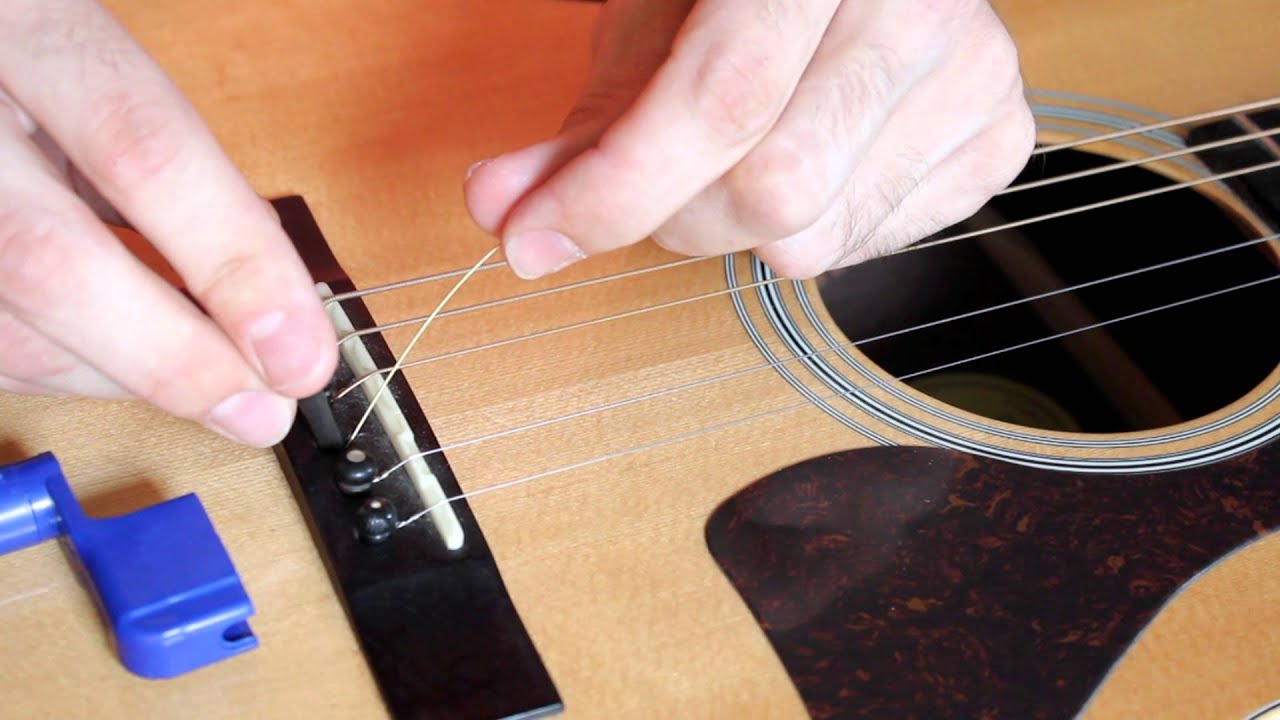
Most steel-string acoustic guitars use bridge pins. The strings pass through the bridge and are held in place by these small pins.
Step 1: Protect the guitar
Place the acoustic guitar face up on a padded surface. A folded towel under the neck can help keep the instrument steady, but make sure the neck is not forced into an unnatural position.
If you have a clip-on tuner, check the current tuning first. This is not required, but it gives you a useful reference when you install the new strings.
Step 2: Loosen the strings
Turn each tuning peg slowly until the string becomes loose. You can remove one string at a time or loosen all six before removing them.
For routine string changes, I prefer loosening all strings first and then removing them one by one. This keeps the process calm and avoids sudden tension changes. On a valuable or delicate guitar, follow the maker’s instructions or ask a qualified repair technician.
Step 3: Cut the loose strings
Once the strings have little or no tension, cut them near the sound hole or around the middle of the neck. Do not cut a string while it is tight.
Curl or wrap each cut string as you remove it. This prevents sharp ends from catching on clothing or scratching the guitar.
Step 4: Remove the bridge pins
Use your fingers first. If a pin is tight, use a bridge-pin puller or the notch on a string winder.
Do not pull the pin sideways with strong force. Instead, lift it gently while pushing the string down from the sound hole. The ball end of the string can sometimes press against the bridge plate, making the pin seem stuck.
Step 5: Remove the string from the tuning post
Pull the loose string out of the bridge hole. Then unwind the remaining part from the tuning post.
Place the old string in a safe container. Do not leave loose strings on the floor. They can scratch wood floors, puncture bags, or hurt bare feet.
Step 6: Wipe the guitar
With the strings off, wipe the top, neck, bridge, and headstock with a clean, dry cloth. If the fretboard needs deeper cleaning, use only a product approved for its finish and wood type.
Do not use household polish, alcohol, or water-soaked cloths. These products may damage the finish or dry out some unfinished fretboards.

How to Remove Strings From an Electric Guitar
Electric guitars use several bridge designs. The removal process depends on whether the strings load through the bridge, pass through the body, or attach to a tailpiece.
Standard fixed bridge
For a fixed bridge, loosen the string at the tuning peg first. Cut the slack string, then pull it out of the tuning post and bridge.
Some bridges have small holes in the rear. The string may pass through the bridge and come out near the pickups. Pull it through slowly so the ball end does not catch.
Tune-o-matic bridge and stop tailpiece
Many electric guitars use a Tune-o-matic bridge with a separate stop tailpiece. After loosening and cutting the string, pull it out through the tailpiece.
Be careful with the bridge and saddles. These parts can move or fall out on some designs. If a saddle or bridge piece comes loose, place it in a labeled container and note its original position.
Tremolo or vibrato bridge
Floating tremolo systems require extra care. The bridge may rise when strings are removed because the strings and springs balance each other.
If you remove all strings from a floating bridge, support the bridge with a soft block or follow the manufacturer’s instructions. Some players change one string at a time to keep the bridge close to its normal position.
Do not force a tremolo bridge back into place. If the bridge angle changes greatly, a professional setup may be needed after restringing.
Fender-style bridge
On many Fender-style guitars, the strings either load through the back of the bridge or through holes in the guitar body. Loosen the string, cut it, and pull it out from the correct side.
Watch the cut ends near the bridge. They can be sharp, and some bridge plates have edges that may scratch your fingers.
How to Remove Strings From a Classical Guitar
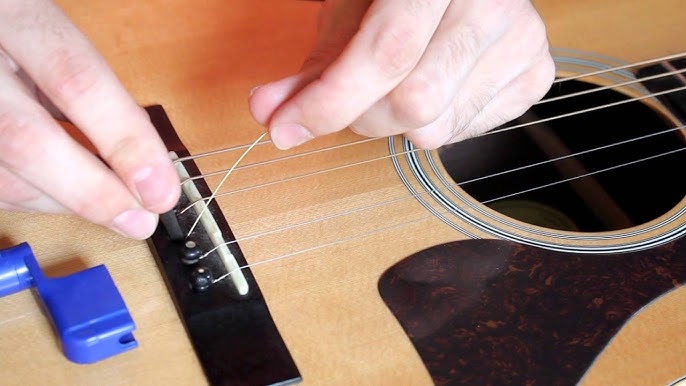
Classical guitars usually use nylon strings. They do not use bridge pins. Instead, each string is tied to the bridge and wrapped around a tuning post.
Nylon strings can stretch and unwind in unusual ways, so work slowly.
Turn the tuning peg until the string is completely slack.
Cut the string near the middle of the neck if it is difficult to handle.
Unwind the string from the tuning post.
Untie the string from the bridge.
Pull the string away from the guitar and discard it safely.
Some classical guitar bridges use different knot styles. If you plan to reuse the strings, take a photo of the bridge before removing them. For normal string replacement, however, old nylon strings are usually not worth saving.
Never install steel strings on a classical guitar. The guitar’s bracing, neck, and bridge are designed for much lower tension. Steel strings can cause serious structural damage.

Should You Remove One String at a Time?
Both methods can work, but each has advantages.
Removing one string at a time
This method keeps some tension on the neck and bridge. It can also help floating tremolo systems stay closer to their normal position.
It is a good choice when:
• You are changing strings during a performance or lesson.
• Your guitar has a floating tremolo.
• You are unsure how the bridge is supported.
• You want to keep the guitar stable while cleaning.
Removing all strings at once
This method gives you full access to the fretboard, bridge, and pickups. It is useful when you need to clean the instrument or perform maintenance.
A normal, healthy guitar is generally designed to handle the change in tension. Still, avoid sudden cuts. Loosen the strings first, and check for loose braces, lifting bridges, neck cracks, or other existing problems.
When I first began changing strings, I once pulled a tight acoustic string through the bridge too quickly. The ball end snapped against the bridge plate and made a sharp sound. Nothing was damaged, but it taught me to release tension fully and support the string from both sides.
Common Mistakes to Avoid
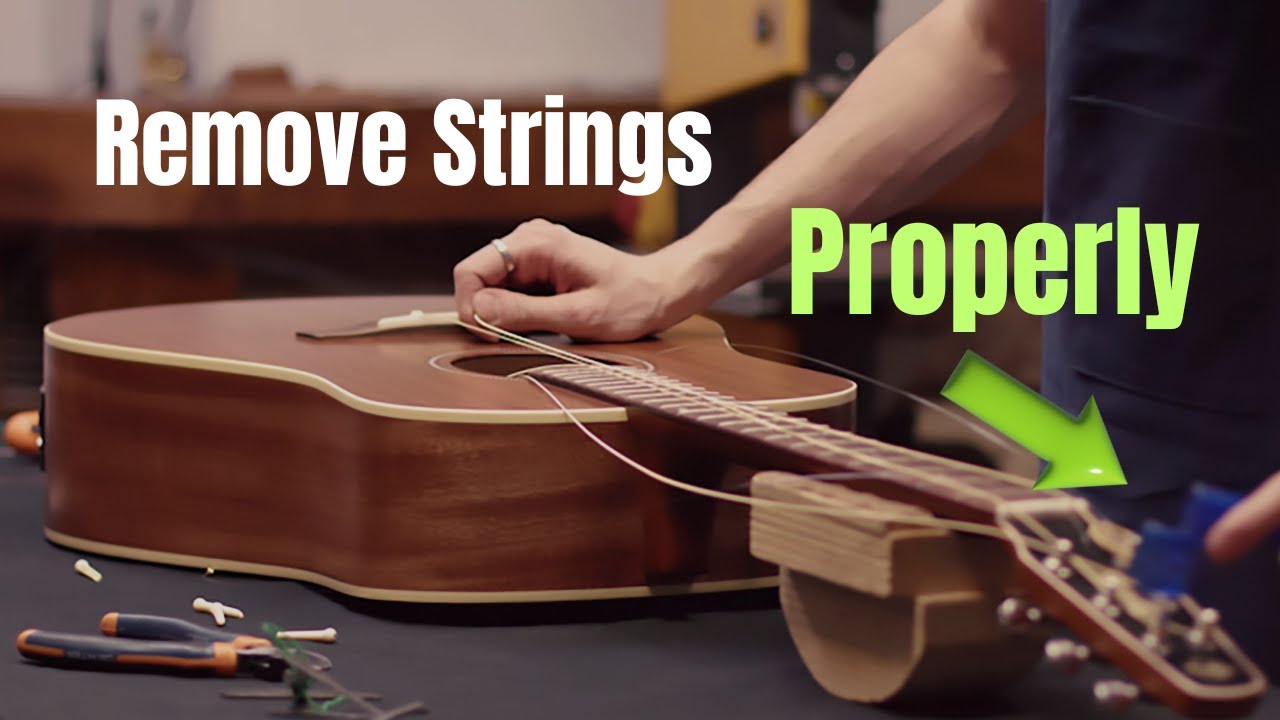
Learning how to remove strings from guitar is easy, but small mistakes can cause damage or injury.
• Cutting tight strings: Always loosen the string before using wire cutters.
• Pulling bridge pins sideways: Lift them straight and gently.
• Losing bridge parts: Keep pins, saddles, and small pieces in a container.
• Using metal tools on the finish: Cover the guitar with a cloth and use plastic tools when possible.
• Removing floating tremolo strings without support: The bridge may shift or tilt.
• Leaving sharp string ends exposed: Bend, wrap, or discard old strings right away.
• Using the wrong cleaning product: Check whether the fretboard is finished, unfinished, rosewood, ebony, maple, or another material.
• Installing the wrong string type: Classical guitars need nylon strings, while steel-string guitars need suitable steel or coated strings.
• Overlooking existing damage: Stop if you see a lifted bridge, cracked wood, loose tuner, or unusual neck movement.
If the guitar has sentimental or financial value, a repair shop can remove the strings during a full setup. This is especially wise for older instruments and guitars with previous repairs.
Cleaning and Inspecting the Guitar After String Removal
Once you know how to remove strings from guitar, use the open access to inspect the instrument. Look closely at the bridge, saddle, tuning machines, fret ends, and neck joint.
Check for:
• A bridge that lifts away from the top
• Cracks near the bridge or sound hole
• Loose bridge pins
• Deep fret wear
• Bent or loose tuning posts
• A saddle that rocks or moves
• Dirt packed around the frets
A dry microfiber cloth is enough for light dust. For a dirty fretboard, use a small amount of a guitar-safe cleaner made for that specific surface. Maple fretboards often have a finish, while many rosewood and ebony fretboards do not.
Do not pour cleaner onto the guitar. Apply a small amount to the cloth, not directly to the instrument. If you are unsure about the finish, stop and check the manufacturer’s care instructions.
After cleaning, inspect the new strings before installation. A rusty or damaged string can break early and make tuning difficult.

How to Dispose of Old Guitar Strings
Old guitar strings should not go into a recycling bin unless your local program accepts them. Metal recycling rules vary by location.
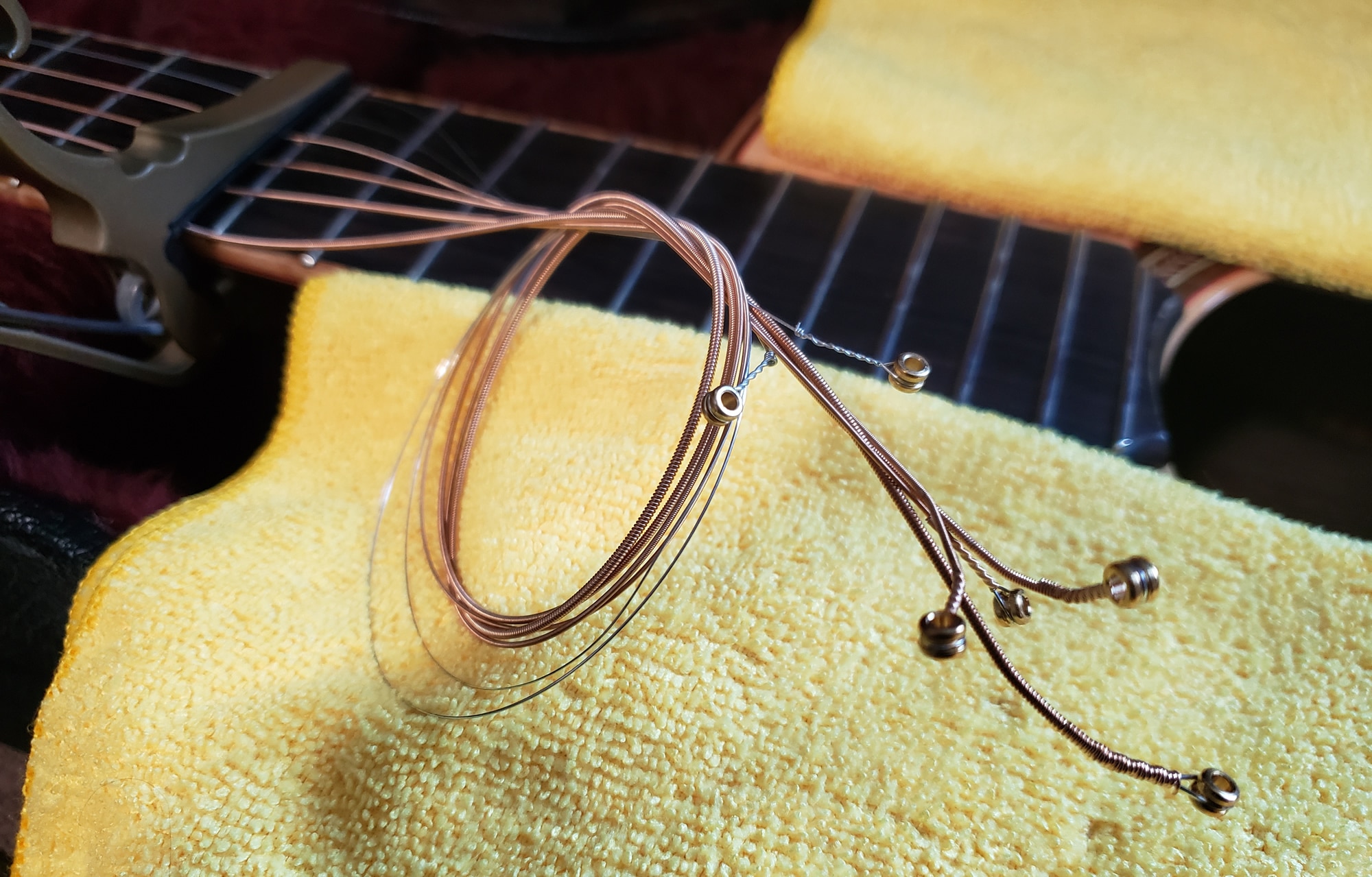
Wrap used strings into a tight coil and place them in a small box, envelope, or sealed container. Mark the container as sharp metal before throwing it away.
Some music stores and recycling programs collect used strings. Recycling can reduce waste, but local rules matter. Never place loose strings where they can injure sanitation workers, pets, or other people.
Frequently Asked Questions About How to Remove Strings From Guitar
Can I cut all six guitar strings at once?
Yes, you can cut all six strings after loosening them fully. For a floating tremolo, vintage guitar, or instrument with known damage, remove them one at a time or follow professional guidance.
Do I need to loosen guitar strings before cutting them?
Yes. A tight string stores tension and can snap back when cut. Loosen it until it feels slack, then cut and remove it safely.
How do I remove stuck acoustic guitar bridge pins?
Push the string down from inside the sound hole while gently lifting the pin. If it remains stuck, use a proper bridge-pin puller and avoid prying against the guitar’s finish.
Can I remove strings from a classical guitar the same way as an acoustic guitar?
The first step is similar, but classical guitar strings are tied to the bridge instead of held by bridge pins. Loosen the strings, unwind them from the tuners, and carefully untie the bridge knots.
Is it safe to remove all strings before cleaning the fretboard?
Yes, on most healthy guitars. Removing all strings gives better access, but floating tremolo bridges may move, and damaged or vintage instruments deserve extra care.
How often should I remove and replace guitar strings?
Replace strings when they sound dull, feel rough, fail to stay in tune, or show rust. How often this happens depends on playing time, hand sweat, string type, climate, and storage.
Conclusion
Learning how to remove strings from guitar takes only a few simple steps: loosen the tension, cut carefully, remove the bridge end, unwind the tuning post, and store sharp pieces safely. Acoustic, electric, classical, and tremolo-equipped guitars each have small differences, so identify the bridge before you begin.
Use the string change as a chance to clean and inspect your guitar. Work slowly, protect the finish, and stop if you find structural damage. With the right tools and a calm approach, you can remove guitar strings safely and prepare the instrument for a fresh, better-sounding set. Try the process on your next string change, and share your own tips or questions with other players.