

A slide on a guitar is a tube or bar that changes pitch by gliding along the strings.
If you have heard a guitar note cry, sing, or glide smoothly from one pitch to another, you have heard slide guitar. In this guide, I’ll explain what is a slide on a guitar, how it works, which materials and techniques matter, and how you can start playing without damaging your strings or losing control of your notes.
What Is a Slide on a Guitar?
A guitar slide is a small tube or solid bar that you place against the strings. Instead of pressing a string down behind a fret, you glide the slide along the string to change its pitch.
The slide does not shorten the string in the same way a fingertip does. It creates a movable contact point over the fretboard. When you move that contact point, the vibrating length of the string changes, which raises or lowers the note.
So, what is a slide on a guitar in simple terms? It is both:
• A physical tool made from glass, metal, ceramic, or another hard material
• A playing method that produces smooth changes in pitch
A normal fretted note has a clear start and end. A slide note can travel between pitches. This gives the guitar a vocal sound, much like a singer moving from one note to another.

How Does a Guitar Slide Work?
A guitar string produces a higher note when its vibrating length becomes shorter. On a standard guitar, your finger presses the string against a fret. The fret acts as a fixed point and creates a precise note.
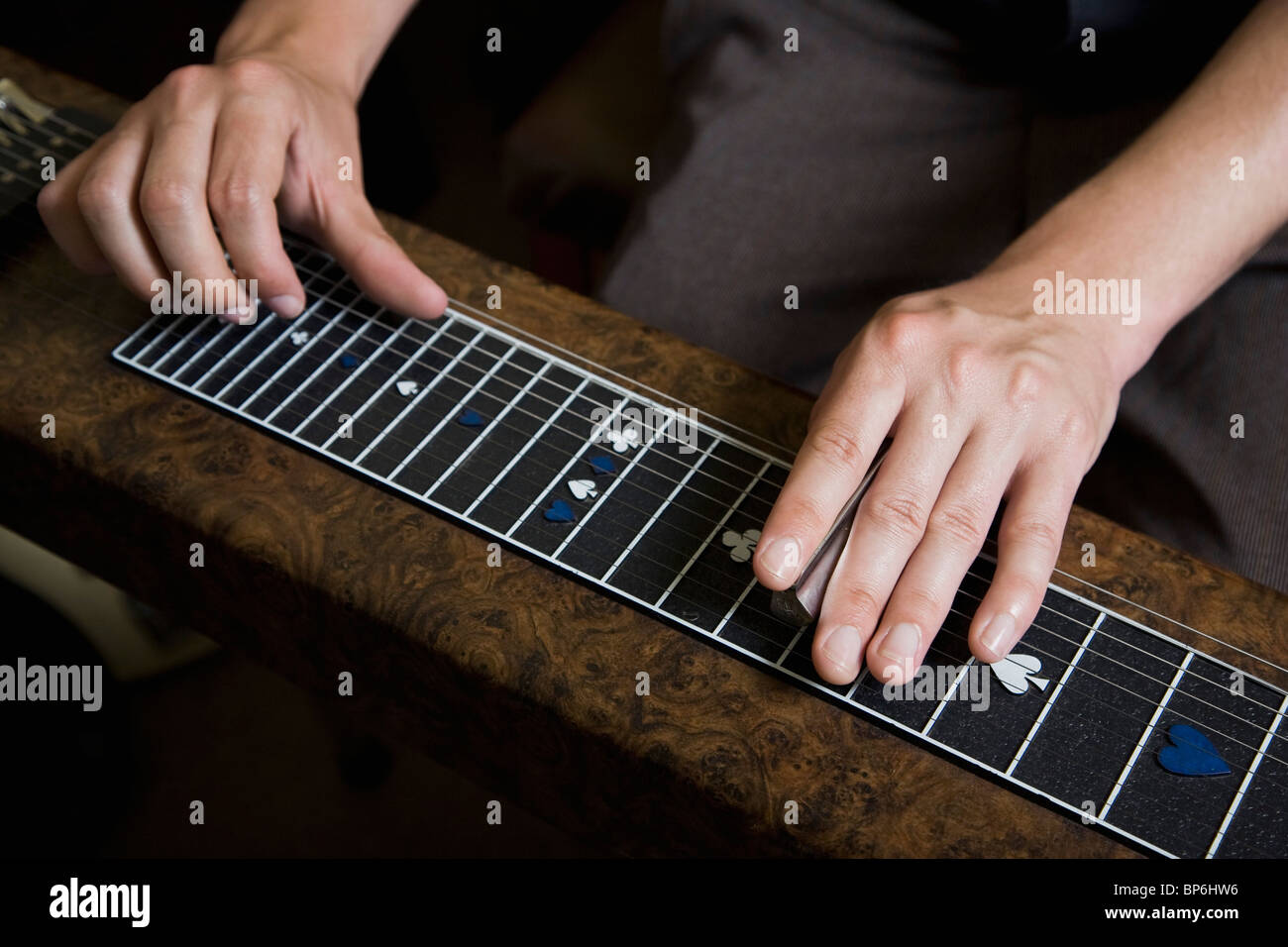
A slide works differently. You place its smooth surface directly above a fret and touch the string lightly. The slide becomes the new stopping point for the string. As you move it toward the guitar body, the pitch rises. As you move it toward the headstock, the pitch falls.
The key word is lightly. The slide should touch the string without pressing it firmly onto the fret. If you press too hard, the string may hit the frets and create a harsh buzzing sound.
Here is a simple example:
Play an open G string.
Place the slide above the 12th fret.
Touch the string gently with the slide.
Move the slide toward the 14th fret.
Listen as the note rises.
The slide must sit directly above the fret, not halfway between two frets. Your ears can detect even a small pitch error, so accurate positioning matters more than speed.
Guitar Slide vs. Regular Fretting
Understanding the difference between slide playing and regular fretting helps new players avoid common mistakes.
When you fret a note with your finger, you press the string down behind a metal fret. The fret sets the pitch for you. When you use a slide, you must find the pitch yourself by placing the slide over the correct fret.
This makes slide guitar both simple and demanding. The basic motion is easy to understand, but clean intonation takes practice.
Here are the main differences:
• Regular fretting uses finger pressure to create fixed notes.
• Slide playing uses a smooth surface to create moving notes.
• Fretted notes can use strong pressure.
• Slide notes need light contact.
• Fretted playing often uses several fingers at once.
• Slide playing may use one finger for the slide and the other fingers for muting.
• Fretted notes usually have less pitch movement.
• Slide notes can rise, fall, and shimmer between pitches.
One useful way to think about it is this: fretting is like stepping on a staircase, while sliding is like walking up a ramp. The staircase gives you fixed steps. The ramp lets you move continuously.

Where Do You Wear a Guitar Slide?
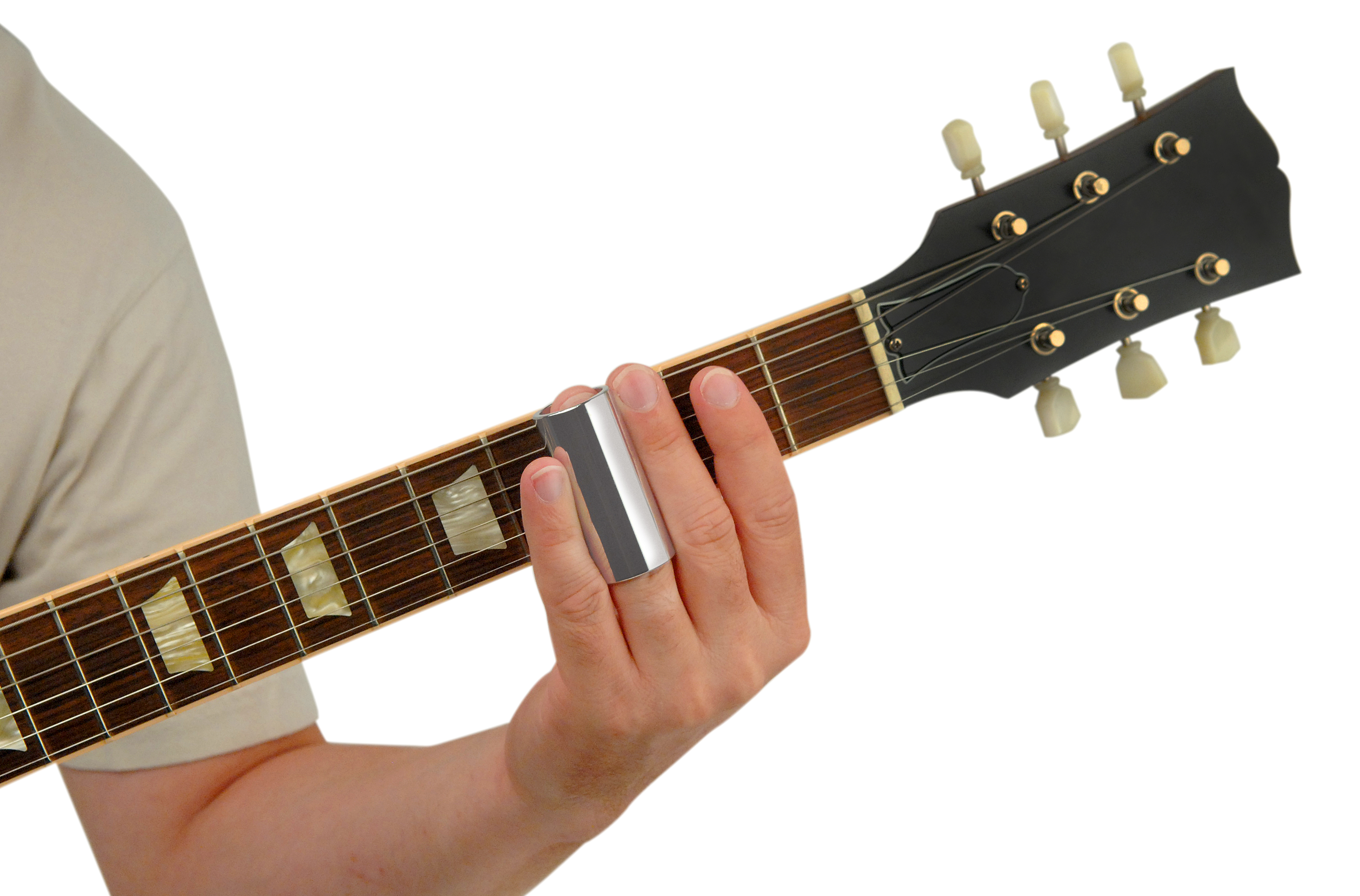
Most players wear a guitar slide on the ring finger, little finger, or middle finger. Each choice has practical benefits.
The ring finger is a popular option because it offers a good balance of control and reach. You can still use your index and middle fingers to mute strings. You may also have one free finger for normal fretting.
The little finger gives you the most freedom to switch between slide and regular playing. However, it can feel less stable at first. A short or lightweight slide often works better on the little finger.
The middle finger can provide strong control, but it may limit your ability to fret notes while holding the slide.
Your choice depends on your playing style:
• Ring finger: A strong all-purpose choice
• Little finger: Best for switching between slide and standard playing
• Middle finger: Useful for control and firm support
• Thumb or bottleneck position: More common in specialized techniques than in modern beginner playing
The slide should fit securely without cutting off circulation. If it spins, falls off, or feels painfully tight, try another size.

Types of Guitar Slides
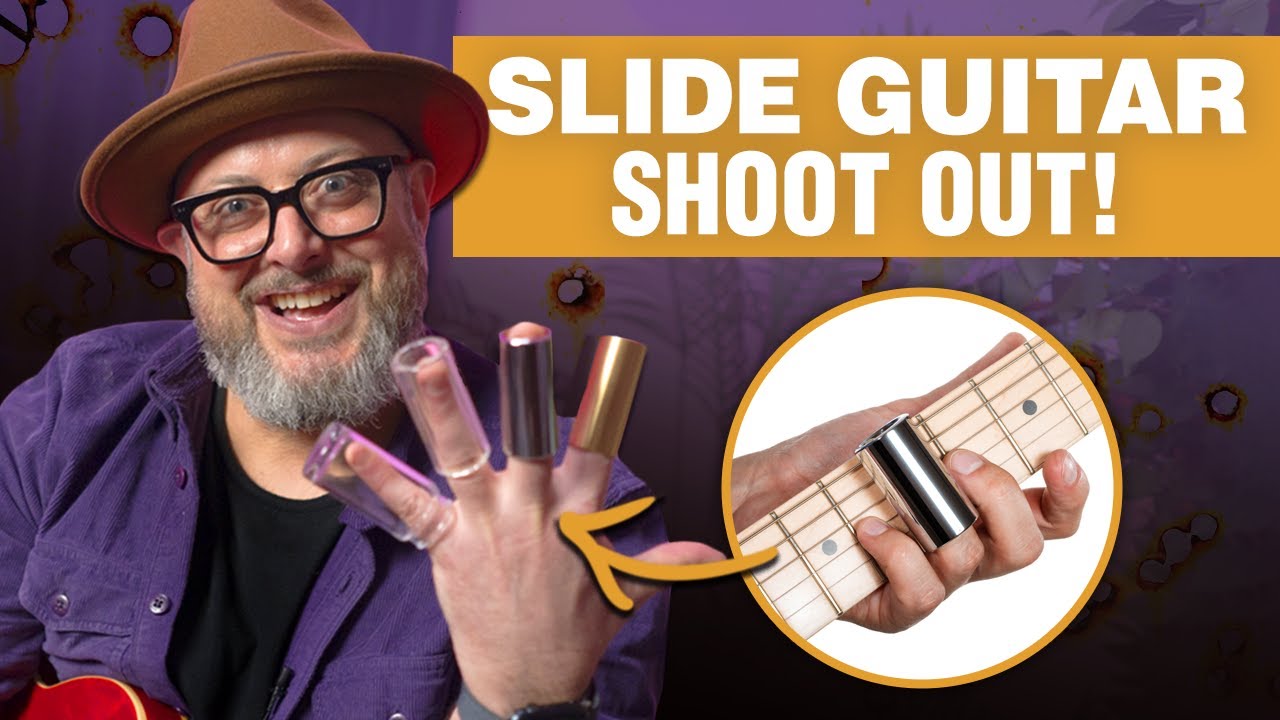
Guitar slides come in several materials and shapes. Each type has a different feel, tone, weight, and level of control.
Glass Slides
Glass slides often produce a smooth, warm, and rounded tone. Many players like them for blues, roots music, and acoustic guitar.
They also feel gentle against the strings. However, glass can break if you drop it on a hard floor. Thick glass gives more sustain but may feel heavier.
Metal Slides
Metal slides are commonly made from steel, brass, or chrome-plated materials. They often create a bright, sharp, and powerful tone.
Metal can be very durable. It may also produce more finger noise and feel less forgiving when your technique is not clean. A metal slide can sound excellent with electric guitar and higher gain.
Ceramic Slides
Ceramic slides sit between glass and metal in many ways. They can offer warmth, texture, and a balanced response.
They are often handmade, so their weight and surface may vary. A smooth ceramic slide can feel very comfortable, but rough edges should be avoided.
Brass Slides
Brass slides provide a strong, rich sound with noticeable weight. They can work well for players who want sustain and a bold attack.
The extra weight can also make fast movement harder. Beginners may prefer a lighter brass slide until their hand control improves.
Steel or Stainless Steel Slides
Steel slides are tough and often have a clear, direct sound. They suit electric guitar, blues, country, and rock styles.
Some steel slides are heavy enough to increase sustain. That same weight may make them tiring during long practice sessions.
Bottleneck Slides
A bottleneck slide is shaped like a tube and is often worn on one finger. The name comes from early players who used the necks of glass bottles as slides.
Today, bottleneck-style slides come in many sizes and materials. Their rounded shape can create a smooth, expressive tone.
Choosing the Right Guitar Slide
The best slide is not always the most expensive one. Fit, comfort, weight, and surface quality matter more than brand name.
Start with a slide that feels secure. You should be able to relax your hand while keeping the slide in place. A slide that is too loose will wobble. One that is too tight can cause pain and reduce control.
Consider these factors:
• Material: Choose glass for warmth, metal for brightness, or ceramic for a balanced tone.
• Length: The slide should cover the strings you need without hitting your neighboring fingers.
• Thickness: Thick slides often provide more sustain and stability.
• Weight: Light slides move quickly, while heavy slides can sound fuller.
• Inner diameter: The slide must fit your finger comfortably.
• Surface: The outer surface should be smooth and free from chips or sharp edges.
For a first slide, a medium-length glass or metal model is often a safe choice. If you play acoustic guitar, a lighter slide may feel easier. If you play electric guitar with sustained notes, a heavier slide may suit you.
A practical tip is to visit a music store and try several sizes. Small differences in finger shape can make a large difference in comfort.
How to Play Slide Guitar for the First Time
Learning what is a slide on a guitar is easy. Learning to control one takes patience. Begin with a single string and focus on clean sound.
Tune the guitar normally at first. Standard tuning makes it easier to compare slide notes with familiar frets. Later, you can explore open tunings.
Follow these steps:
Place the slide on your ring or little finger.
Rest your picking hand near the strings.
Pick the open high E string.
Touch the slide lightly above the 5th fret.
Move slowly between the 5th and 7th frets.
Stop when the note sounds in tune.
Repeat the movement on the B and G strings.
Keep the slide parallel to the frets. If one side of the slide touches the string before the other, the note may sound uneven.
Use your ears instead of relying only on your eyes. Play a fretted note at the 7th fret, then match it with the slide. This teaches your hand where the pitch should sit.
Do not rush. Slow movement builds control, and control creates a better tone.

Muting Unwanted Noise
Noise control is one of the hardest parts of slide guitar. The slide can easily make several strings ring at once.
Your picking hand should mute strings below the one you are playing. Your unused fretting-hand fingers can rest lightly behind the slide to stop strings above it from ringing.
For example, if you play the G string:
• Use the slide to touch the G string.
• Let one finger behind the slide lightly touch the strings above it.
• Use your picking hand to control the strings below it.
• Pick only the target string or a small group of strings.
This two-hand muting method takes practice, but it makes a major difference. Clean slide playing often comes from muting rather than from the slide itself.
In my experience teaching and testing slide techniques, beginners often focus too much on moving the slide. The bigger improvement usually comes from stopping unwanted sound. A slow, muted note sounds far better than a fast note surrounded by string noise.

Slide Guitar Tunings
You can use a slide in standard tuning, but open tunings make certain chords and melodies easier.
In an open tuning, the open strings form a chord. This means you can lay the slide across several strings at one fret and produce a full chord.
Common slide tunings include:
• Open G: D–G–D–G–B–D
• Open D: D–A–D–F#–A–D
• Open E: E–B–E–G#–B–E
Open G is popular in blues, country, and roots music. Open D and open E can produce a wide, powerful sound across all six strings.
Open E creates strong tension on the guitar neck because some strings are tuned higher than in standard tuning. If you use it, consider tuning carefully and avoid forcing the strings beyond their safe pitch.
Open D lowers some strings and can feel more relaxed. It is a useful starting point for chord-based slide playing.
Standard tuning remains useful for beginners because it keeps familiar note patterns. You do not need a special tuning to learn what is a slide on a guitar or to play your first slide melody.
Electric Guitar and Acoustic Guitar Slide Tone
Slide technique works on both electric and acoustic guitar, but the playing experience differs.
An acoustic guitar often produces a natural, woody slide tone. Its body adds volume and resonance. Light-gauge strings can feel comfortable, but very light strings may be harder to control with a heavy slide.
An electric guitar gives you more control over volume, sustain, and tone. Moderate gain can make slide notes sing. Too much distortion, however, can magnify every unwanted sound.
For acoustic guitar:
• Use a clean, smooth slide.
• Try medium or heavier strings if your setup allows it.
• Keep your picking clear and controlled.
• Use open tunings for broad chord sounds.
For electric guitar:
• Start with a clean or lightly driven amplifier.
• Reduce excess treble if the tone feels harsh.
• Use palm muting and behind-the-slide muting.
• Add reverb or a small amount of delay for space.
The guitar setup also matters. Very low action can make slide playing difficult because the slide may strike the frets. A slightly higher action often gives the slide more room.
Slide Guitar Techniques to Practice
Once you can produce clean notes, add movement and expression. Slide guitar becomes exciting when it sounds like a voice rather than a simple pitch exercise.
Sliding Into a Note
Start below the target fret and glide upward until the note is in tune. This creates a vocal-style entrance.
Sliding Away From a Note
Begin on the correct pitch, then move the slide down the neck. This creates a falling, expressive sound.
Vibrato
A slide vibrato comes from moving the slide quickly back and forth around the target fret. Keep the movement small at first. Wide vibrato can sound dramatic, but it may also sound out of tune.
Double-Stop Slides
Touch two strings at once and move the slide together. This creates a thicker sound often heard in blues and country music.
Behind-the-Slide Notes
Use a finger behind the slide to fret or mute notes. This advanced method allows more complex phrases and can combine normal fretting with slide sounds.
Sliding Chords
In an open tuning, place the slide across several strings and move it between fret positions. This creates full chord changes with one smooth motion.
Practice each technique slowly. A metronome can help you keep steady timing, but your first goal should be accurate pitch and clean sound.
Common Slide Guitar Mistakes
Most early problems come from too much pressure, poor muting, or incorrect slide placement.
Avoid these mistakes:
• Pressing the slide hard against the frets: This creates buzzing and makes movement difficult.
• Placing the slide between frets: The note will sound out of tune.
• Holding the slide at an angle: Some strings may sound sharp or flat.
• Ignoring unused strings: Extra noise can hide the main melody.
• Starting with heavy distortion: Distortion makes technique problems more obvious.
• Moving too fast: Speed cannot replace accurate pitch.
• Choosing an uncomfortable slide: Pain will affect your hand position and practice time.
One mistake I have seen many players make is trying to copy a fast blues lick before learning to stop the strings. A better path is to play one note, mute it, and then play the next note. This builds the control needed for confident phrases.
Your fingertips may also feel sore when you begin. Take short breaks, and stop if you feel sharp pain or numbness. Slide playing should challenge your coordination, not injure your hand.
Benefits and Limitations of Using a Guitar Slide
A guitar slide adds sounds that are difficult to create with ordinary fretting. It can make a simple guitar phrase feel emotional and human.
Key benefits include:
• Smooth movement between pitches
• Strong blues, country, rock, and roots tones
• Expressive vibrato
• Easy chord movement in open tunings
• A distinctive sound for recording and live performance
• New creative options for familiar scales
There are also limitations:
• Intonation depends on your ear and hand position.
• String noise can be difficult to control.
• Some guitar setups are not ideal for slide.
• Fast chord changes can be harder.
• A slide may limit normal fretting on the same hand.
• Heavy slides can cause fatigue.
A slide is not automatically better than normal guitar technique. It is another musical voice. The right choice depends on the sound you want and the control you can develop.
Does a Guitar Need a Special Setup for Slide?
A guitar does not always need a special setup for slide playing. Many players begin on a regular guitar with standard action and tuning.
However, a professional setup can improve the experience. If the strings sit very close to the frets, the slide may create buzzing. Slightly higher action can make clean slide notes easier.
A technician may check:
• String height
• Neck relief
• Nut height
• Fret condition
• Intonation
• String gauge
Do not raise the action too far without a clear reason. Excessively high strings can make regular fretting uncomfortable and may create intonation problems.
If you use one guitar for both regular and slide playing, aim for a balanced setup. You can also use a lighter slide and a gentle touch instead of making major changes to the instrument.
How to Practice Slide Guitar Effectively
Short, focused practice sessions work better than long sessions filled with tension. Ten to fifteen minutes of careful practice can build more skill than an hour of uncontrolled movement.
Try this routine:
Tune each string carefully.
Play open strings and listen to their tone.
Match fretted notes at the 5th and 7th frets.
Practice sliding between two notes.
Add slow vibrato.
Practice muting after every note.
Play a simple blues phrase with a metronome.
Record yourself once or twice a week. Slide intonation can feel accurate while you are playing but sound slightly sharp or flat in a recording.
Practice with both a clean tone and a mild overdrive tone. A clean sound shows technical problems clearly. A little overdrive helps you learn how your sound behaves in a real musical setting.
The biggest lesson is to listen closely. Slide guitar rewards patience. Your goal is not to cover the fretboard quickly. Your goal is to make each note feel deliberate.
Frequently Asked Questions About What Is a Slide on a Guitar
What is a slide on a guitar used for?
A guitar slide changes pitch by gliding along the strings instead of pressing them behind frets. It creates smooth note transitions, expressive vibrato, and a singing tone.
Can you use a slide on any guitar?
You can use a slide on acoustic, electric, classical, and resonator guitars. The string height, string material, and guitar setup may affect comfort and tone.
Which finger should hold a guitar slide?
Many players use the ring finger or little finger. The ring finger offers stability, while the little finger leaves more fingers free for normal guitar playing.
Is slide guitar hard to learn?
The basic idea is simple, but accurate pitch and clean muting take practice. Start with one string, use slow movements, and listen carefully for correct intonation.
Do you press a guitar slide onto the strings?
You should touch the strings lightly rather than press the slide firmly into the frets. Too much pressure causes buzzing, poor control, and unwanted noise.
What is the best slide for a beginner?
A comfortable medium-length glass or metal slide is a useful starting point. Choose a size that stays secure without feeling tight or painful.
Do you need open tuning to play slide guitar?
No. You can play slide in standard tuning. Open tunings make chord-based slide playing easier, but standard tuning is often simpler for beginners.
Why does my slide guitar sound out of tune?
The slide may be between frets, angled incorrectly, or moving past the target pitch. Place it directly above the fret and use your ears to match fretted notes.
Conclusion
A guitar slide is a simple tool that opens the door to a rich and expressive style. It rests lightly on the strings, changes pitch through movement, and can create warm blues tones, bright electric sounds, and smooth vocal-like melodies.
The best way to learn what is a slide on a guitar is to start slowly. Choose a comfortable slide, practice above the frets, mute unused strings, and train your ear to recognize accurate pitch.
Pick up a slide today and try a few gentle notes. Then explore open tunings, vibrato, and simple blues phrases. Share your favorite slide technique or keep learning through more guitar guides and practical lessons.