

A guitar setup adjusts your instrument’s neck, strings, bridge, and intonation for better playability and sound.
If you have ever wondered what is a guitar setup, think of it as a careful tune-up for the whole instrument. A setup can make stiff strings feel smoother, reduce buzzing, improve tuning, and help your guitar perform as its maker intended. This guide explains each adjustment, when you need one, what it costs, and how to avoid common mistakes.
What Is a Guitar Setup?
A guitar setup is a series of adjustments that improve a guitar’s playability, tone, tuning stability, and overall condition. A guitar technician checks the instrument from the neck to the bridge, then adjusts parts such as the truss rod, bridge, nut, pickups, and tuning hardware.
The goal is not to change the guitar into a different instrument. The goal is to help it work well with your playing style, string choice, and preferred tuning.
A complete setup often includes:
• Checking the neck relief
• Adjusting the truss rod
• Setting the string action
• Adjusting the bridge and saddles
• Checking and correcting intonation
• Inspecting the nut and fret condition
• Cleaning the fretboard and hardware
• Replacing and stretching the strings
• Checking tuning stability and electronics
On an acoustic guitar, the technician may also inspect the saddle, bridge, neck angle, and top. On an electric guitar, the work often includes pickup height, tremolo balance, and electronic checks.
In simple terms, what is a guitar setup? It is similar to an alignment service for a car. The guitar may still work without it, but small adjustments can make it feel and perform much better.
Why Does a Guitar Need a Setup?
Guitars are made from wood, metal, plastic, and other materials that respond to changes in temperature, humidity, tension, and use. Even a well-made guitar can slowly move out of adjustment.
New strings can also change the balance of the instrument. A heavier string set places more tension on the neck than a lighter set. Changing from standard tuning to drop tuning can affect the neck and intonation as well.
Common reasons for a guitar setup include:
• The strings feel too high or too low
• Notes buzz on some frets
• The guitar goes out of tune quickly
• Chords sound in tune, but higher notes do not
• The neck looks bowed or twisted
• The bridge or tremolo feels unstable
• The guitar has recently been shipped
• You changed string gauge or tuning
• You bought a used or new guitar
• The instrument has not been serviced for a long time
A setup is not always a sign that a guitar is poorly made. Seasonal changes alone can affect the neck. In many parts of the United States, a dry winter or humid summer can cause noticeable changes within weeks.
A useful lesson from working with guitars is that players often try to solve a setup problem with the wrong fix. They may buy new strings when the nut is binding, or tighten the truss rod when the real issue is uneven frets. Diagnosis should come before adjustment.

What Does a Guitar Setup Include?
The exact work depends on the guitar and its condition. Still, most professional setups follow a similar process.
Neck relief and truss rod adjustment
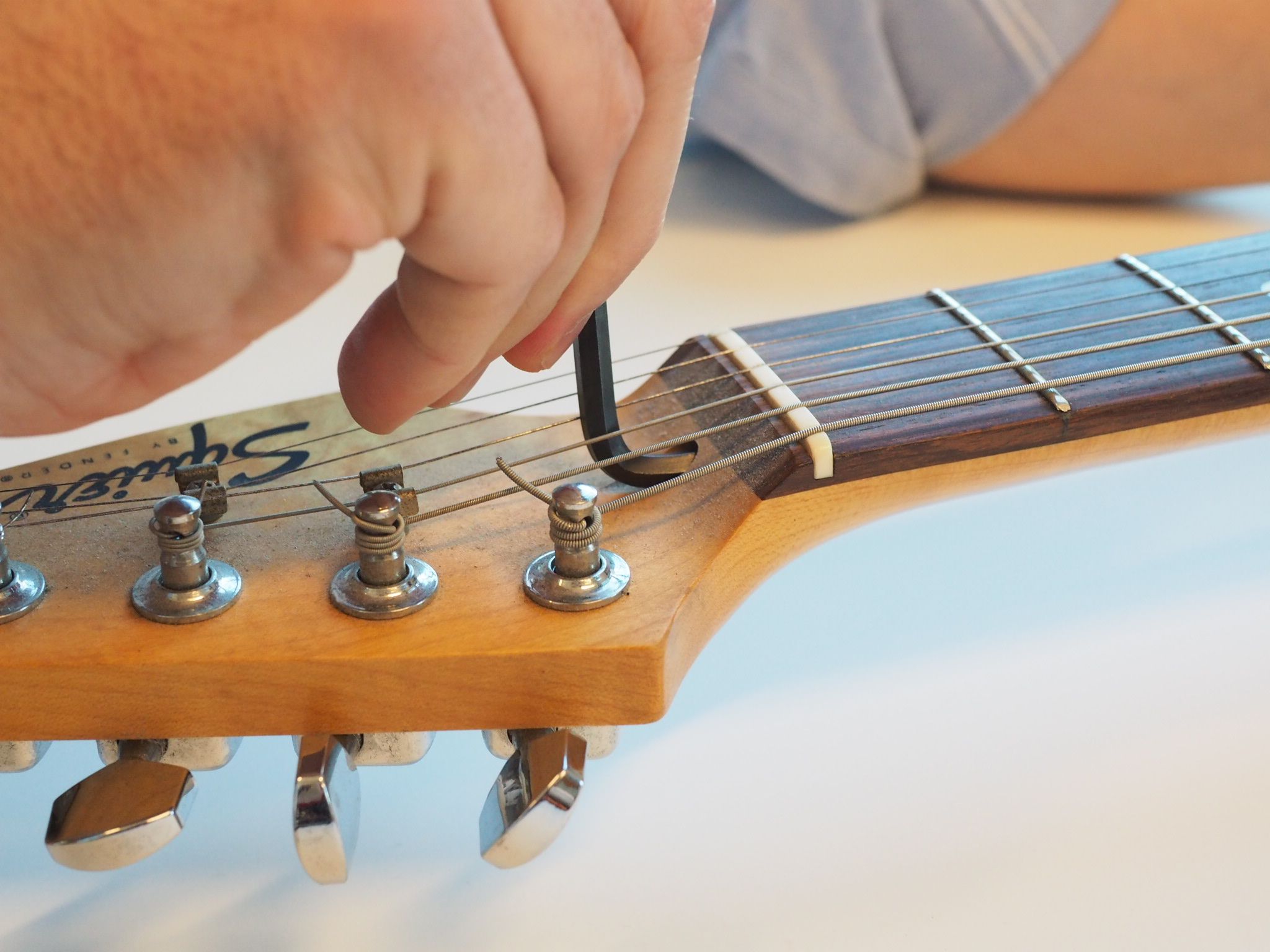
The truss rod is a metal rod inside the guitar neck. It helps control the neck’s curve against the pull of the strings.
A small amount of forward curve, called relief, is often useful. It gives the strings room to vibrate without hitting the frets. Too much relief can make the action feel high. Too little relief can cause buzzing, especially near the middle of the neck.
A technician checks relief by comparing the neck’s curve with the string path. The correct amount depends on the guitar, playing style, string gauge, and manufacturer guidance.
Never make large truss rod changes at once. A small adjustment can have a major effect, and excessive force can damage the rod or neck.
String action adjustment
String action is the distance between the strings and the frets. Low action feels fast and easy for many players, but it can create buzz if the frets, neck, or attack do not support it.
Higher action can provide more room for strong picking and wide bends. It may also suit acoustic players who want a fuller response. There is no single action height that works for everyone.
A setup technician measures action at specific frets, often near the 12th fret, and adjusts the bridge or saddle as needed. The final height should match your touch rather than an arbitrary number.
Intonation adjustment
Intonation controls whether the guitar plays in tune across the fretboard. A guitar can be perfectly tuned with open strings and still sound sharp or flat at the 12th fret.
On most electric guitars, the technician adjusts the saddle position. On many acoustic guitars, intonation depends on the saddle shape, fret placement, string choice, and neck geometry.
The usual check compares the open note with the fretted note at the 12th fret. If the fretted note is sharp, the string length usually needs to increase. If it is flat, the string length usually needs to decrease.
Nut inspection and adjustment
The nut holds the strings at the end of the fretboard. Its slots must have the right depth, width, and shape.
Nut problems can cause:
• Stiff tuning
• Clicking sounds while tuning
• Sharp notes near the first few frets
• Open-string buzzing
• Uneven string height
If the slots are too high, first-position chords may feel difficult. If they are too low, the open strings may buzz. Nut work requires care because removing too much material is hard to reverse.
Fret inspection
Frets should be level enough for clean notes. Worn or uneven frets can cause buzzing, dead notes, poor bends, and inaccurate setup results.
A technician may check for:
• Flat spots
• High frets
• Loose fret ends
• Sharp fret edges
• Uneven fret height
A basic setup cannot fix badly worn frets. The guitar may need fret leveling, a fret dress, or a full refret.
Pickup height and electronics
Electric guitar pickups need the right distance from the strings. If they sit too close, magnetic pull can affect sustain and tuning, especially with some single-coil designs. If they sit too far away, the output may sound weak.
A technician may also check:
• Volume and tone controls
• Pickup selector operation
• Output jack tightness
• Solder joints
• Grounding noise
• Tremolo or vibrato function
These checks are especially useful when a guitar has crackling controls, weak output, or intermittent sound.
Acoustic Guitar Setup vs. Electric Guitar Setup
The answer to what is a guitar setup changes slightly between acoustic and electric instruments. Both types need accurate neck relief, action, and intonation, but their hardware and common problems differ.
Acoustic guitar setup
An acoustic setup often focuses on:
• Neck relief
• String action
• Nut slot height
• Saddle height and shape
• Fret condition
• Bridge condition
• Neck angle
• Humidity-related movement
An acoustic guitar’s saddle is a key part of its action and tone. Lowering it can make the guitar easier to play, but removing too much material can create fret buzz and reduce resale value.
A technician must also look at the neck angle. If the neck has moved too far forward or the bridge area has changed, simply lowering the saddle may not solve the problem. In serious cases, the guitar may need a neck reset.
Electric guitar setup
An electric guitar setup often includes:
• Truss rod adjustment
• Bridge height adjustment
• Saddle intonation
• Nut inspection
• Pickup height
• Tremolo adjustment
• String replacement
• Electronic testing
Electric guitars offer more adjustment points than most acoustic guitars. That flexibility is useful, but it also creates more chances for incorrect adjustment.
For example, a floating tremolo bridge must balance string tension against spring tension. Changing string gauge can disturb that balance. The bridge may tilt, and the guitar may stop staying in tune until it is reset.

How Do You Know Your Guitar Needs a Setup?
Your guitar may need a setup when it feels harder to play than it should. The signs can be subtle at first, so pay attention to changes in feel and sound.
Look for these warning signs:
• Your fretting hand feels tired after a short session
• You need to press hard to play simple chords
• Notes buzz even when you use a light touch
• Some notes sound dead or muted
• The strings sit unusually high above the fretboard
• Open chords sound fine, but barre chords feel difficult
• The guitar will not stay in tune
• The 12th-fret note does not match the harmonic
• The bridge looks tilted or uneven
• The neck has visible movement after a weather change
A helpful test is to play the same scale across the neck. Listen for buzz, dead spots, and changes in volume. Then play a few open chords, barre chords, bends, and higher notes.
Your playing style matters. A player with a light touch may prefer lower action. A hard picker may need slightly more clearance to prevent rattling. The best setup is based on the player, not just the instrument.
What Are the Benefits of a Guitar Setup?
A proper setup can improve several parts of the playing experience at once. It does not turn every guitar into a premium instrument, but it can help the instrument reach its practical potential.
Better playability
Correct action and neck relief make fretting easier. Chords may require less pressure, and bends may feel more controlled.
This matters for beginners because a difficult guitar can make learning feel harder than it needs to be. A comfortable instrument removes one barrier between practice and progress.
More accurate tuning
Correct intonation helps notes stay closer to pitch across the fretboard. This is important when you play chords high on the neck, record music, or play with other musicians.
A setup cannot fix every tuning problem. Poor-quality tuners, a slipping bridge, loose hardware, or bad string installation may need separate attention.
Less fret buzz
A setup can reduce buzz caused by incorrect relief, low action, or uneven bridge adjustment. However, fret buzz caused by damaged or uneven frets may require fretwork.
Some players accept a small amount of unplugged buzz if it does not appear through an amplifier. The right result depends on your goals and tolerance.
Improved tone and response
Correct pickup height, fresh strings, and proper action can make the guitar sound clearer and more balanced. The instrument may respond better to light picking and strong attack.
Tone is subjective, so a setup should not promise one perfect sound. A technician should ask how you play and what kind of response you want.
Longer component life
Routine inspection can reveal loose screws, worn saddles, damaged cables, sharp frets, and other issues before they become worse. Early care often costs less than major repair.
Manufacturers such as Fender, Gibson, Taylor, Martin, and Yamaha publish care and adjustment guidance for many instruments. Their recommendations may differ, so the model’s documentation should guide specific measurements.
How Often Should You Get a Guitar Setup?
Many players benefit from a professional setup once or twice a year. That is only a general guide, not a strict rule.
You may need a setup sooner if you:
• Change string gauge
• Change tuning often
• Move to a different climate
• Store the guitar without humidity control
• Notice new buzzing or high action
• Buy a used guitar
• Ship the guitar across the country
• Play the instrument heavily
A guitar used daily on stage may need more frequent attention than one played at home. An acoustic guitar may also need extra care in dry climates.
Instead of following a calendar alone, use the instrument’s behavior as your guide. If the guitar feels good, stays in tune, and plays cleanly, it may not need immediate adjustment.
How Much Does a Guitar Setup Cost?
In the United States, a basic guitar setup often costs about $50 to $150. The price varies by location, guitar type, technician, and the amount of work required.
An electric guitar with a simple fixed bridge may cost less than an acoustic guitar that needs saddle work. A floating tremolo, damaged nut, fret leveling, or deep cleaning can increase the price.
Possible additional costs include:
• New strings
• Nut repair or replacement
• Fret leveling
• Fret replacement
• Electronics repair
• Tremolo repair
• Saddle replacement
• Neck reset
Ask what the quoted price includes before approving the work. A basic setup may cover adjustments but not fret repair or replacement parts.
A very low price is not always a bargain, and a high price does not automatically mean better work. Look for a technician who explains the problem, records your preferred setup, and checks the guitar after making adjustments.
Can You Set Up a Guitar Yourself?
You can perform some basic setup tasks at home. String changes, cleaning, tuning, and small action checks are reasonable starting points for many players.
More advanced work requires proper tools and practice. Truss rod adjustments, nut filing, fret leveling, and bridge reshaping can cause permanent damage if done incorrectly.
Beginner-friendly tasks
• Replace strings carefully
• Clean the fretboard with a suitable product
• Tighten loose strap buttons
• Check tuning stability
• Measure string action
• Check neck relief using a careful method
• Adjust pickup height in small steps
Work best left to a technician
• Filing nut slots
• Leveling frets
• Reshaping an acoustic saddle
• Repairing a broken truss rod
• Correcting a neck angle
• Repairing complex electronics
• Setting up a floating tremolo for the first time
If you want to learn, change one thing at a time and record the original position. Use the manufacturer’s instructions and a quality ruler made for guitar measurements.
One common mistake is turning the truss rod because the action feels high. Action can be high for many reasons, including a tall saddle, a high nut, or a neck angle problem. Adjusting the wrong part can make the guitar worse.

A Simple Guitar Setup Checklist
This checklist can help you understand the process or discuss the work with a technician.
Inspect the guitar for cracks, loose hardware, and fret wear.
Choose the string gauge and tuning you plan to use.
Install fresh strings correctly.
Check the neck relief.
Adjust the truss rod only when needed.
Measure the action at the correct fret.
Adjust the bridge or saddle.
Check the nut slots and first-fret action.
Test intonation across the neck.
Set electric pickup height.
Test the controls, jack, and tuning stability.
Play chords, scales, bends, and strong single notes.
Make small final adjustments.
Clean the instrument and record the final settings.
The final play test matters. A guitar can measure well and still feel wrong for a particular player. Your hands are the final test equipment.
Common Guitar Setup Mistakes to Avoid
Understanding what is a guitar setup also means knowing what a setup cannot solve. Many problems come from rushed adjustments or incorrect assumptions.
Making large truss rod turns
A truss rod should not be forced. If it feels stuck, stop and seek professional help.
Chasing ultra-low action
Very low action may look attractive, but it can create buzzing and poor sustain. A slightly higher setup may sound and feel better for a strong player.
Ignoring the nut
The nut affects tuning, first-position comfort, and open-string buzz. Bridge adjustments cannot always solve a nut problem.
Setting up with old strings
Old strings may have uneven tension and poor intonation. Use the string type and gauge you plan to play.
Forgetting humidity
Wood responds to moisture. Acoustic guitars are especially sensitive to very dry conditions. A soundhole humidifier may help, but it should be used correctly and monitored.
Copying another player’s measurements
A professional guitarist’s action may not suit your hands, pick attack, or tuning. Use other settings as a starting point, not a rule.
Assuming every buzz is a setup issue
Buzz can come from uneven frets, loose hardware, a damaged bridge, or technique. A setup is useful only when the real cause is identified.
Guitar Setup Tools and Measurements
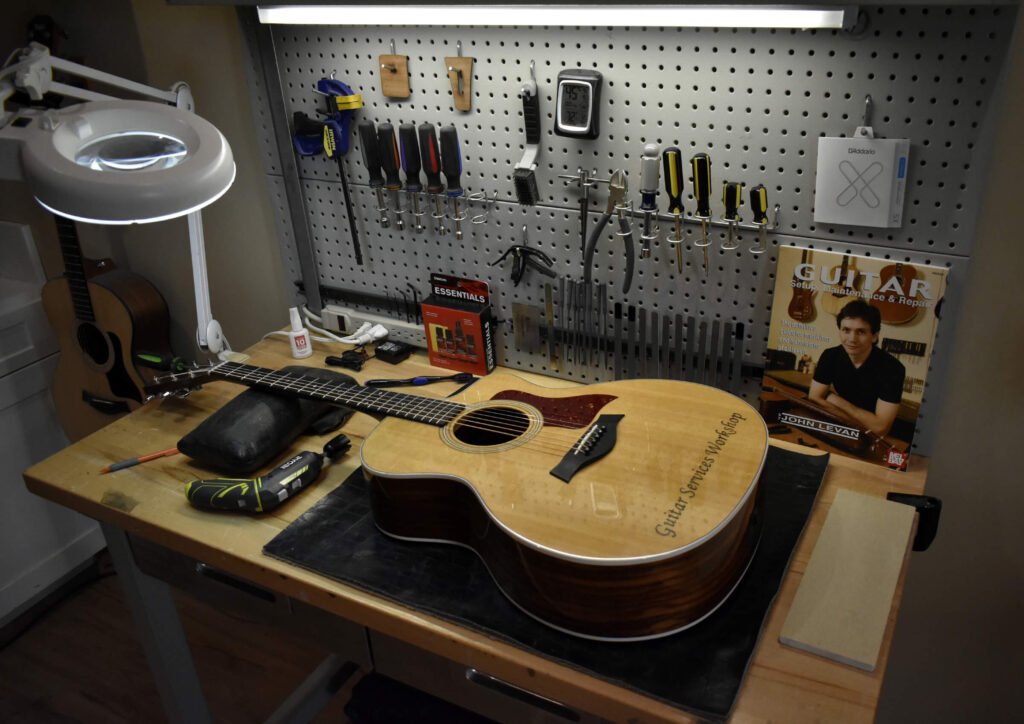
A professional technician may use specialized tools, but players can learn a great deal with a few basic items.
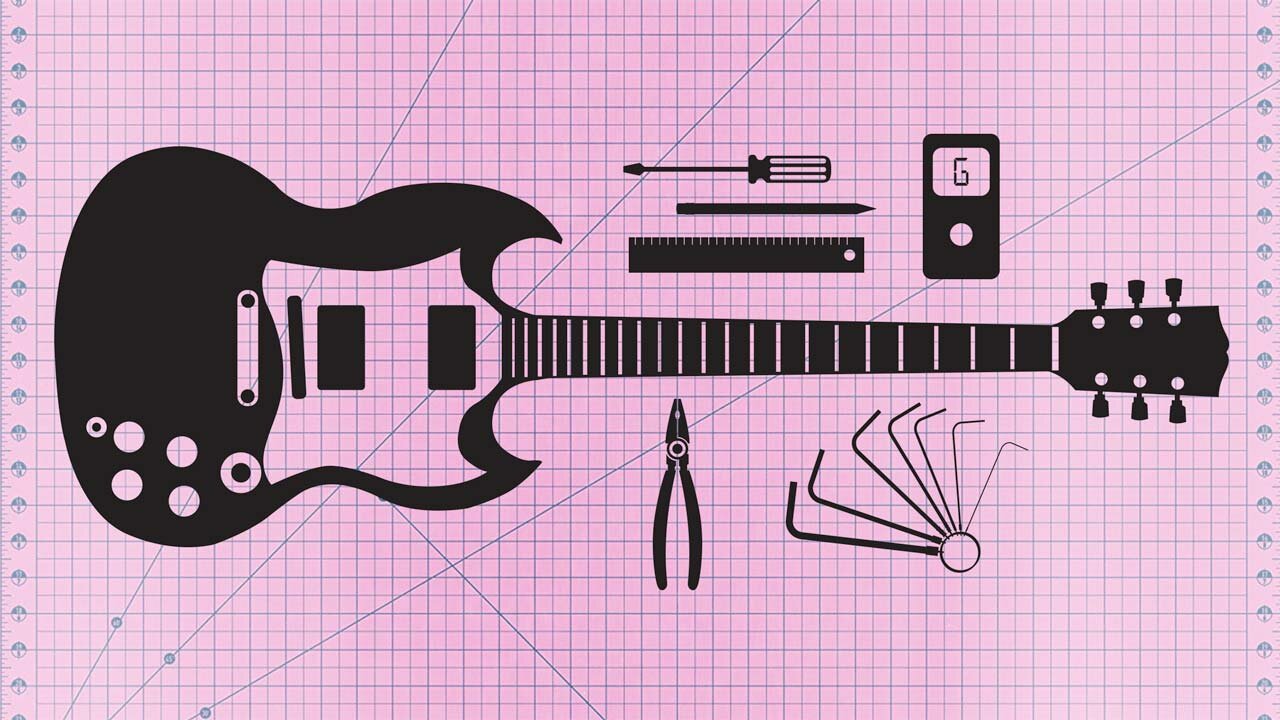
Useful tools include:
• Guitar ruler with 64ths and millimeters
• Electronic tuner
• Capo
• Feeler gauges
• Correct-size truss rod wrench
• Screwdrivers
• String cutter and winder
• Fret rocker
• Pickup-height gauge
• Work mat and neck support
Measurements should be taken consistently. For example, action is often measured from the top of the fret to the bottom of the string, but different shops may describe measurements in slightly different ways.
Manufacturer specifications are useful starting points. They are not universal laws. A setup for fingerstyle playing may differ from one for rock bends, slide guitar, jazz, or low tunings.
Frequently Asked Questions About What Is a Guitar Setup
What is a guitar setup in simple terms?
A guitar setup is a group of adjustments that helps the instrument play cleanly, stay in tune, and feel comfortable. It can include the neck, strings, bridge, nut, frets, intonation, and electronics.
How long does a guitar setup take?
A basic setup may take one to three hours, depending on the guitar and the technician’s workload. Fret repairs, nut work, tremolo balancing, and other repairs can take longer.
Does every new guitar need a setup?
Not every new guitar needs immediate work, but many benefit from a check after shipping and climate changes. A setup can also match the instrument to your preferred strings, action, and tuning.
Can a guitar setup fix buzzing?
A setup can fix buzzing caused by neck relief, action, or bridge adjustment. Buzz caused by uneven frets, loose parts, or structural problems may require additional repair.
How often should an acoustic guitar get a setup?
Many acoustic players choose a professional setup every six to twelve months, but the right schedule depends on use, climate, and changes in playability. Get the guitar checked sooner if the action, tuning, or fret buzz changes suddenly.
Does a setup improve guitar tone?
A setup can improve clarity, sustain, intonation, and response by correcting mechanical problems. It cannot completely change the guitar’s natural design, pickups, wood, or construction.
Should I change strings before a setup?
Yes, use the string gauge and tuning you plan to keep. Fresh strings give the technician a more accurate basis for setting action and intonation.
Conclusion
A guitar setup is a careful adjustment of the instrument’s neck, action, bridge, nut, intonation, strings, and related parts. It can make a guitar easier to play, more stable in tune, and more enjoyable without changing its basic character.
The best setup matches your hands, music, tuning, string choice, and playing style. Start with simple checks, avoid forced adjustments, and consult a skilled technician when the issue involves frets, the nut, the truss rod, or the guitar’s structure.
Take a few minutes to inspect your guitar today. If it feels difficult to play or no longer sounds consistent, book a setup with a trusted local repair shop and give your instrument the care it deserves.