

Most acoustic guitars use steel strings, with light-gauge phosphor bronze as a balanced choice for many players.
Knowing what strings for an acoustic guitar can feel confusing because string material, gauge, guitar size, tuning, and playing style all change the result. After testing many common string types and gauges, I have found that the best choice is not always the most expensive one. This guide will help you choose strings that fit your guitar, sound, and hands.

What strings are used on an acoustic guitar?
Most steel-string acoustic guitars use metal strings made from a steel core wrapped with bronze alloy. The most common choices are phosphor bronze and 80/20 bronze strings.
The right strings depend on the guitar. A full-size dreadnought may sound rich with medium strings, while a small parlor guitar may respond better to extra-light or light strings.
For most players, a good starting point is:
• Light-gauge phosphor bronze strings
• A .012–.053 or .012–.054 string set
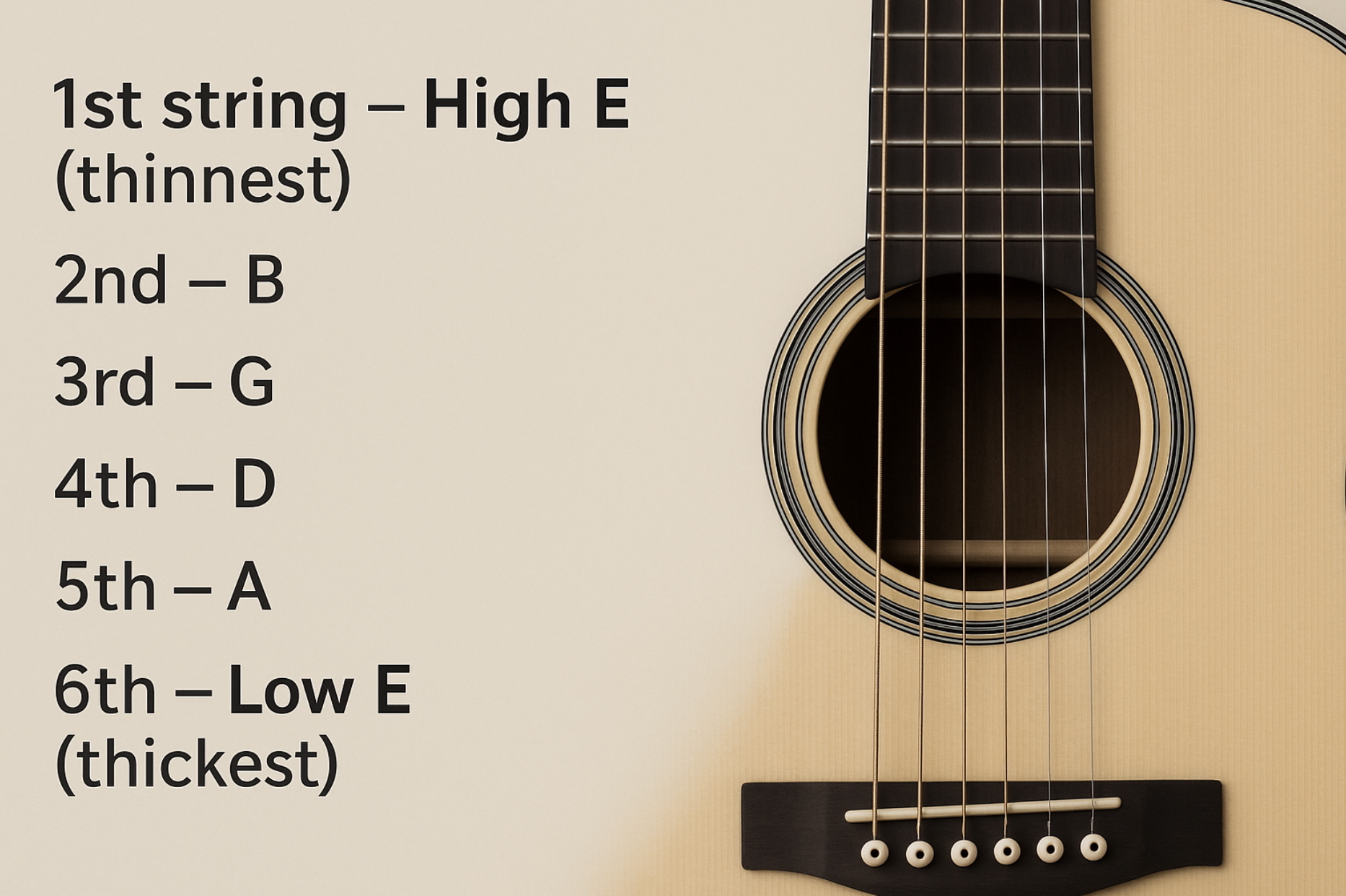
• A standard tuning of E-A-D-G-B-E
• A coated set if longer string life is important
When people ask, “what strings for an acoustic guitar,” they usually want a safe match that sounds good and feels easy to play. Light phosphor bronze strings meet that need for many steel-string guitars.
Still, the guitar maker’s recommendations should come first. The bracing, bridge, neck, and top are designed for a certain level of string tension. Using a suitable set protects the instrument and improves playability.

Steel strings or nylon strings?
The first step in choosing what strings for an acoustic guitar is identifying whether the guitar is built for steel or nylon strings.
Steel-string guitars have strong internal bracing. They are made to handle the high tension created by steel strings. Nylon-string guitars, often called classical guitars, use lighter nylon or fluorocarbon strings and have a different bridge and neck design.
Never put steel strings on a classical guitar unless the manufacturer specifically says it is safe. The added tension can damage the neck, bridge, or top.
Steel-string acoustic guitars
Steel strings create a bright, clear, and powerful tone. They work well for:
• Folk music
• Country music
• Bluegrass
• Rock and pop rhythm
• Flatpicking
• Fingerstyle playing
Steel strings usually have a metal core. The thicker bass strings have an outer wrap, while the thinner treble strings are often plain steel.
Nylon-string acoustic guitars
Nylon strings have a softer feel and a warm, round tone. They are common on classical, flamenco, and some crossover guitars.
Nylon strings are not a direct substitute for steel strings. They attach differently on many guitars and produce less tension, so they may not sound or feel right on a steel-string instrument.

Phosphor bronze vs. 80/20 bronze strings
The alloy around the steel core has a major effect on tone. The two most common choices are phosphor bronze and 80/20 bronze.
Phosphor bronze
Phosphor bronze strings contain copper, tin, and a small amount of phosphorus. They usually produce a warm tone with clear highs and strong midrange.
Choose phosphor bronze if you want:
• A balanced sound
• Warm bass notes
• Smooth treble
• A versatile tone for strumming and fingerpicking
• A sound that works well for recording
Phosphor bronze is often the safest answer to what strings for an acoustic guitar should a beginner buy. It sounds full without being too sharp or metallic.
80/20 bronze
80/20 bronze strings contain about 80 percent copper and 20 percent zinc. They often sound brighter and more open than phosphor bronze strings.
Choose 80/20 bronze if you want:
• Strong sparkle
• A crisp attack
• More treble bite
• A lively sound for flatpicking
• Extra brightness from a dark-sounding guitar
The bright tone may soften after several hours of playing. This is normal. Oils, sweat, dust, and oxidation slowly change the sound of metal strings.
Silk and steel strings
Silk and steel strings use silk or a similar soft layer beneath part of the winding. They create lower tension and a gentler feel.
They can suit:
• Older guitars that need lower tension
• Small-body guitars
• Fingerstyle players
• Beginners with sensitive fingertips
• Players who want a softer, quieter sound
They may not provide the volume or punch needed for heavy strumming. Always check the guitar maker’s advice before using low-tension strings.
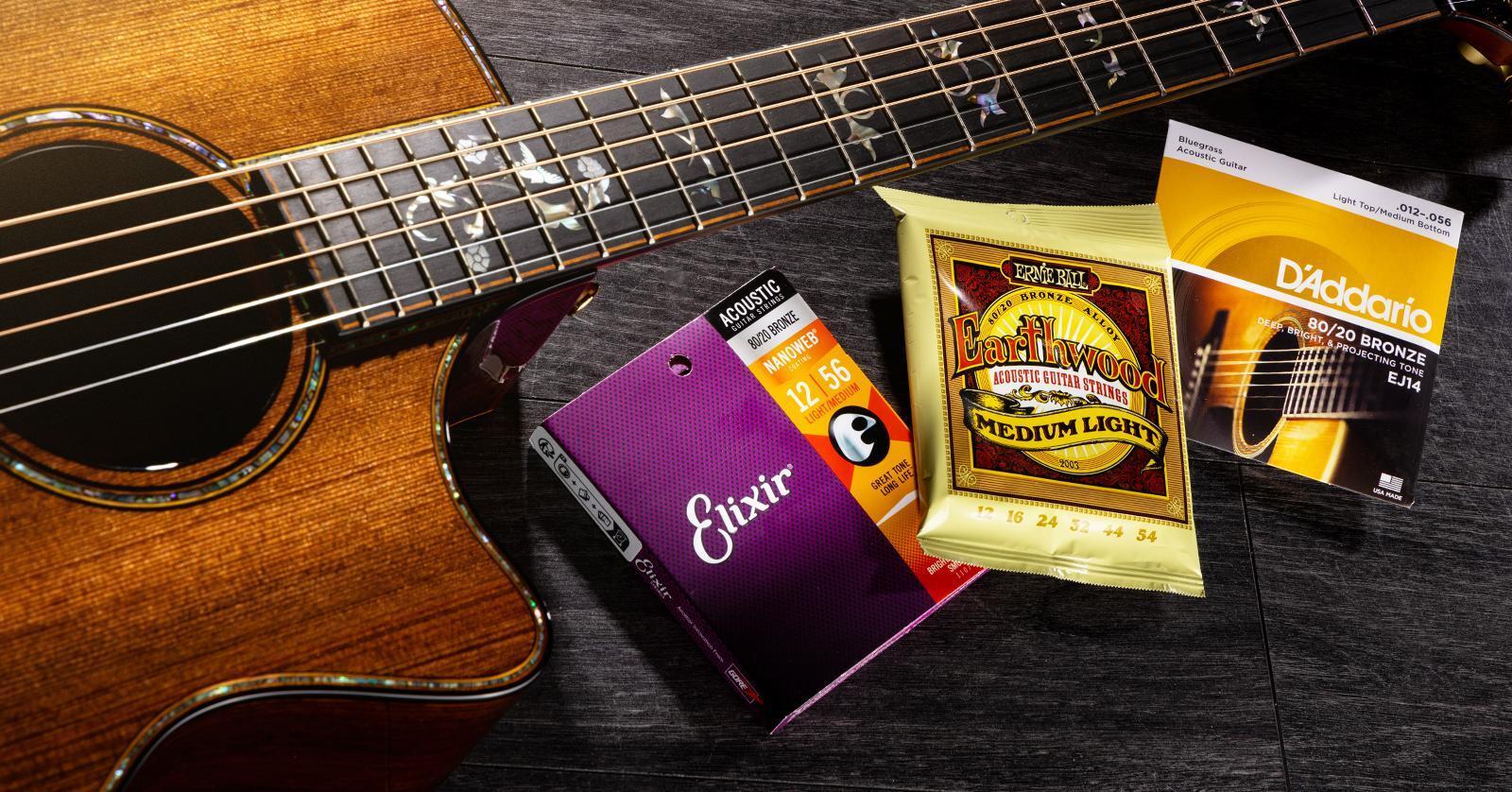
Choosing the right acoustic guitar string gauge
String gauge means the thickness of each string. It affects tone, volume, tension, and comfort.
A string set may be labeled extra light, custom light, light, medium light, or medium. Names can vary by brand, so check the actual measurements on the package.
Common acoustic guitar gauges
| Gauge type | Typical high E size | Feel and sound |
|---|---|---|
| Extra light | .010 or .011 | Very easy to bend and press |
| Custom light | .011 or .012 | Comfortable with moderate tone |
| Light | .012 | Balanced for many players |
| Medium light | .012 or .013 | More volume with moderate tension |
| Medium | .013 | Strong tone and higher tension |
These sizes are general examples. A “light” set from one brand may not match another brand exactly.
Extra-light strings
Extra-light strings are easy on the fingers. They are useful for beginners, lead playing, and players with hand pain.
They can also sound thinner and may buzz more if the guitar setup is not correct. Strong picking can cause them to move more against the frets.
Light strings
Light strings offer a strong balance of comfort, volume, and tone. They are often the best starting point when deciding what strings for an acoustic guitar should be used.
They work well on many dreadnought, concert, auditorium, and jumbo guitars. They also suit players who switch between strumming and fingerpicking.
Medium strings
Medium strings can produce a louder and fuller sound. They are popular with bluegrass players and people who use a firm pick.
The added tension makes them harder to fret and bend. They may also place more stress on the guitar, so use them only if the guitar supports that gauge.
A lesson from real use
I once moved from light to medium strings on a smaller acoustic because I wanted more volume. The result was not better. The guitar felt stiff, and the top did not respond as freely. Returning to light strings gave the instrument more life and made long practice sessions easier.
The lesson is simple: thicker does not always mean better. The best string gauge is the one that lets the guitar vibrate freely while letting you play without strain.
How guitar size affects string choice
Guitar size is an important part of what strings for an acoustic guitar should be selected.
A large dreadnought often has strong bass response and high volume. Light or medium strings can work well, depending on the design and the player’s technique.
A small-body guitar may respond better to light, extra-light, or silk and steel strings. Heavy strings can make a small guitar feel tight and may overpower its natural voice.
Common guitar shapes
• Dreadnought: Often suits light or medium strings and strong strumming
• Jumbo: Can handle a full tone but may sound too boomy with heavy strings
• Auditorium or grand auditorium: Usually works well with light strings
• Concert or parlor: Often benefits from light or extra-light strings
• Travel guitar: Requires the correct scale length and may need special sets
• 12-string guitar: Needs a set made specifically for 12-string instruments
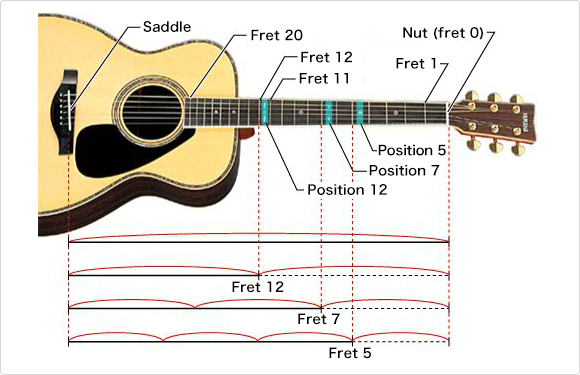
Do not choose strings based only on body size. The guitar’s scale length, bracing, bridge design, and manufacturer guidance also matter.
A short-scale guitar may feel softer with the same string gauge than a long-scale guitar. This is because scale length changes the tension needed to reach the same pitch.
How playing style changes the best string choice
Your technique helps determine what strings for an acoustic guitar will feel and sound best.
For heavy strumming
Try light or medium phosphor bronze strings. They can handle firm pick work and create a full rhythm sound.
If your pick attack is strong, extra-light strings may feel too loose. They may also go out of tune more easily during aggressive playing.
For fingerstyle
Light, extra-light, or custom-light strings can work well. They make fretting and bends easier and allow the fingers to move quickly.
Some fingerstyle players prefer phosphor bronze for warmth. Others choose 80/20 bronze for more note separation.
For flatpicking
Light or medium strings are common choices. Medium strings can provide strong projection, but they require more left-hand pressure.
A firm flatpicker may also prefer a bright 80/20 bronze set. A player who wants a smoother sound may prefer phosphor bronze.
For alternate tunings
Lower tunings reduce string tension. Light strings may feel loose when tuned down to D or C.
A heavier set can help maintain a firm feel in low tunings. However, thicker strings may need a setup adjustment, especially at the nut.
If you often change tunings, consider a balanced set designed for flexible tension. Make small changes and listen to the guitar rather than assuming the thickest set is best.

Coated vs. uncoated acoustic guitar strings
Coated strings have a thin protective layer that helps slow corrosion. Uncoated strings expose the metal wrap directly to air, skin oils, and moisture.
Benefits of coated strings
• They often last longer
• They resist sweat and corrosion better
• They may feel smoother
• They can reduce finger noise
• They are useful for players with acidic sweat
Limitations of coated strings
• They usually cost more
• Some players find them less lively
• The coating can wear under heavy picking
• Certain sets may feel slick
Uncoated strings often sound fresh and bright right away. Coated strings may offer better value if you play often and replace strings frequently.
String life depends on your hands, climate, playing time, and care. There is no fixed number of weeks that applies to everyone.
Wipe the strings with a clean, dry cloth after playing. Wash your hands before you play and store the guitar in a stable environment. These simple habits can extend string life.

How often should you change acoustic guitar strings?
Change acoustic guitar strings when the tone, tuning, or feel starts to decline.
Common signs include:
• A dull or flat sound
• Rough spots on the winding
• Rust or dark corrosion
• Frequent tuning problems
• Strings that feel stiff or dirty
• Poor intonation
• Visible dents near the frets
A frequent player may change strings every few weeks. A casual player may use the same set for several months. Coated strings can last longer, but they still wear out.
Do not wait for a string to break. Old strings can lose clarity long before they fail.
When replacing strings, change the full set if the current strings are old. Mixing one new string with five worn strings can create an uneven tone.
How to choose strings for a beginner
If you are new to acoustic guitar, keep the first choice simple.
Use this process:
- Confirm whether the guitar uses steel or nylon strings.
- Check the brand’s recommended gauge.
- Start with light phosphor bronze strings for a steel-string guitar.
- Choose extra-light strings if your fingers are very sensitive.
- Consider coated strings if sweat quickly dulls your strings.
- Play the new set for several days before judging the tone.
Do not buy strings only because a famous player uses them. That player may use a different guitar, tuning, scale length, and setup.
A comfortable set encourages practice. That matters more than chasing a small change in brightness.
Common mistakes when buying acoustic guitar strings
Many string problems come from a poor match rather than a poor product.
Using the wrong string type
Putting nylon strings on a steel-string guitar can create weak tone and poor fit. Putting steel strings on a classical guitar can cause serious damage.
Choosing strings that are too heavy
Heavy strings may increase volume, but they can make the guitar hard to play. They may also require a truss rod or nut adjustment.
Ignoring scale length
The same string gauge can feel different on short- and long-scale guitars. Check the guitar specifications if the tension feels unusual.
Buying based only on price
Expensive strings are not automatically better for your guitar. A reasonably priced set that matches your instrument may sound better than a premium set that does not.
Changing gauge without a setup
A large gauge change can affect neck relief, action, intonation, and nut fit. If the guitar buzzes or feels stiff after a major change, ask a qualified repair technician to inspect it.
A practical method for testing new strings
Testing strings works best when you change one factor at a time.
Try this simple method:
- Record your current string type and gauge.
- Install a new set carefully.
- Tune the guitar several times during the first playing session.
- Play the same chords, scales, and songs each day.
- Compare brightness, comfort, volume, and tuning stability.
- Keep notes after one week and again after the strings age.
Use the same guitar and pick when comparing sets. Otherwise, it is hard to know whether the string or your technique caused the difference.
Listen from a few feet away, not only from the player’s position. Acoustic guitars often sound warmer to the person playing them than to someone across the room.
What strings for an acoustic guitar are best for different needs?
The best match changes with the player and instrument.
| Player need | Good starting choice |
|---|---|
| General use | Light phosphor bronze |
| Bright tone | Light 80/20 bronze |
| Warm tone | Phosphor bronze |
| Sensitive fingers | Extra-light or silk and steel |
| Heavy strumming | Light or medium phosphor bronze |
| Fingerstyle | Extra-light, custom light, or light |
| Long string life | Coated phosphor bronze |
| Low tuning | A heavier set approved for the guitar |
| Small-body guitar | Extra-light or light strings |
| Bluegrass | Light or medium strings, based on the guitar |
These are starting points, not strict rules. Your guitar may sound best with a different combination.
When deciding what strings for an acoustic guitar to buy, comfort and response should guide you as much as tone. A string that sounds excellent but causes hand pain is not a successful choice.
Frequently Asked Questions About What Strings for an Acoustic Guitar
What are the best strings for an acoustic guitar?
Light-gauge phosphor bronze strings are a reliable starting point for many steel-string acoustic guitars. They offer a balanced mix of warmth, clarity, volume, and comfort.
Can I put any acoustic strings on my guitar?
No. Check whether your guitar uses steel or nylon strings, then follow the maker’s recommended gauge range. Using the wrong type or excessive tension can damage the instrument.
Are light or medium acoustic guitar strings better?
Light strings are easier to play and suit many players. Medium strings can produce more volume and stronger bass, but they feel tighter and may not suit every guitar.
Which acoustic guitar strings last the longest?
Coated strings often last longer because their protective layer slows corrosion. Hand sweat, playing time, storage, and cleaning habits also affect string life.
Are phosphor bronze strings better than 80/20 bronze strings?
Neither is always better. Phosphor bronze usually sounds warmer and more balanced, while 80/20 bronze often sounds brighter and more cutting.
How do I know what string gauge my guitar needs?
Check the owner’s manual, the manufacturer’s product page, or the gauge already installed. If you want to make a major change, have a guitar technician check the setup.
Can beginners use medium acoustic guitar strings?
Beginners can use them if the guitar supports them, but light strings are usually easier on the fingers. Starting with a comfortable gauge can make practice more enjoyable.
Conclusion
The answer to what strings for an acoustic guitar depends on the instrument, playing style, tuning, and feel you want. For many steel-string guitars, light phosphor bronze strings are a safe and versatile starting point. Extra-light strings help with comfort, while medium strings offer more resistance and projection when the guitar can handle them.
Always confirm the correct string type and follow the manufacturer’s gauge advice. Try one set at a time, keep notes, and judge the strings by both sound and comfort. Explore different materials and gauges, then share your favorite combination or string-changing experience with other guitar players.