

Introduction
If you are in the United States and hear a piano in a home, school, church, or concert hall, you are hearing the result of centuries of European instrument design. The modern piano began in Italy around the year 1700, when Bartolomeo Cristofori built an instrument that could play both soft and loud notes.
The piano grew from older keyboard instruments, especially the harpsichord and clavichord. It later spread across Europe, changed through the work of German, Austrian, English, and American makers, and became one of the most widely used instruments in the United States.
Short answer: The piano comes from Florence, Italy. Bartolomeo Cristofori made the first known successful piano around 1700. Its early Italian name was gravicembalo col piano e forte, meaning “harpsichord with soft and loud.”

Who Invented the Piano?
Bartolomeo Cristofori invented the first true piano. He was an Italian instrument maker who worked for Prince Ferdinando de’ Medici in Florence.
Cristofori’s key idea was simple but difficult to build: a player should be able to control volume by changing how hard they press the key. Earlier keyboard instruments did not offer this same control.
The harpsichord made sound by plucking its strings. Pressing a key gently or firmly usually did not create a large change in volume. The clavichord used a small metal blade to strike the string, so it allowed some expression, but it was too quiet for large rooms.
Cristofori used a different system. When the player pressed a key, a felt-covered hammer struck the string. The hammer then moved away from the string at once. This allowed the string to vibrate freely and let the hammer strike again when needed.
This system gave the player control over both:
- Pitch, through the key and string
- Volume and expression, through the force of the key press
The first known written description of Cristofori’s instrument appeared in 1711. Italian writer Scipione Maffei described its hammer action and its ability to play soft and loud notes. The instrument was first called a gravicembalo col piano e forte. Over time, people shortened the name to pianoforte, and later to piano.
The Metropolitan Museum of Art identifies Cristofori’s work as the starting point for the modern piano. Several early Cristofori pianos still exist, including instruments from 1720, 1722, and 1726.

What Instruments Came Before the Piano?
The piano did not appear from nowhere. It developed from a long line of string and keyboard instruments.
The clavichord
The clavichord was one of the earliest keyboard instruments linked to the piano’s development. A metal piece called a tangent touched the string when the player pressed a key.
It allowed some control over tone and volume. A skilled player could also create a small wavering effect called bebung. But the clavichord was very quiet. It worked best in a private room, not a theater or concert hall.
The harpsichord
The harpsichord was louder and more useful for groups. Its strings were plucked by small quills or similar devices.
A harpsichord could have several keyboards and sets of strings. These features changed its tone and loudness. Still, the player could not control each note’s volume in the same direct way as on a piano.
The dulcimer
The dulcimer is a string instrument played with small beaters. It is not a keyboard instrument, but it offers an important clue about the piano’s design.
The player strikes the strings rather than plucks them. Some historians see instruments such as the dulcimer as part of the wider history of struck-string instruments. However, the dulcimer did not directly turn into the piano.
The organ
The pipe organ also influenced keyboard design. It helped develop the layout of keys and the use of keyboards for complex music.
An organ creates sound with air and pipes. A piano creates sound with hammers and strings. They share a keyboard but use very different sound systems.
The key difference is this: the piano combined a keyboard with a controllable hammer action. That combination made it different from both the clavichord and the harpsichord.

How Did Cristofori’s Piano Work?
Cristofori’s piano used a hammer mechanism that solved several problems at once.
A basic piano action follows this path:
- The player presses a key.
- The key moves a series of levers.
- The levers send a felt-covered hammer toward a string.
- The hammer strikes the string.
- The action causes the hammer to escape from the string.
- The hammer returns so the player can repeat the note.
- A damper lifts from the string while the key is held.
- When the player releases the key, the damper stops the sound.
The word escapement describes the part that lets the hammer move away from the string after the strike. Without escapement, the hammer could block the string or bounce against it.
Cristofori also developed a check. This part helps catch the hammer after it strikes. It keeps the hammer from falling too far and helps the action repeat more reliably.
These details may sound small, but they made the piano practical. The player could control touch, volume, and phrasing. That gave composers a wider expressive range.
A piano does not produce a louder note simply because its string is larger. The main cause is the energy of the hammer strike. A stronger key press sends the hammer faster toward the string. A faster hammer strike transfers more energy to the string and creates a louder sound.

When Did the Piano Become Popular?
The piano became popular during the 18th century, but the change took time.
Cristofori’s design was advanced, yet it was complex and costly. Early pianos were made by hand and were not common household items. Other builders studied the design and adapted it for different players and rooms.
German makers helped spread the piano. Gottfried Silbermann built early pianos based on Cristofori’s ideas. His instruments attracted attention in central Europe, including from composer Johann Sebastian Bach.
Later, piano makers developed different action designs. One important design was the Viennese action, which offered a light touch. It suited the music of composers such as Wolfgang Amadeus Mozart.
The English action became stronger and heavier. It supported larger instruments with a fuller sound. These changes helped the piano move from a court instrument to a public and domestic instrument.
By the late 18th and early 19th centuries, composers such as:
- Wolfgang Amadeus Mozart
- Ludwig van Beethoven
- Franz Schubert
- Frédéric Chopin
- Robert Schumann
were writing music that used the piano’s changing volume and wide range.
The Industrial Revolution then changed piano production. Improved tools, iron parts, wire, and factory methods allowed makers to build stronger and more powerful instruments.

How Did the Piano Change Into the Modern Instrument?
The modern piano is larger, stronger, and more powerful than Cristofori’s early instruments.
Early pianos often had a smaller range than today’s standard concert grand. Many modern acoustic pianos have 88 keys, with 52 white keys and 36 black keys. Not every piano has 88 keys, but this is the common modern layout.
Several major changes shaped the modern piano.
Stronger frames
Early pianos used wooden frames. As strings became longer and tighter, the instrument needed more support.
Modern steel strings create strong tension. A cast-iron frame helps hold that tension. It also lets piano makers use thicker strings and longer bass strings.
More powerful strings
Early pianos used thinner strings and produced a lighter sound. Modern pianos use steel strings. The bass section also uses copper-wound strings, which create lower notes without requiring extremely long strings.
Improved pedals
Most modern acoustic pianos have two or three pedals:
- The damper pedal lifts the dampers and lets notes continue to ring.
- The soft pedal changes the action or shifts the hammers on many pianos.
- The ** sostenuto pedal**, found on many grand pianos, holds selected notes while later notes remain separate.
Pedal functions can vary by piano type and model. A soft pedal on a grand piano often shifts the action sideways. On many upright pianos, it works in a different way.
Overstringing
Modern grand pianos often use overstringing. In this design, the bass strings cross over some of the middle strings. This allows longer bass strings to fit inside a shorter case.
The result is a stronger bass sound and a more compact design. It also shows how piano making became a blend of music, woodworking, metalwork, and engineering.

What Role Did the United States Play in Piano History?
The piano came from Italy, but the United States played a major role in its later growth.
Pianos became common in American homes during the 19th century. They appeared in parlors, schools, churches, theaters, and music studios. For many families, owning a piano became a sign of education and culture.
American piano companies also improved large-scale production. Steinway & Sons, founded in New York City in 1853, became one of the best-known American piano makers. The company developed and patented design features related to the modern grand piano, including improvements to the frame, strings, and action.
The United States also helped expand the piano’s cultural role. The instrument became central to:
- Ragtime
- Blues
- Jazz
- Gospel
- Musical theater
- Popular song
- Classical performance
- Music education
This history can lead to a common mistake. The piano is not an American invention. Its first successful form came from Italy. The United States helped refine, manufacture, distribute, and popularize later forms of the instrument.

Why Is the Piano Called a Piano?
The word piano comes from the Italian word piano, which means “soft” or “quiet.”
The early full name was gravicembalo col piano e forte. It means “harpsichord with soft and loud.”
The name described the feature that made the new instrument special. A player could press one key gently for a soft note or with more force for a loud note.
The word pianoforte stayed in use for many years. The shorter word piano later became more common. The term can also mean a soft musical dynamic marking, written as p in sheet music.
In English, “piano” can have two common meanings:
- The keyboard instrument
- A soft dynamic level in music
The meaning is clear from the sentence. “She plays the piano” refers to the instrument. “Play this passage piano” means play it softly.

Is a Piano a String Instrument or a Keyboard Instrument?
A piano is both a string instrument and a keyboard instrument.
It belongs to the chordophone family because vibrating strings produce its sound. It belongs to the keyboard family because the player controls those strings with keys.
The keys do not make the sound by themselves. They operate the action inside the piano. The action moves the hammers that strike the strings.
This makes the piano different from:
- A harpsichord, which plucks strings
- An organ, which uses air and pipes or electronic sound
- A digital piano, which uses recorded or modeled sound
- A synthesizer, which creates sound electronically
- A celesta, which strikes metal bars
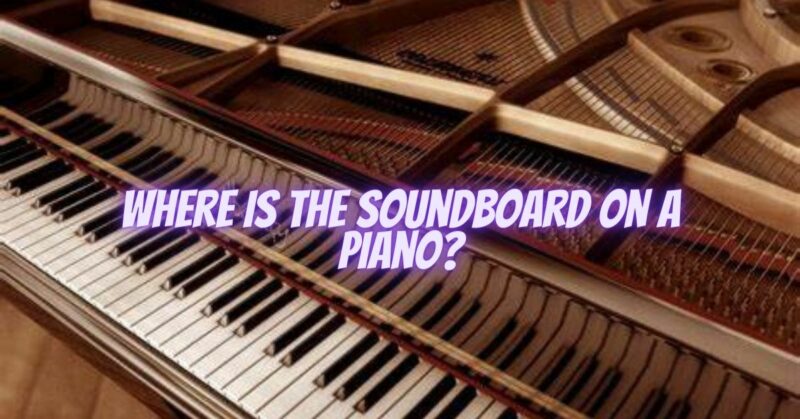
A digital piano may feel similar to an acoustic piano, but it does not contain strings, hammers, or a soundboard. It creates sound through electronics and speakers.
Acoustic Piano vs. Digital Piano: What Is the Difference?
An acoustic piano creates sound through physical strings and a soundboard. A digital piano creates sound through electronics.
| Feature | Acoustic piano | Digital piano |
|---|---|---|
| Sound source | Strings and soundboard | Digital samples or modeled sound |
| Maintenance | Needs regular tuning | Usually does not need tuning |
| Volume control | Limited without a mute system | Headphones and volume control are common |
| Weight | Often heavy | Often lighter, but varies |
| Touch | Mechanical hammer action | Weighted or simulated action |
| Power | Does not need electricity | Needs power or batteries |
| Sound change | Depends on design and room | Depends on speakers and software |
An acoustic piano is closer to Cristofori’s original idea because it uses hammers and strings. A digital piano is a later electronic descendant.
Neither type is automatically right for every player. An acoustic piano may suit someone who wants traditional tone and touch. A digital piano may suit someone who needs headphones, easy movement, or low maintenance.

Common Myths About the Piano’s Origin
Myth: The piano was invented in Germany
German builders played a major role in developing the piano. However, Bartolomeo Cristofori built the first known successful pianos in Italy.
Myth: The piano came directly from the harpsichord
The harpsichord influenced the piano, but the piano did not simply replace one part with another. Cristofori created a new hammer action and solved the problems that came with striking strings.
Myth: The first piano looked like a modern grand
It did not. Early pianos were smaller and had fewer keys. Their cases, strings, frames, and actions differed from those of modern concert grands.
Myth: Every piano has 88 keys
Many modern pianos have 88 keys, but some smaller pianos and historic instruments have fewer. Key count depends on the design and period.
Myth: The piano is only a classical instrument
The piano is important in classical music, but it is also central to jazz, blues, gospel, ragtime, pop, rock, country, and film music.

A Simple Piano History Timeline
| Date or period | Development |
|---|---|
| Before 1700 | Clavichords, harpsichords, organs, and other keyboard instruments are used |
| Around 1700 | Bartolomeo Cristofori builds the first known successful pianos in Florence |
| 1711 | Scipione Maffei publishes a description of Cristofori’s instrument |
| 18th century | German, Austrian, and other European makers develop new piano actions |
| Late 18th century | The piano becomes important in public performance and composition |
| Early 19th century | Larger frames, stronger strings, and wider ranges appear |
| 1850s onward | American and European factories expand piano production |
| 20th century | The piano becomes central to jazz, popular music, recording, and education |
| Today | Acoustic, digital, hybrid, and software-based pianos are widely used |
Frequently Asked Questions
Where was the first piano made?
The first known successful piano was made in Florence, Italy, around 1700. Bartolomeo Cristofori built it while working for the Medici court.
What was the first piano called?
Its early name was gravicembalo col piano e forte. The phrase means “harpsichord with soft and loud.” The shorter terms pianoforte and piano came later.
Did Mozart play a piano?
Yes. Mozart played early pianos, including instruments with a lighter action and a smaller range than many modern pianos. The sound and response of those instruments differed from today’s concert grands.
Did Beethoven play a modern piano?
No. Beethoven played pianos from his own period. Makers were still increasing the piano’s range, power, and structural strength during his lifetime.
How many strings does a piano have?
The exact number varies by piano model. A full-size grand piano may have more than 200 strings. Many treble notes use three strings, while lower notes often use two or one thicker string.
How old is the piano?
The piano is more than 300 years old. Cristofori’s first instruments date to around 1700, but the modern piano developed through many later changes.
Key Takeaways
- The piano originated in Florence, Italy, around 1700.
- Bartolomeo Cristofori built the first known successful piano.
- The piano developed from the clavichord, harpsichord, organ, and other string instruments.
- Its defining feature was a hammer action that allowed players to control volume through touch.
- The word piano means “soft” in Italian.
- The United States did not invent the piano, but American makers helped improve and popularize it.
- Modern pianos are stronger, louder, and wider in range than Cristofori’s early instruments.
Conclusion
The piano comes from Italy, but its full history spans Europe and the United States. Cristofori created the basic breakthrough: a keyboard instrument whose hammers could strike strings with different force.
Later makers added stronger frames, longer strings, improved actions, pedals, and wider ranges. American manufacturers then helped bring the piano into homes, schools, churches, studios, and concert halls.
When you press a piano key today, you are using a design that began in Florence more than three centuries ago. The case may be modern, and the music may be jazz, pop, or classical, but the core idea remains Cristofori’s: the player controls the sound through touch.