

A used guitar is usually worth 40% to 80% of its current new price in the U.S. market, but that range is only a starting point. A common mass-market guitar in good condition may sell for 40% to 60% of its new price. A popular, well-kept model may reach 60% to 80%. Vintage, rare, discontinued, or highly sought-after guitars can sell for much more—or much less—depending on proof of authenticity and current demand.
The best way to find a used guitar’s value is to compare recent completed sales of the same model, not active asking prices. The exact model, year, condition, originality, included case, location, and selling method all affect the final price.
This guide explains how to price an acoustic, electric, bass, or vintage guitar for sale in the United States.

Quick Answer: How Much Is a Used Guitar Worth?
A used guitar’s fair market value is the price that similar guitars have recently sold for under similar conditions.
Use this rough guide only as an opening estimate:
| Guitar type | Typical used value compared with current new price |
|---|---|
| Entry-level guitar with visible wear | 25%–45% |
| Common guitar in good condition | 40%–60% |
| Popular model in very good condition | 55%–80% |
| High-end guitar with original parts | 60%–90% |
| Vintage or rare guitar | Cannot be estimated safely by percentage alone |
| Modified, damaged, or incomplete guitar | Often 20%–50%, depending on the work |
These are broad market estimates, not guaranteed prices. A $1,000 guitar does not automatically sell for $600 because condition and demand may differ. A discontinued model may be worth more than its original price, while a heavily modified model may be worth far less.
The strongest price signal is a group of recent sold listings for the same model and similar condition.

The Difference Between Asking Price and Market Value
An asking price is what a seller wants. Market value is what a buyer has recently paid.
This difference matters because many guitar listings remain online for months at prices buyers will not accept. If you use those listings as your guide, you may overprice the instrument.
Look for:
- Completed or sold listings
- The exact brand and model
- The same finish and pickup layout
- A similar production year
- Similar condition
- The same accessories
- A comparable U.S. selling market
For example, a seller may list a used electric guitar for $900. If five similar guitars sold recently for $650 to $725, the guitar is probably closer to that range than to the $900 asking price.
Where to Find Comparable Sales
Useful places to research U.S. guitar prices include:
- Reverb sold listings: Helpful for comparing used musical instruments by model and condition.
- eBay sold listings: Useful when the model is commonly sold through auctions or broad marketplaces.
- Guitar Center used listings: Helpful for retail comparison, although listed prices may not equal final negotiated prices.
- Local listings: Facebook Marketplace, Craigslist, and local music stores can show regional demand.
- Manufacturer websites: Useful for confirming current retail prices, specifications, and model names.
Search by the full model name. Include the year, series, finish, and whether the guitar has a case.
A search for “Fender stratocaster” is too broad. A better search might be “2018 Fender Player Stratocaster 3-color sunburst maple sold.”

The Main Factors That Determine Used Guitar Value
The model is usually the biggest factor, but it is not the only one. Two guitars with the same logo can have very different values.
Brand and Model
Brand recognition affects demand, resale speed, and buyer confidence. Fender, Gibson, Martin, Taylor, PRS, Gretsch, Rickenbacker, and several other brands have strong used markets, but popularity varies by model.
A well-known brand does not guarantee a high price. An entry-level model from a respected brand may sell for less than a lesser-known boutique guitar with strong demand.
The exact model matters because small changes can affect value:
- Different pickup sets
- Different wood or neck construction
- Different country of manufacture
- Different production series
- Different hardware
- Limited colors or special editions
- Signature or artist models
Current New Price
Buyers often compare a used guitar with the current price of a new version. If a new guitar sells for $799, a used example with normal wear may need to be priced below that to attract buyers.
Use the actual street price, not only the manufacturer’s suggested retail price. U.S. music retailers often sell new guitars below the listed manufacturer price during sales.
A discontinued guitar requires a different comparison. Find the last known retail price, then focus more heavily on recent used sales.
Condition
Condition has a direct effect on price. Buyers usually pay more for a guitar that needs no immediate repair.
Common condition levels include:
- Mint: Little or no visible use. Original parts and paperwork are usually present.
- Excellent: Minor marks that are hard to see at normal viewing distance.
- Very good: Normal play wear, small dents, or light scratches with no major problem.
- Good: Clear wear, but the guitar works properly and needs no major repair.
- Fair: Heavy wear, repairs, altered parts, or issues that affect use.
- Poor: Structural damage, major missing parts, or repairs that may cost more than the guitar’s value.
Be specific. “Good condition” means different things to different buyers. Describe fret wear, cracks, finish damage, electronic noise, bridge movement, neck issues, and replaced parts.
Originality
Original parts often increase value, especially on vintage and collectible guitars.
Potentially important original parts include:
- Pickups
- Tuners
- Bridge
- Tailpiece
- Knobs
- Pickguard
- Wiring
- Finish
- Frets
- Case
A replacement part is not always bad. A professional repair may improve playability. However, a modified vintage guitar may be worth less to collectors than an untouched example.
Keep the original parts if you have them. Including the original pickups, case, or hardware can improve buyer confidence.
Age and Production Year
Age alone does not make a guitar valuable. A 1990s guitar is not automatically vintage, and an older entry-level instrument may have little resale value.
The year matters most when:
- The model changed over time
- A certain production period is highly sought after
- The guitar has historical importance
- The materials or construction changed
- The model was discontinued
- The serial number helps verify authenticity
Confirm the year through the manufacturer’s serial number system, official records, or a qualified appraiser. Serial number charts can be incomplete or wrong for certain factories and periods.
Playability
A guitar that plays well often sells more easily than one that only looks good.
Check whether:
- The neck is reasonably straight
- The truss rod works
- The frets have usable height
- The strings sit at a comfortable action
- The intonation is acceptable
- The tuning machines hold tune
- The electronics work
- The bridge is secure
- The acoustic top is stable
- The instrument has no serious structural crack
A setup can improve playability, but do not assume the setup cost will return dollar for dollar. A $100 setup may make a $500 guitar easier to sell, but it may not raise the price by $100.
Case and Accessories
A genuine hard case can add value, especially for expensive, vintage, or fragile guitars. A gig bag may help the sale, but its value is usually modest unless it is a high-quality branded bag.
Other useful accessories include:
- Original certificate
- Warranty card
- Factory paperwork
- Tremolo arm
- Truss rod tool
- Original strap buttons
- Extra pickup covers
- Original electronics
- Manufacturer case
Do not add the full retail value of accessories to the guitar. Buyers usually treat them as part of the package, not as separate purchases.

How to Calculate a Used Guitar’s Value
Use a simple four-step process.
Step 1: Identify the Exact Guitar
Write down:
- Brand
- Full model name
- Model series
- Serial number
- Production year, if known
- Country of manufacture
- Finish
- Pickup configuration
- Modifications
- Included case and accessories
Look inside the soundhole of an acoustic guitar, near the headstock, or on the back of an electric guitar for labels and serial numbers.
Do not rely only on the headstock logo. Many brands use similar names across budget, midrange, and professional lines.
Step 2: Confirm the New or Replacement Price
Find the current U.S. price of the same model or the closest replacement model.
Use more than one source when possible. Compare:
- Manufacturer’s listed price
- Major retailer prices
- New open-box prices
- Discontinued-model records
- Recent sold listings
The goal is to learn what a buyer can get for a new or nearly new alternative today.
Step 3: Gather at Least Five Sold Comparisons
Five comparable sales can give you a more useful range than one unusually high or low listing.
Record each sale in a simple table:
| Comparison | Sold price | Condition | Case included? | Notes |
|---|---|---|---|---|
| 1 | $— | Very good | Yes | Original parts |
| 2 | $— | Good | No | Fret wear |
| 3 | $— | Excellent | Yes | Recent year |
| 4 | $— | Good | Yes | Replaced tuners |
| 5 | $— | Very good | No | Different finish |
Remove comparisons that are not truly similar. A signed guitar, damaged guitar, auction with an unusually low result, or model with major upgrades may distort the range.
Step 4: Adjust for Your Guitar
Start with the middle of the comparable sales. Then adjust for condition and features.
A simple calculation is:
Estimated value = comparable-sale midpoint + accessory value − repair cost − modification discount
This is not an official appraisal formula. It is a practical way to avoid pricing from emotion.
Hypothetical Example
Suppose five similar guitars sold for:
- $520
- $550
- $575
- $600
- $650
The middle sale is $575. Your guitar has a hard case, but it needs fret work estimated at $125.
A reasonable private-sale estimate might be:
- Starting point: $575
- Case adjustment: modest increase
- Repair adjustment: about $125 or more
- Possible negotiation room: small reduction
The likely selling range might be around $500 to $575, depending on how serious the fret wear is and how quickly you need to sell.
The exact number should come from the condition and the market, not from the calculation alone.
Used Guitar Value by Selling Method
The same guitar can have different values depending on where you sell it.
Private Sale
A private sale may produce the highest price because there is no store margin. It also requires more work.
You must usually handle:
- Photos
- Listing text
- Buyer messages
- Payment safety
- Packing or local pickup
- Returns and disputes
- Shipping damage risk
For local sales, compare prices in your region. A guitar may sell quickly in Nashville, Los Angeles, New York, or another large music market but take longer in a smaller town.
Music Store Trade-In
A store trade-in is convenient, but the offer is usually below private-sale value. The store must cover staff time, repairs, storage, payment costs, warranty risk, and profit.
A trade-in can make sense when:
- You are buying another instrument
- You want a fast and simple transaction
- The store can verify the guitar
- Shipping would be expensive
- You prefer lower risk over maximum price
Ask whether the offer is cash, store credit, or a trade allowance. These can have different values.
Consignment
With consignment, a store lists the guitar and pays you after it sells. The store keeps a percentage or fixed fee.
Before signing, ask:
- What is the commission?
- Who pays for repairs?
- How long is the listing period?
- Can the store reduce the price?
- What happens if the guitar does not sell?
- Who covers theft or damage?
- When will you receive payment?
Calculate your net amount, not just the advertised selling price.
Online Marketplace
Online marketplaces can reach more buyers, but fees and shipping reduce your net proceeds.
Use this calculation:
Net proceeds = sale price − platform fee − payment fee − shipping − insurance − packing materials − repair cost
For example, a $700 sale may produce much less than $700 after costs. Ask the buyer to pay shipping when the platform allows it, but confirm the rules before listing.
Auction
An auction may work for rare, vintage, or highly desirable guitars with strong buyer interest. It can also produce a lower-than-expected result if few bidders participate.
Set a reserve only after checking the auction’s rules and fees. A reserve can protect you, but it may also reduce bidding activity.

How Much Should You Ask for a Used Guitar?
Price the guitar slightly above your lowest acceptable amount if you expect normal negotiation.
For example, if you want to receive $600, you might list at $650 or $675 after checking comparable sales. Do not list far above the market unless the guitar has a clear reason for the premium.
A useful pricing structure is:
- Fast sale: Near the lower end of recent sold prices
- Fair market listing: Around the middle of recent sold prices
- Patient sale: Near the upper end, with excellent photos and complete details
- Rare guitar: Price only after specialist research or appraisal
If a listing receives views but no serious messages, the price may be too high. If buyers immediately offer the full price, your price may be attractive—but that does not always mean it was too low.
Avoid changing the price every few hours. Give the listing enough time to gather useful buyer feedback.
What to Include in the Listing
A trustworthy listing should state:
- Full model name
- Serial number, with sensitive details partly covered in public photos if desired
- Approximate year
- Condition
- Repairs and modifications
- Fret condition
- Electronics condition
- Neck and truss rod information, if known
- Case or gig bag details
- Shipping method
- Return terms
- Clear photos of all damage
Show the front, back, sides, neck, headstock, bridge, electronics, serial number, and any repair. Hiding damage usually creates disputes and may cause a return.
How Condition Problems Affect Guitar Value
Some problems have a small effect. Others can change the value dramatically.
Usually Minor Value Reductions
These issues may reduce value but do not always make a guitar hard to sell:
- Light scratches
- Small finish marks
- Normal pick wear
- Faded hardware
- Missing paperwork
- A non-original strap button
- A basic setup need
Problems That Can Reduce Value Significantly
These deserve careful inspection:
- Headstock cracks
- Loose neck joints
- Bridge lifting on an acoustic guitar
- Severe neck warp
- Truss rod failure
- Deep fret wear
- Water damage
- Refinished body
- Non-original pickups on a collectible guitar
- Major routing or drilling
- Broken electronics
- Missing proprietary parts
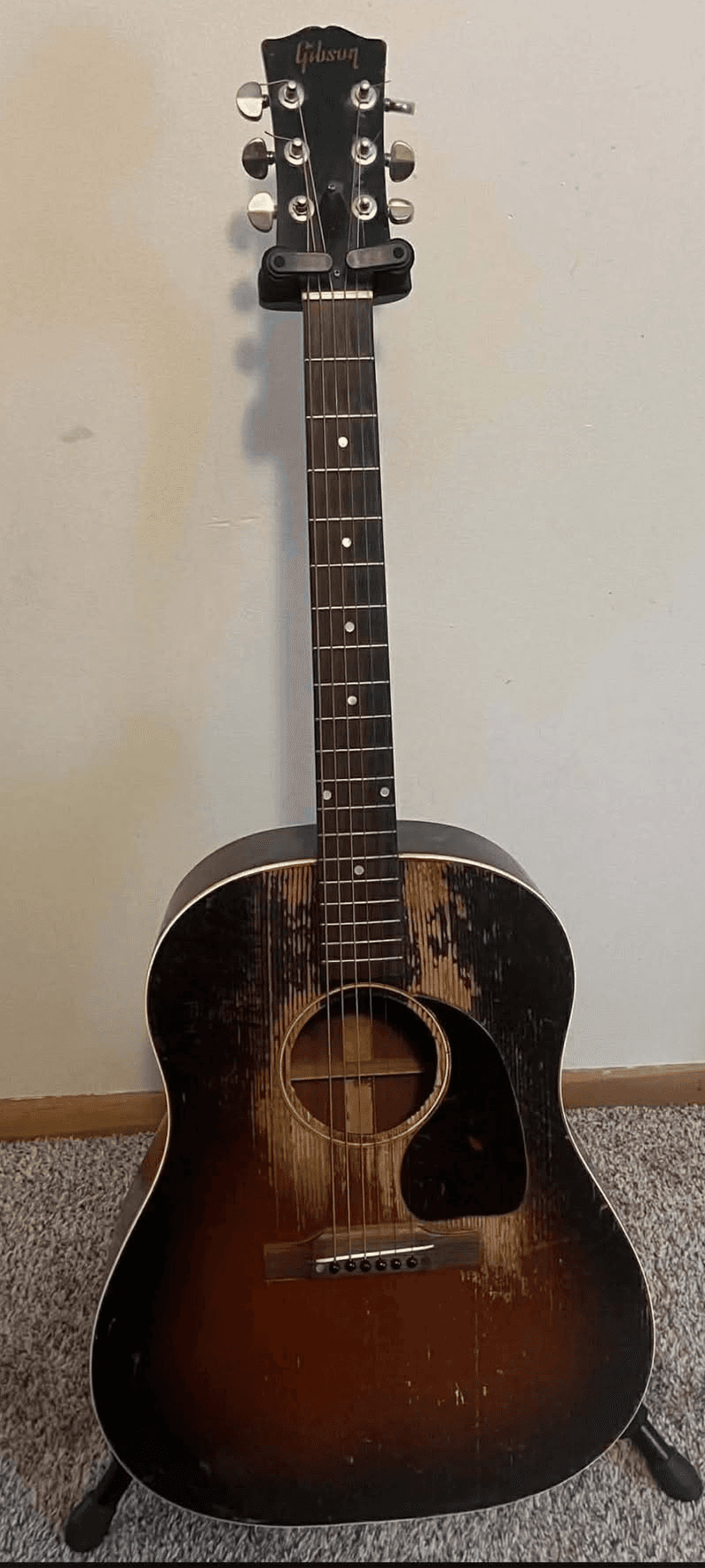
A repaired guitar is not automatically worthless. A clean professional repair may preserve much of the instrument’s value. The repair must be documented, stable, and honestly described.
When to Get a Professional Appraisal
Seek a qualified guitar repairer, vintage dealer, or appraiser when:
- The guitar may be vintage
- The value could be several thousand dollars
- The instrument has a rare serial number
- The guitar may be counterfeit
- It has a famous previous owner
- It contains unusual original parts
- There is a structural repair
- You need insurance or estate documentation
Do not use an informal online opinion as a formal insurance or legal valuation.

Vintage and Rare Guitars Need a Different Valuation Method
Vintage guitar value cannot be estimated safely from age alone.
For a vintage guitar, verify:
- Exact model and production year
- Original finish
- Original pickups and hardware
- Neck and body dates, where available
- Factory modifications
- Repair history
- Provenance
- Case and paperwork
- Comparable sales of the same year and configuration
Vintage prices can vary widely. A refinished guitar, a guitar with a repaired headstock, and an untouched example may look similar in a basic listing but have very different market values.
Be cautious with claims such as “pre-war,” “all original,” “first year,” or “rare.” These descriptions need evidence. Ask for detailed photographs and service records when available.
For valuable guitars, avoid cleaning, polishing, refinishing, or replacing parts before getting advice. A well-intended repair can reduce collector value.
How to Check Whether a Used Guitar Is Genuine
Counterfeit guitars exist, especially for popular brands and expensive models.
Check:
- Serial number format
- Logo placement
- Headstock shape
- Font and decal details
- Neck plate and hardware
- Pickup construction
- Control cavity markings
- Factory labels
- Case details
- Seller history
- Unusually low price
A serial number alone does not prove authenticity. Counterfeit instruments may use copied or stolen serial numbers.
Compare the guitar with official manufacturer photographs and specifications. For an expensive purchase, ask the brand, an authorized dealer, or a qualified repair professional to inspect it.
Do not send a large payment to an unknown seller by an irreversible method. Use a payment method with buyer protection when possible, and inspect the guitar before completing a local transaction.

Common Mistakes When Estimating Used Guitar Value
Using the Original Purchase Price
What you paid does not determine what the guitar is worth today. Retail prices, model demand, and condition may have changed.
Using the Highest Online Listing
The highest asking price may represent an unsold guitar. Sold prices provide stronger evidence.
Treating Modifications as Full-Value Upgrades
A $300 pickup upgrade rarely adds the full $300 to resale value. Some buyers may prefer the change, while others want original parts.
Ignoring Repair Costs
A buyer will often subtract the cost of repairs, plus extra money for risk and inconvenience. A guitar that needs immediate work may sell for less than the repair estimate suggests.
Calling a Guitar “Mint”
Mint means more than “I took good care of it.” Use clear photographs and describe marks, fret wear, replaced parts, and repairs.
Forgetting Fees and Shipping
A high sale price does not equal a high payout. Calculate all costs before choosing a selling method.
Cleaning Too Aggressively
Do not use household cleaners, abrasive products, or unverified chemicals on a guitar. They can damage lacquer, plastics, labels, or hardware. Use the manufacturer’s care guidance or ask a qualified repair technician.

A Simple Used Guitar Value Checklist
Before pricing the guitar, complete this checklist:
- Identify the exact model.
- Record the serial number.
- Confirm the production year if possible.
- Check the current U.S. new price.
- Find at least five recent sold comparisons.
- Inspect the neck, frets, bridge, finish, and electronics.
- List all repairs and modifications.
- Confirm whether original parts are included.
- Check the value of the case or gig bag.
- Estimate shipping, selling fees, and repair costs.
- Set a price range rather than one rigid number.
- Use clear photos and honest condition terms.
If you cannot identify the model, start with detailed photos of the headstock, body, bridge, pickups, label, serial number, and control area. Those details often reveal the correct series.

Key Takeaways
- A used guitar is worth what similar guitars recently sold for, not what sellers currently ask.
- A common used guitar often sells for about 40% to 80% of its current new price.
- Exact model, condition, originality, demand, and selling method can change the result.
- Vintage and rare guitars need specialist research.
- Modifications may improve playability but do not always increase resale value.
- Always subtract fees, shipping, and repair costs when calculating your payout.
- Honest photos and accurate descriptions help protect both buyer and seller.
Frequently Asked Questions
Is a 20-year-old guitar worth more because it is old?
Not necessarily. Age adds value only when buyers want that specific model, production period, or historical style. Condition, originality, and demand matter more than age by itself.
How much value does a guitar lose after purchase?
There is no fixed depreciation rate. A common new guitar may lose value quickly after purchase, while a sought-after model may hold its value well. Check current sold listings instead of applying a universal percentage.
Are modified guitars worth less?
Often, yes, especially when the original parts are missing or the modification changes the body. A useful upgrade can improve playability, but it may not return its full cost at resale. Keep and include the original parts whenever possible.
Does a hard case increase a guitar’s value?
A genuine hard case can make a guitar easier to sell and may add meaningful value, particularly for high-end or vintage instruments. It usually does not add its full retail price to the guitar’s resale value.
Should I repair a used guitar before selling it?
Repair only when the work is likely to improve saleability or prevent a major price reduction. Get an estimate first. A costly repair may not return its full cost, especially on a low-value guitar.
How can I tell if a guitar is rare?
Confirm the exact model, year, production features, and sales history. A low production number or discontinued status does not automatically create demand. Compare the guitar with documented sales and seek professional advice for valuable instruments.
Is a guitar appraisal tax-deductible or valid for insurance?
A general online estimate is usually not enough for formal insurance, estate, donation, or tax purposes. Ask the relevant insurer, tax professional, or attorney what documentation is required, then use a qualified appraiser when necessary.
Conclusion: Find the Real Selling Range
To find out what a used guitar is worth, identify the exact instrument, compare recent U.S. sold prices, inspect its condition, and adjust for originality, repairs, accessories, fees, and selling method.
Start with a range, not a single number. If the guitar is common, recent marketplace sales may be enough. If it is vintage, rare, heavily modified, or structurally damaged, a qualified guitar appraiser or repair technician can help prevent an expensive mistake.