

Gibson makes the Les Paul guitar, while Epiphone produces more affordable Les Paul models under Gibson’s ownership.
The answer to who makes the Les Paul guitar depends on the model, price, and factory. Gibson builds the famous USA-made versions, while Epiphone makes licensed and Gibson-designed alternatives for players who want the same classic shape at a lower cost. This guide explains the history, brands, factories, quality levels, and buying tips behind the Les Paul name.

Who Makes the Les Paul Guitar Today?
Gibson makes the original Les Paul guitar. Gibson Brands, Inc. owns the Gibson and Epiphone brands, so both companies produce Les Paul-style instruments within the same brand family.
The main difference is simple:
• Gibson Les Paul guitars are premium instruments made mainly in the United States.
• Epiphone Les Paul guitars are more affordable models made under Gibson’s direction.
• Gibson Custom Shop builds high-end versions with special woods, finishes, and historic details.
The Les Paul name comes from guitarist and inventor Lester William Polsfuss, better known as Les Paul. However, Les Paul did not build every Les Paul guitar himself. He worked with Gibson to develop the design, electronics, and playing features that shaped the model.
So, when people ask who makes the Les Paul guitar, the clearest answer is Gibson. Epiphone makes related versions for a wider range of players.
Gibson: The Original Les Paul Manufacturer
Gibson introduced the first Gibson Les Paul model in 1952. The guitar came from a partnership between Gibson and Les Paul, who was already famous for his electric guitar experiments and recording work.
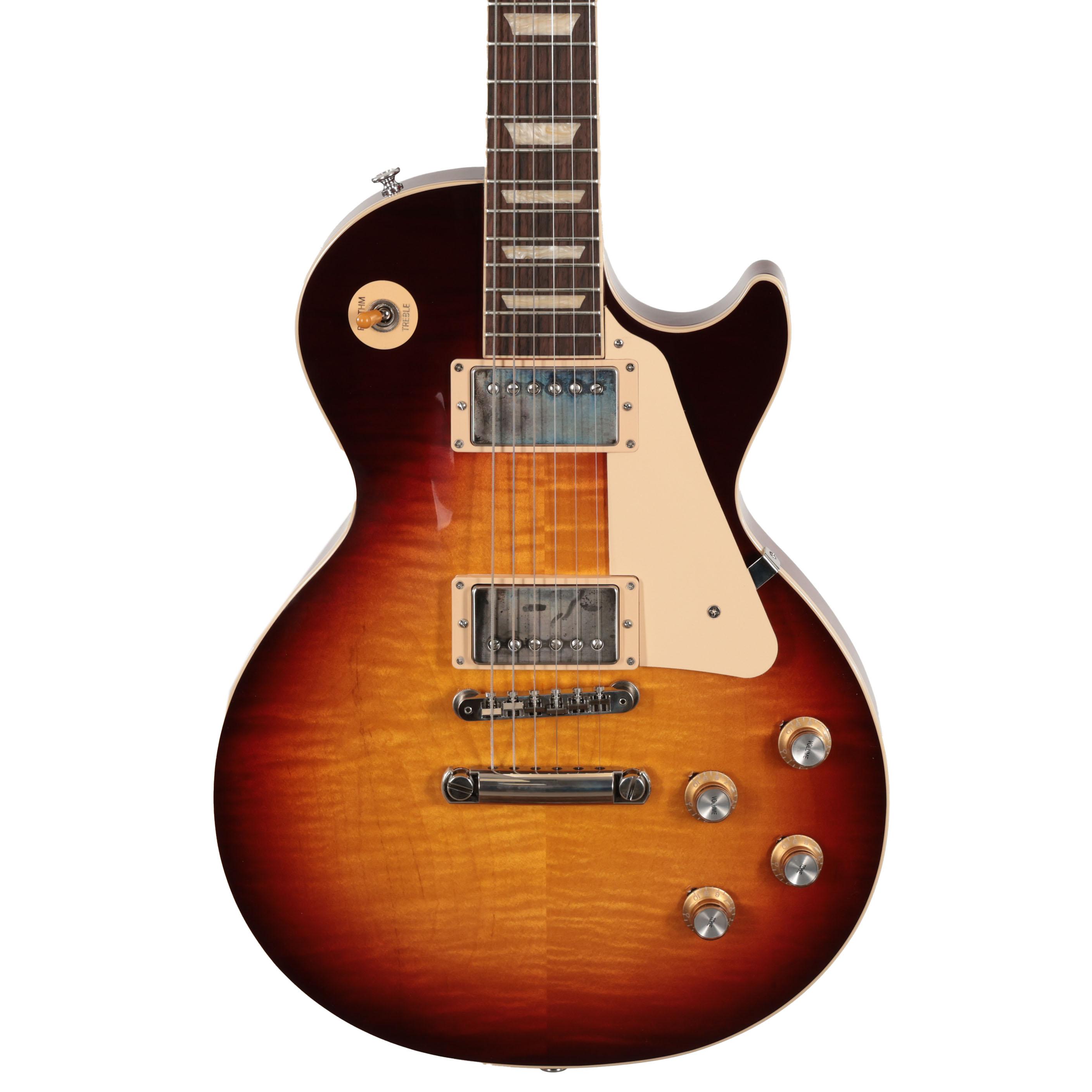
The early design used a solid mahogany body, a carved maple top, two single-coil P-90 pickups, and a set neck. Later models adopted the humbucking pickups that became a major part of the Les Paul sound.
Gibson makes several Les Paul families today, including:
• Les Paul Standard, which follows the core design with traditional features.
• Les Paul Studio, which offers a simpler build and fewer decorative details.
• Les Paul Traditional and Classic models, which may include modern or vintage-inspired features.
• Les Paul Modern, which adds features such as weight relief, high-output pickups, and improved upper-fret access.
• Gibson Custom Shop Les Paul models, which focus on historically accurate details and premium craftsmanship.
Gibson’s main electric guitar production is based in Nashville, Tennessee. The company also has a Gibson Custom Shop operation there. Each model may differ in construction, finish, electronics, and inspection standards, so the factory alone does not tell the full story.

Who Makes Epiphone Les Paul Guitars?
Epiphone makes lower-priced Les Paul guitars under the Gibson Brands umbrella. These guitars use the Les Paul name and general design, but they are not the same instruments as USA-made Gibson models.
Many Epiphone Les Paul guitars are made in Asia. The exact factory and country can vary by series and production year. Some higher-end Epiphone models have also been made in the United States, including select Epiphone USA releases.
Epiphone models often include:
• Les Paul Special, a basic and affordable version.
• Les Paul Standard, designed for players who want the classic look and sound.
• Les Paul Custom, known for its black finish, gold hardware, and upscale appearance.
• Inspired by Gibson models, which aim to copy key Gibson specifications more closely.
• Artist signature models, created with input from musicians.
Epiphone guitars usually cost less because of differences in labor, materials, hardware, finishing, electronics, and quality control. That does not make them poor instruments. A well-set-up Epiphone can be an excellent choice for a beginner, working musician, or player who needs a reliable backup guitar.
When researching who makes the Les Paul guitar, remember that “Les Paul” can refer to both Gibson and Epiphone products. The logo on the headstock is the fastest way to tell which brand built the instrument.
Gibson Les Paul vs. Epiphone Les Paul
Gibson and Epiphone Les Paul guitars share the same broad design, but they differ in important ways. Think of them as two versions of the same recipe. The ingredients and cooking method are related, but the details affect the final result.
| Feature | Gibson Les Paul | Epiphone Les Paul |
|---|---|---|
| Brand position | Premium | Affordable to mid-range |
| Main production | United States | Mostly Asia, with some USA models |
| Wood selection | Generally higher grade | Varies by series |
| Pickups | Gibson USA or Custombucker options | Epiphone or Gibson-designed options |
| Finish work | More detailed and labor-intensive | More cost-efficient |
| Price | Higher | Lower |
| Best for | Professionals, collectors, enthusiasts | Beginners, students, gigging players |
Gibson models often have nitrocellulose lacquer finishes, depending on the series. Epiphone guitars commonly use more cost-efficient finishes, such as poly-based coatings. Nitro finishes can age in a distinctive way, but they also need more care and may show marks more easily.
Hardware is another key difference. Gibson guitars may use premium tuners, bridges, tailpieces, and pots. Epiphone hardware has improved greatly, especially in recent years, but it may still use less expensive components.
In practical terms, a good Epiphone can deliver the Les Paul feel without the Gibson price. A Gibson usually offers more refined finishing, stronger resale value, and a closer connection to the classic USA-made specification.

Where Are Les Paul Guitars Made?
The answer depends on the brand and model.
Gibson Les Paul production
Gibson makes most standard USA Les Paul guitars in Nashville, Tennessee. The process includes wood selection, body shaping, neck construction, binding, finishing, hardware installation, electronics work, and final inspection.
Gibson Custom Shop guitars are also associated with Nashville production. These instruments may receive more handwork and may follow specific historic designs. A Custom Shop Reissue is usually made to match details from a particular vintage year.
Epiphone Les Paul production
Many Epiphone Les Paul guitars are made in Asian factories. Production locations can change, so the back of the headstock, product page, or official specifications should be checked for a particular model.
Some Epiphone USA models are made in Nashville. These are not the same as regular imported Epiphone models and usually carry a much higher price.
Vintage Les Paul production
Vintage Gibson Les Paul guitars from the 1950s and 1960s were made in the United States. These instruments are now collector pieces, and their value depends on originality, condition, repairs, and documented history.
A vintage Les Paul with replaced pickups or a repaired headstock may sound excellent but sell for much less than an untouched example. This is one reason authentication matters.

Did Les Paul Make the Guitar Himself?
Les Paul helped design and promote the guitar, but Gibson manufactured it. His role was similar to that of a creative partner and product adviser.
Les Paul had already built experimental instruments before his Gibson partnership. His famous “Log” guitar used a solid center block with detachable sides. It was not the exact design later sold as the Gibson Les Paul, but it helped prove that solid-body electric guitars could reduce feedback and produce strong sustain.
Gibson brought its own expertise in carved maple tops, set-neck construction, acoustic instrument building, and large-scale production. The final Les Paul guitar was the result of collaboration between Les Paul and Gibson engineers.
This distinction matters because people often say “Les Paul made the guitar.” A more accurate statement is that Les Paul helped create and shape the design, while Gibson built and sold the instrument.

How the Les Paul Design Changed Over Time
The Les Paul guitar has changed many times since its launch. Gibson has reused the name across different eras, so two Les Paul models may look similar but feel very different.
Important changes include:
• The original 1952 model used P-90 pickups and a trapeze-style tailpiece.
• Later 1950s models gained the stopbar tailpiece and Tune-o-matic bridge.
• Humbucking pickups became a defining feature of the Les Paul sound.
• The 1961 design evolved into what became the SG shape, although it was first sold as a Les Paul model.
• The Les Paul returned to its familiar single-cutaway shape in the late 1960s.
• Modern versions may use chambered bodies, push-pull controls, locking tuners, and compound-radius fingerboards.
These changes explain why the phrase “Les Paul sound” can mean several things. A P-90 model sounds more direct and raw. A PAF-style humbucker model sounds warm, clear, and dynamic. A modern high-output model may have more power and compression.
When asking who makes the Les Paul guitar, it also helps to ask which era and specification you mean. A 1957 Gibson Les Paul Custom and a modern Epiphone Les Paul Special share a name, but they are very different instruments.

What Makes a Les Paul Guitar Different?
The Les Paul design is known for several features that affect its tone and feel.
Mahogany body
Many Les Paul guitars use a mahogany body. Mahogany is dense and tends to produce a strong, warm response. It also adds weight, which is why some Les Paul guitars feel heavy compared with a Stratocaster or Telecaster.
Maple top
A carved maple top is a classic Les Paul feature. It adds visual depth and can add brightness and attack to the sound. Some lower-cost models use maple veneers or maple caps with different thicknesses, so specifications should be checked carefully.
Set neck
The neck is glued into the body rather than bolted on. This construction supports the traditional Les Paul feel and sustain, although neck joints can be more difficult and expensive to repair.
Humbucking pickups
Most classic Les Paul models use two humbucking pickups. These pickups reduce the hum common with single-coil designs and produce a thick sound for rock, blues, jazz, and heavier music.
Two volume and two tone controls
The separate controls let players blend neck and bridge pickup sounds. Many players use the neck pickup for warm rhythm parts and the bridge pickup for sharper leads.
Are Gibson Les Paul Guitars Worth the Price?
A Gibson Les Paul can be worth the price if you value USA production, premium finishing, long-term ownership, and the traditional Gibson experience. It is not automatically the best choice for every player.
The higher price may reflect:
• More expensive labor and production costs.
• Carefully selected woods.
• Detailed binding and finish work.
• Gibson-made pickups and electronics.
• Stronger resale demand.
• More consistent connection to historic specifications.
However, price does not guarantee that every Gibson will suit every player. Les Paul guitars can vary in weight, neck shape, fret condition, and setup. Try the exact instrument when possible.
One practical mistake is buying by reputation alone. I recommend checking the neck comfort, weight, fret edges, pickup output, tuning stability, and unplugged response before focusing on the logo. The best guitar is the one that feels right in your hands and makes you want to practice.
Are Epiphone Les Paul Guitars Good?
Yes. Modern Epiphone Les Paul guitars can be very good, especially in the mid-range and Inspired by Gibson series.
They often provide:
• The familiar single-cutaway body shape.
• Two humbucking pickups.
• A set neck.
• Comfortable modern neck profiles.
• Attractive finishes.
• Lower replacement and repair costs.
An Epiphone may need a professional setup after purchase. Common adjustments include truss rod relief, bridge height, pickup height, and intonation. These changes can make a major difference.
A useful buying tip is to budget for a setup rather than assuming the guitar is ready for your exact playing style. Even expensive guitars may need adjustment after shipping, seasonal changes, or a change in string gauge.
The main limitation is that not every Epiphone has the same materials or electronics as a Gibson. Still, that difference is often reasonable when the price is several times lower.
How to Identify Who Made a Les Paul Guitar
You can usually identify the maker by checking a few details.
Look at the headstock logo. A Gibson logo means Gibson made the guitar. An Epiphone logo means Epiphone made it.
Read the label or serial number. The serial number may reveal the production year and factory, but formats vary.
Check the back of the headstock. Some instruments show the country of manufacture there.
Compare the model name with official specifications. A Les Paul Standard, Studio, Classic, Custom, and Special can differ greatly.
Inspect the case and paperwork. Original documents can help confirm the model and production details.
Ask for clear photos when buying used. Request images of the headstock, serial number, bridge, pickups, and control cavity if needed.
Serial number research is helpful, but it is not perfect. Some numbers have been reused, changed, or poorly recorded. For a costly vintage guitar, seek an appraisal from a trusted vintage dealer or qualified expert.
Common Mistakes When Buying a Les Paul
The biggest mistake is assuming all Les Paul guitars are alike. They are not. Brand, factory, year, model, neck shape, pickups, weight, and setup all affect the experience.
Avoid these common problems:
• Buying a fake because the price seems unusually low.
• Ignoring a repaired headstock on a used Gibson.
• Choosing only by finish color.
• Assuming a heavier guitar always sounds better.
• Failing to test the upper-fret access.
• Forgetting to inspect fret wear.
• Buying without checking the serial number.
• Confusing a Les Paul-style guitar with an official Gibson or Epiphone Les Paul.
Counterfeit Gibson guitars do exist. Warning signs include poor logo placement, incorrect headstock shape, wrong control layouts, low-quality hardware, and a serial number that does not match the model. If a deal feels too good to be true, slow down and verify it.
Which Les Paul Should You Choose?
Your best choice depends on your budget, goals, and playing needs.
Choose a Gibson Les Paul if:
• You want a USA-made instrument.
• You value traditional Gibson construction.
• You plan to keep the guitar for many years.
• You want strong resale potential.
• You prefer premium pickups and finishing.
Choose an Epiphone Les Paul if:
• You are a beginner or developing player.
• You need a lower-cost instrument.
• You want a dependable gig or backup guitar.
• You plan to upgrade pickups or hardware later.
• You want the Les Paul design without a large investment.
Choose a vintage Gibson if:
• You understand vintage guitar condition.
• You can verify its history.
• You are prepared for higher repair and insurance costs.
• You value collectability as much as playability.
For many players, a mid-priced Epiphone with a good setup is the smartest first step. You can learn what you like before spending several thousand dollars on a Gibson.
Frequently Asked Questions About Who Makes the Les Paul Guitar
Who makes the original Les Paul guitar?
Gibson makes the original Les Paul guitar. The design was created through a collaboration between Gibson and guitarist Les Paul.
Does Epiphone make Les Paul guitars?
Yes, Epiphone makes Les Paul guitars under Gibson Brands. Epiphone models are usually more affordable and are often made outside the United States, although some special models are made in the USA.
Are Gibson and Epiphone the same company?
Gibson owns Epiphone. They are separate brands, but Gibson controls the overall brand relationship and produces or approves Les Paul designs for both lines.
Where are Gibson Les Paul guitars made?
Most standard Gibson Les Paul guitars are made in Nashville, Tennessee. Gibson Custom Shop instruments are also associated with Nashville production.
Are Epiphone Les Paul guitars made in China?
Many Epiphone Les Paul guitars have been made in China and other Asian production centers. The exact location depends on the model and production year, so check the instrument or official specifications.
Did Les Paul invent the Les Paul guitar?
Les Paul helped develop the design and worked closely with Gibson, but Gibson manufactured the commercial guitar. His earlier solid-body experiments strongly influenced the final instrument.
Is a Gibson Les Paul better than an Epiphone Les Paul?
A Gibson Les Paul usually offers higher-end materials, finishing, electronics, and USA production. A good Epiphone can still offer excellent playability and value, especially after a professional setup.
Conclusion
Gibson makes the original Les Paul guitar, while Epiphone makes more affordable Les Paul models within the Gibson family. Gibson Les Paul guitars are mainly built in Nashville, while many Epiphone models are produced in Asia, with some USA-made exceptions.
The right choice depends on your budget, playing goals, and personal feel. Try several models, check the exact specifications, inspect used guitars carefully, and do not overlook the value of a proper setup. Explore trusted dealers and owner reviews, then choose the Les Paul that makes you want to play more.