

Yes, Fender acoustic guitars are good for beginners and casual players seeking value, comfort, and reliable sound.
Fender acoustic guitars have earned a strong place in the entry-level and mid-range market. Their comfortable necks, familiar body shapes, easy availability, and useful features make them practical choices, although they are not all built for the same player or budget. This guide explains when Fender acoustic guitars are good, where they fall short, and which features deserve your attention before you buy.
Are Fender Acoustic Guitars Good Overall?
Yes, Fender acoustic guitars are good for many beginners, hobby players, songwriters, and casual performers. They offer clear sound, comfortable playability, attractive designs, and fair prices. Fender also has a wide product range, from simple beginner guitars to more advanced models with solid wood tops and onboard electronics.
The main point is that “Fender acoustic guitar” describes many different instruments. A low-cost FA-125 is not built like a higher-grade Paramount model. Comparing the exact model matters more than judging the Fender name alone.
Fender acoustic guitars are often a safe choice because they are easy to find in music stores. You can usually try one, compare it with similar guitars, and find replacement parts or service without much trouble.
For most buyers, their main strengths are:
• Comfortable necks that suit new players
• Good sound for the price
• Attractive body shapes and finishes
• Reliable availability
• Models with built-in tuners and electronics
• Beginner bundles that include useful accessories
Still, no guitar is perfect. Some inexpensive Fender models use laminated wood, basic hardware, and factory setups that may need adjustment. These limits are normal at this price level and do not make the guitars poor instruments.

What Makes Fender Acoustic Guitars Good?
Several design choices help explain why Fender acoustic guitars are good for new and intermediate players. The company focuses on familiar shapes, easy playability, and useful features rather than trying to compete only with high-end guitar makers.
Comfortable necks
Many Fender acoustic guitars have neck profiles that feel slim and manageable. This can help beginners form chords without feeling that the guitar neck is too large.
A comfortable neck does not mean every Fender guitar will suit every hand. Try holding the guitar if possible. Your thumb should rest naturally behind the neck, and your fingers should reach common chords without sharp strain.
Balanced body designs
Fender sells dreadnought, concert, auditorium, and travel-style acoustic guitars. A dreadnought gives strong volume and bass. A concert or auditorium model may feel easier to hold, especially for smaller players.
Body shape affects comfort as much as sound. A large dreadnought can feel like a wide suitcase against your ribs, while a concert guitar may sit more naturally on your lap.
Useful electronics
Many Fender acoustic-electric guitars include a pickup and preamp system. These features let you connect the guitar to an amplifier, PA system, or recording interface.
Built-in electronics are useful for open-mic nights, church music, small performances, and home recording. They do not automatically make the guitar sound better when unplugged, but they add flexibility.
Strong visual appeal
Fender acoustic guitars often use modern finishes, bold colors, and familiar Fender design details. This matters more than some players admit. A guitar that looks inviting is more likely to stay in your hands.
The best guitar is often the one you want to play every day. Regular practice has a greater effect on progress than a small difference in wood grade.
Fender Acoustic Guitar Models Worth Considering
The right Fender acoustic guitar depends on your playing level, budget, and intended use. Here are several common model families and what they generally offer.
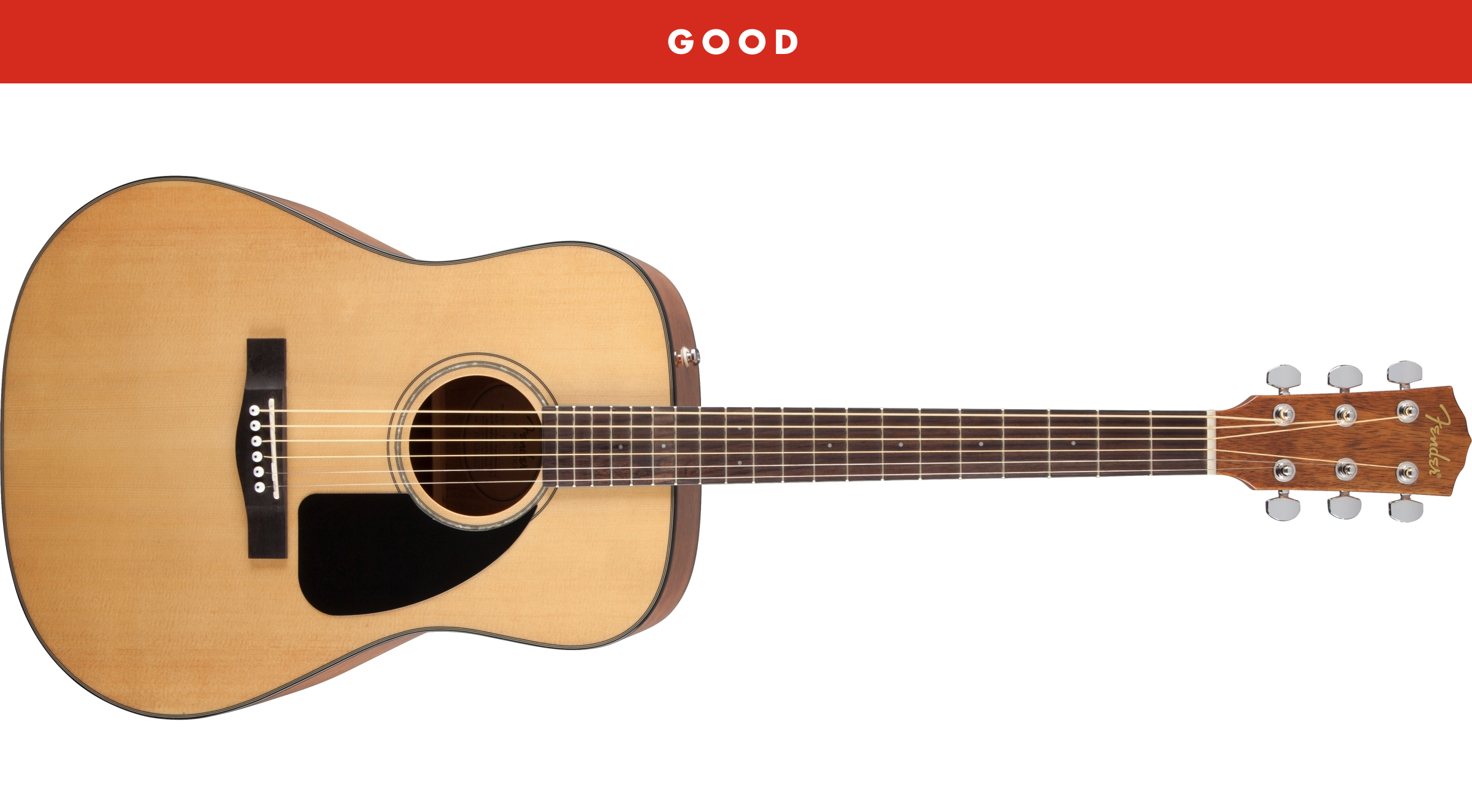
Fender FA-125
The FA-125 is an entry-level dreadnought acoustic guitar. It commonly features a laminated spruce top, laminated back and sides, a nato or similar neck, and a traditional dreadnought body.
It is a practical first guitar for strumming and basic chord practice. The dreadnought body gives it a strong voice, but its size may feel less comfortable for children or smaller adults.
The FA-125 is often sold in starter packs. These packs may include a gig bag, picks, a strap, and a tuner. They can be convenient, but inspect the included accessories because bundle quality varies.
Fender CD-60S
The CD-60S is one of the more popular Fender acoustic models. Depending on the version, it may include a solid spruce top, laminated back and sides, and a comfortable rolled fingerboard edge.
A solid top can produce more openness and volume than a fully laminated top. It may also improve with age when cared for properly. The CD-60S is often a strong choice for a beginner who wants room to grow.
The CD-60S is available in different body shapes and electric versions. Check the exact product details before buying because specifications can change between editions.
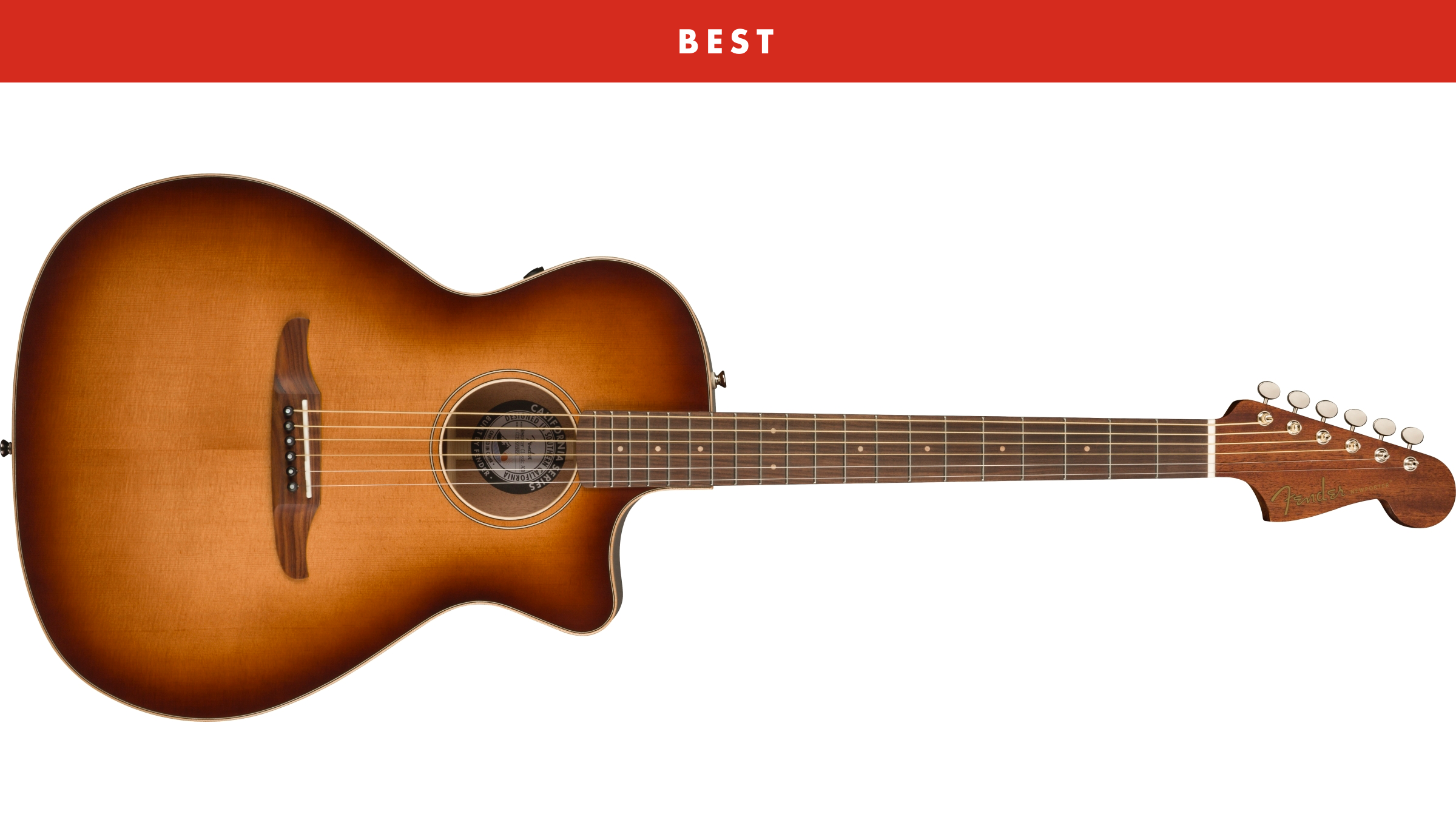
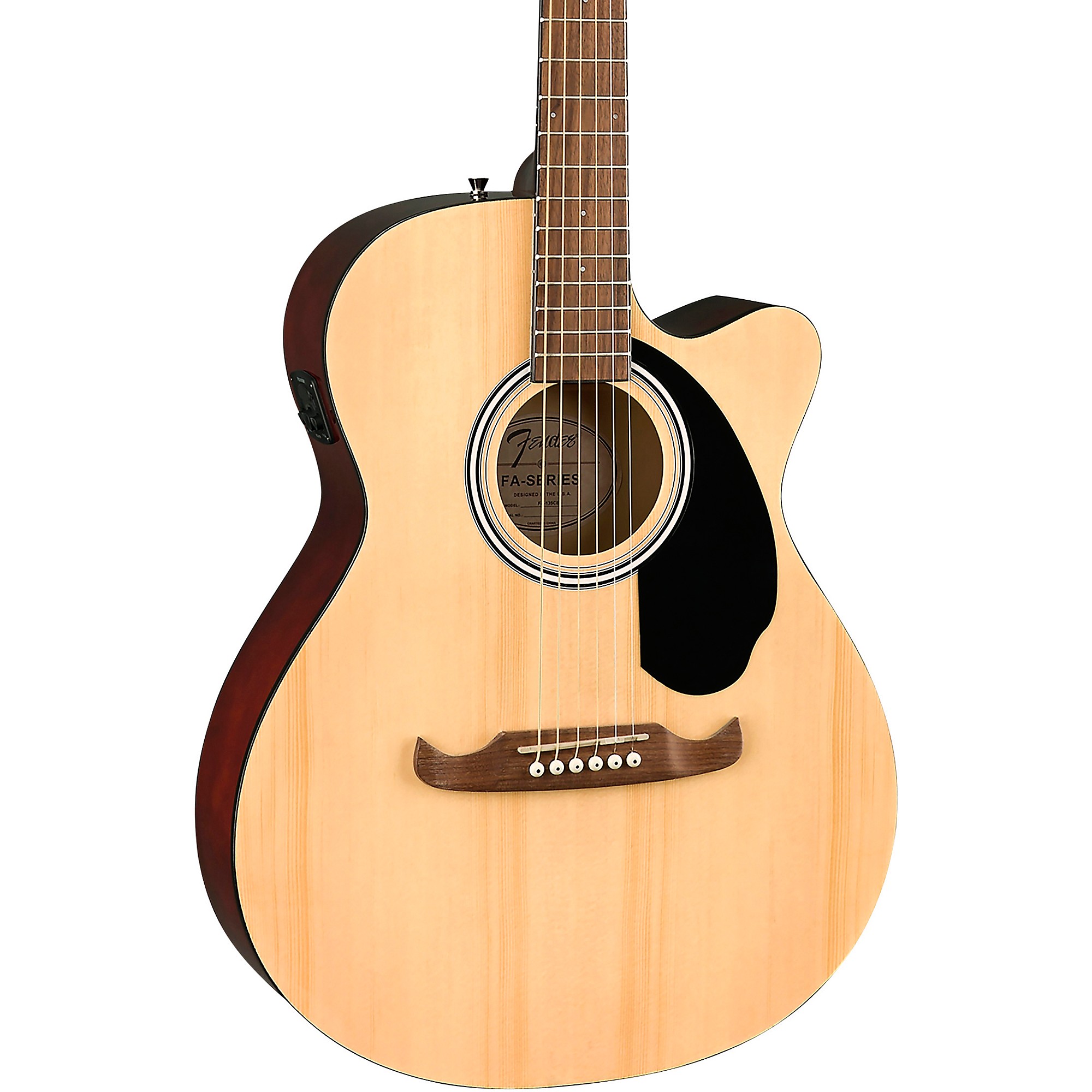
Fender FA-135CE
The FA-135CE is an acoustic-electric model with a cutaway. The cutaway gives easier access to higher frets, while the onboard electronics allow amplification.
This model suits players who want to practice at home and perform later. It is also useful for singers who need a simple setup for small venues.
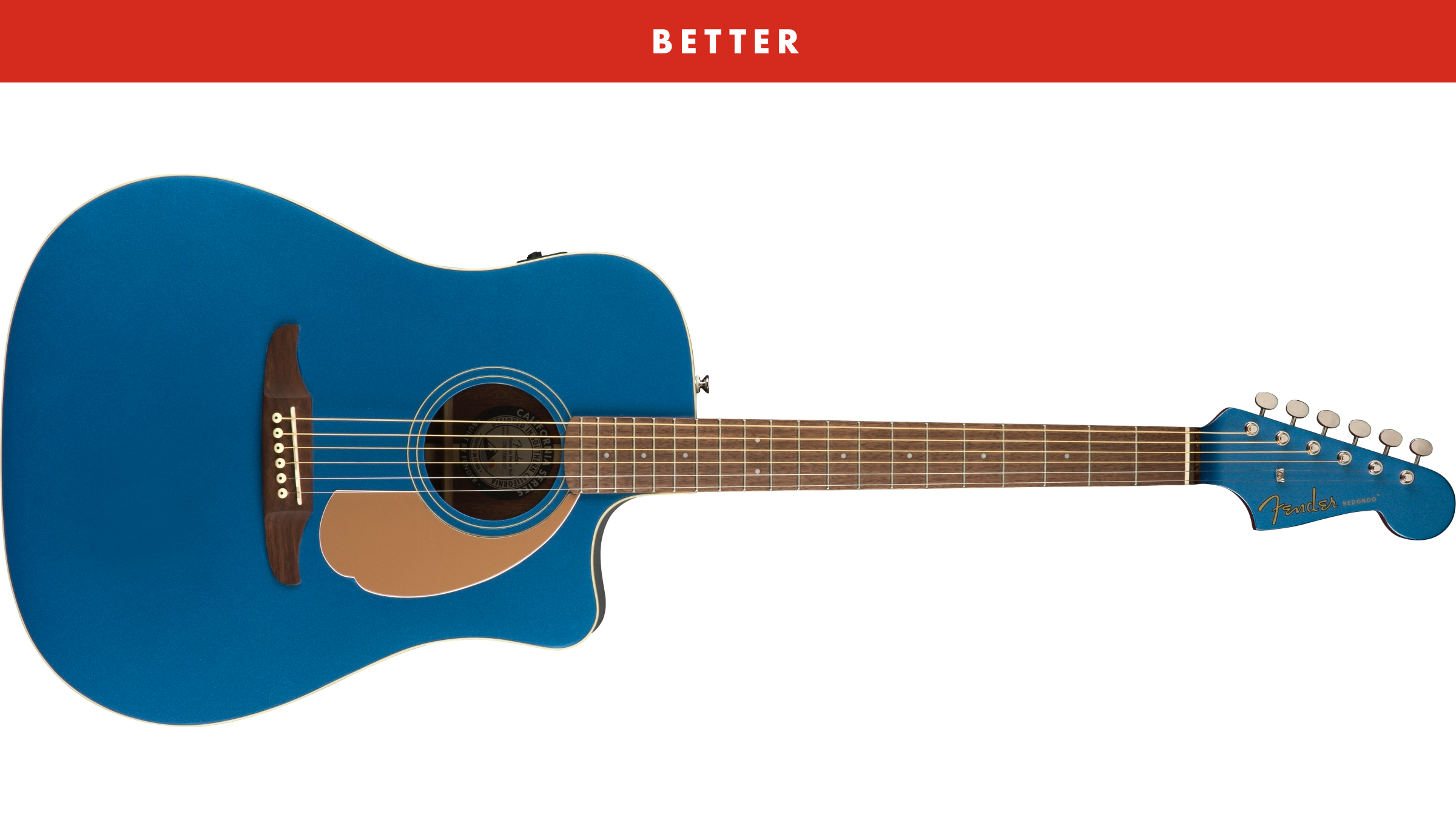
Fender Redondo Player
The Redondo Player uses a distinctive offset body design inspired by Fender’s electric guitar style. It often includes a cutaway and acoustic-electric electronics.
Its shape appeals to electric guitar players who want to move into acoustic music. The neck may feel familiar to Fender electric guitar fans, though the larger acoustic body still requires an adjustment period.
Fender Paramount Series
The Paramount line sits above Fender’s basic beginner range. These guitars may include solid wood construction, more detailed appointments, and improved electronics or hardware.
They can offer a richer sound and better long-term potential. However, buyers should compare them with similarly priced Yamaha, Takamine, Seagull, Martin, and Taylor models before deciding.

Fender Acoustic Guitar Sound Quality
Sound quality depends on the guitar’s wood, body shape, bracing, strings, setup, and player. A Fender acoustic guitar can sound bright, balanced, warm, or loud depending on the model.
Entry-level Fender acoustic guitars usually have a clear and direct sound. They work well for pop, country, folk, worship music, and basic singer-songwriter playing. Their tone may not have the depth or complex overtones of a premium solid wood guitar, but that difference is expected.
A solid spruce top often gives more response and tonal detail than a laminated top. Laminate construction, however, has its own benefit. It is usually more resistant to changes in humidity and can be less costly to produce.
Here is a simple comparison:
• Laminated top: Affordable, durable, and suitable for beginners
• Solid spruce top: More responsive, louder, and capable of developing richer tone
• Mahogany-style top: Often warmer and smoother than spruce
• Dreadnought body: Loud bass and strong strumming power
• Concert body: Balanced tone and easier physical comfort
• Auditorium body: Flexible tone for strumming and fingerpicking
When I compare beginner guitars, I pay close attention to note balance. A guitar may sound impressive on the lowest strings but weak on the higher strings. Play simple chords, single-note lines, and a few fingerpicked patterns before making a decision.
Fender Acoustic Guitar Playability and Setup
Playability is one of the biggest reasons Fender acoustic guitars are good for beginners. A guitar that is easy to fret can make practice feel encouraging instead of painful.
However, factory setup quality can vary. Two guitars of the same model may feel different because of string height, neck relief, fret condition, and nut filing.
What to check before buying
Use this short inspection process:
Sit with the guitar for several minutes.
Play open chords near the nut.
Play notes around the fifth and twelfth frets.
Check whether the strings feel unusually high.
Listen for buzzing or dead notes.
Test the tuning machines.
Look along the neck for obvious warping.
Check the bridge and top for lifting or cracks.
High action is a common issue on inexpensive acoustic guitars. “Action” means the distance between the strings and the frets. If it is too high, beginners may press too hard and develop sore fingers quickly.
A professional setup can often improve a budget guitar. A repair technician may adjust the truss rod, shape the saddle, smooth the frets, and correct the nut. This small investment can make a larger difference than buying a slightly more expensive guitar with poor setup.
One mistake I often see new players make is judging a guitar only by its finish. A beautiful guitar with painful action will usually collect dust. Always place comfort and function above color or decoration.

Advantages and Disadvantages of Fender Acoustic Guitars
Fender acoustic guitars are good value in many cases, but the advantages and limitations should be clear.
Main advantages
• Affordable prices across several model levels
• Comfortable necks for many beginners
• Familiar designs from a respected guitar company
• Wide selection of body shapes
• Acoustic-electric models for live use
• Easy access through local dealers and online stores
• Attractive finishes that encourage regular playing
• Good availability of replacement strings and accessories
Main disadvantages
• Some entry-level models use basic laminated construction
• Factory setup may need improvement
• Low-cost electronics may sound simple when amplified
• Dreadnought models can feel large for smaller players
• Tone may lack the complexity of higher-priced guitars
• Quality can vary slightly between individual instruments
These disadvantages do not mean Fender acoustic guitars are bad. They show why buyers should match the guitar to their needs.
A beginner who wants to learn chords may not need premium tonewoods. A working performer may need stronger electronics, better tuning stability, and a more refined acoustic voice. Paying for features you will not use is just as unhelpful as buying too little guitar for your goals.
Are Fender Acoustic Guitars Good for Beginners?
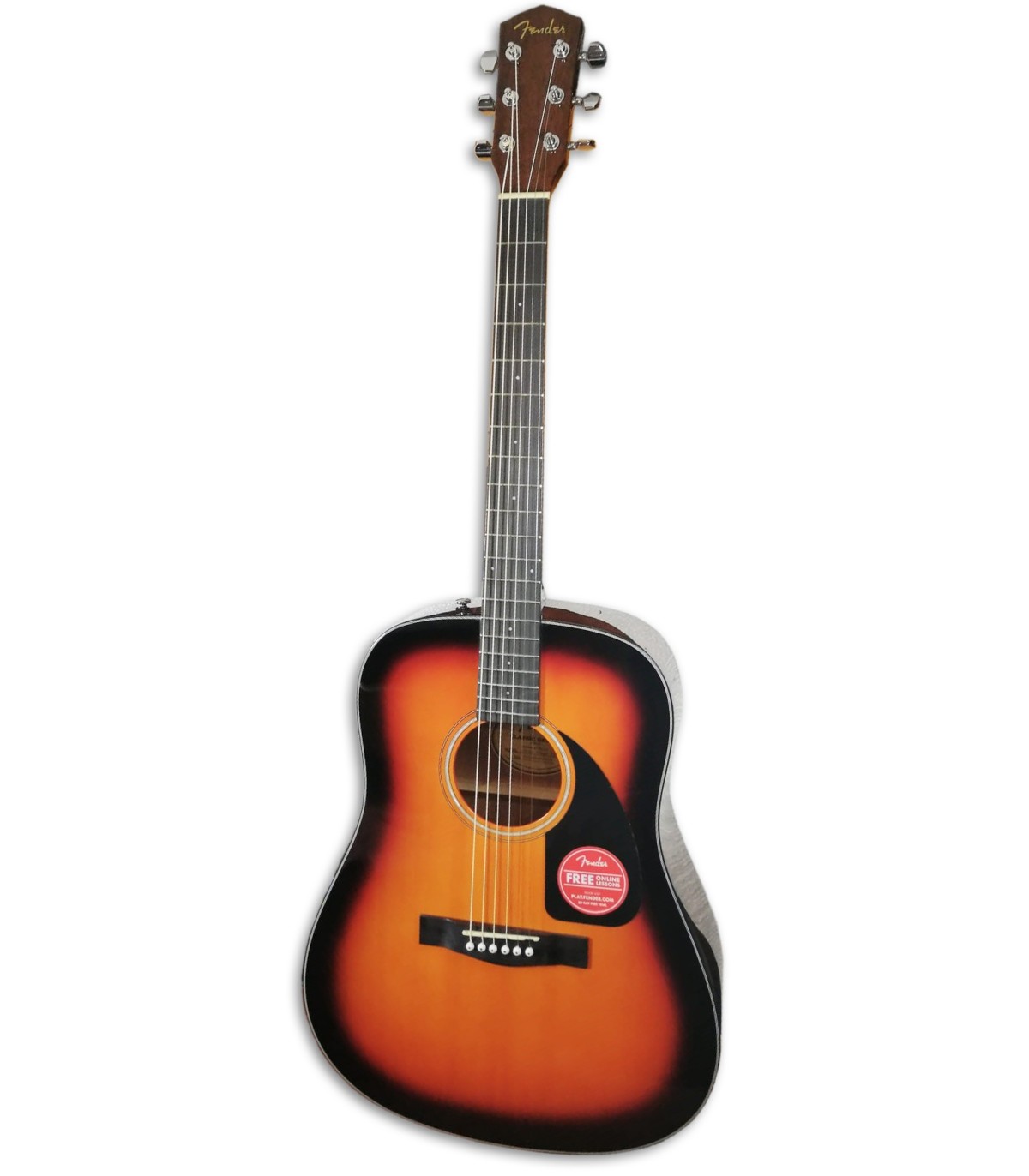
Fender acoustic guitars are good for beginners because they combine reasonable prices with accessible playability. Many new players want a guitar that sounds pleasant, feels comfortable, and does not require expert knowledge to start using.
A Fender starter pack can be convenient for a first-time player. Yet it is worth checking whether the included gig bag, tuner, and strings meet your needs. Sometimes buying the guitar separately and choosing better accessories offers more value.
Beginners should also think about body size. A full dreadnought may produce strong sound, but a concert or auditorium model can be easier to hold during long practice sessions.
New players should budget for a few basic items:
• A clip-on tuner
• A padded gig bag
• A strap
• Extra light or custom-light strings
• Picks in several thicknesses
• A humidifier for dry climates
• A professional setup if the action feels high
Your first guitar does not need to be expensive. It needs to make practice easy enough that you keep returning to it. That is where many Fender acoustic guitars perform well.
Are Fender Acoustic Guitars Good for Intermediate Players?
Fender acoustic guitars can serve intermediate players, especially models with solid tops, better hardware, and acoustic-electric features. They are suitable for songwriting, casual recording, rehearsals, and small performances.
Intermediate players may eventually notice limits in projection, sustain, tonal detail, or tuning stability. These limits depend on the model and how it compares with guitars from brands that focus mainly on acoustic instruments.
If you already understand your preferred tone, compare Fender with Yamaha, Takamine, Alvarez, Seagull, Martin, and Taylor. Play the same chords and picking patterns on each guitar. Your ears and hands should guide the final choice.
Fender models with cutaways are helpful for players who use higher fret positions. They are less essential for traditional strumming, where most playing takes place near the first few frets.
Fender Acoustic Guitars Compared With Other Brands
Fender competes most directly with other brands in the beginner and mid-range market. Each company has a slightly different strength.
• Yamaha often receives praise for consistent construction and balanced beginner guitars.
• Epiphone offers affordable acoustic models with classic styling and familiar Gibson-inspired designs.
• Alvarez is known for several value-focused acoustic guitars with strong tone for the price.
• Takamine is popular with performers who want dependable acoustic-electric systems.
• Seagull often appeals to players seeking a distinctive sound and solid construction.
• Martin and Taylor offer broad ranges, including premium instruments, but their lower-priced models may use different construction methods.
Fender acoustic guitars are good when you value comfort, style, availability, and an easy path into acoustic playing. Another brand may be better if your priority is fingerstyle detail, advanced projection, or a specific neck shape.
Brand reputation is useful, but it should not replace a hands-on test. Acoustic guitars are made from natural materials, so individual instruments can sound different even when they share the same model name.
How Much Should You Pay for a Fender Acoustic Guitar?
Fender acoustic guitars are available at several price levels, but prices change by country, retailer, finish, and included electronics. Entry-level models are usually aimed at first-time players, while solid-top and professional-style models cost more.
A sensible buying plan is:
Set a total budget, including accessories and setup.
Decide whether you need a pickup.
Choose a body shape that feels comfortable.
Compare at least three guitars.
Inspect the setup and construction.
Keep money aside for strings and a tuner.
Do not assume the most expensive Fender guitar is automatically the best choice. A mid-priced model with a good setup may feel and sound better than a costly guitar that does not fit your body or playing style.
Also consider the used market. A carefully maintained used Fender acoustic guitar may offer better value than a new beginner bundle. Check for neck movement, bridge lifting, top cracks, fret wear, and electronic problems before buying used.
How to Maintain a Fender Acoustic Guitar
Proper care helps any acoustic guitar last longer. Wood reacts to temperature and humidity, so avoid leaving the instrument in a car, near a heater, or in direct sunlight.
Follow these simple care habits:
• Wipe the strings and body after playing.
• Store the guitar in a case or padded gig bag.
• Keep it away from extreme heat and cold.
• Use a humidifier when indoor air becomes very dry.
• Change strings when they sound dull or feel rough.
• Check the neck and bridge for changes.
• Take the guitar to a technician when buzzing suddenly appears.
Most acoustic guitars are happiest in moderate indoor humidity. Exact conditions vary by location, but avoiding very dry or very damp environments is the key lesson.
Do not use household furniture polish on the guitar unless the manufacturer specifically approves it. A clean, soft cloth is usually enough for regular care.
Common Mistakes When Buying a Fender Acoustic Guitar
The most common mistake is buying based only on price. A cheap guitar that feels uncomfortable may cost more in frustration, repairs, and lost motivation.
Other mistakes include:
• Choosing a body that feels too large
• Ignoring string height
• Buying electronics when you never plan to amplify
• Failing to test tuning stability
• Assuming every model has a solid wood top
• Overlooking cracks or bridge problems on used guitars
• Buying a guitar without checking its return policy
• Selecting heavy strings that make fretting harder
Take your time. Play the guitar softly and loudly. Test both strumming and fingerpicking. Ask a music teacher, technician, or experienced player to inspect it if you are unsure.
Frequently Asked Questions About Are Fender Acoustic Guitars Good
Are Fender acoustic guitars good for beginners?
Yes, many Fender acoustic guitars are good for beginners because they are affordable, comfortable, and easy to find. Choose a smaller body if a dreadnought feels too large, and consider a professional setup if the strings feel high.
Do Fender acoustic guitars sound good?
Fender acoustic guitars can sound very good for their price, especially models with solid spruce tops. Their tone varies by model, body shape, strings, and setup, so testing the exact guitar is important.
Are Fender acoustic guitars durable?
Most Fender acoustic guitars are durable when stored and maintained properly. Laminated models can handle normal use well, but every acoustic guitar should be protected from extreme heat, cold, and humidity.
Is Fender better than Yamaha for acoustic guitars?
Neither brand is always better. Fender may appeal to players who prefer its neck feel and styling, while Yamaha is often chosen for consistent construction and balanced tone.
Are Fender acoustic-electric guitars worth buying?
They can be worth buying if you plan to play through an amplifier, PA system, or recording interface. If you only play at home, a non-electric model may offer better value for your budget.
Which Fender acoustic guitar is best for a beginner?
The Fender FA-125 is a simple entry-level option, while the CD-60S can offer a more refined experience in versions with a solid top. The best choice depends on body comfort, setup, budget, and whether you need electronics.
Conclusion
Fender acoustic guitars are good for many beginners, casual players, songwriters, and performers who want useful features at a fair price. Their strongest qualities are comfort, style, availability, and a wide choice of body shapes and electronics.
They are not all equal, so compare the exact model, wood construction, setup, and body size. Try the guitar in person when possible, and remember that a proper setup can transform the playing experience.
Choose the Fender model that feels natural in your hands, then make time to play it every day. Explore local music stores, compare trusted reviews, and share your Fender acoustic guitar experience in the comments.