

To string a 12-string guitar, replace each string carefully, match octave pairs, and tune up slowly to avoid excess tension.
Learning how do you string a 12 string guitar can feel confusing at first, especially when every note has a partner. The process is safe and manageable when you understand string courses, follow the correct order, and tune in small steps. This guide explains the tools, string order, winding method, tuning process, and common mistakes so your guitar plays clearly and stays stable.

What You Need Before You String a 12-String Guitar
Before learning how do you string a 12 string guitar, gather the right tools. A calm setup makes the job much easier and reduces the chance of scratching the finish or bending a tuning post.
You will need:
• A new 12-string guitar set with the correct gauge and tuning
• A string winder
• A guitar tuner, preferably a clip-on or chromatic tuner
• A wire cutter
• A soft cloth or guitar mat
• A bridge pin puller, if your guitar has bridge pins
• Lemon oil or fretboard conditioner, only if the fretboard needs cleaning and the manufacturer allows it
Check the guitar’s label, owner’s manual, or manufacturer website before buying strings. Most acoustic 12-string guitars use light or extra-light strings because the total tension is much higher than on a six-string guitar.
A typical acoustic 12-string set may include .010 to .047 or .010 to .052 strings. Electric 12-string sets use different gauges and pairings, so never assume an acoustic set will work on an electric guitar.

Understand the 12-String Guitar String Order
The key to understanding how do you string a 12 string guitar is learning how the strings are paired. A 12-string guitar has six courses. Each course contains two strings that produce the same musical note, or a note and its octave.
From the lowest course to the highest course, standard tuning is:
Low E course: E2 and E3
A course: A2 and A3
D course: D3 and D4
G course: G3 and G3
B course: B3 and B3
High E course: E4 and E4
The low E, A, D, and G courses usually contain one standard string and one thinner octave string. The B and high E courses use two strings of the same pitch.
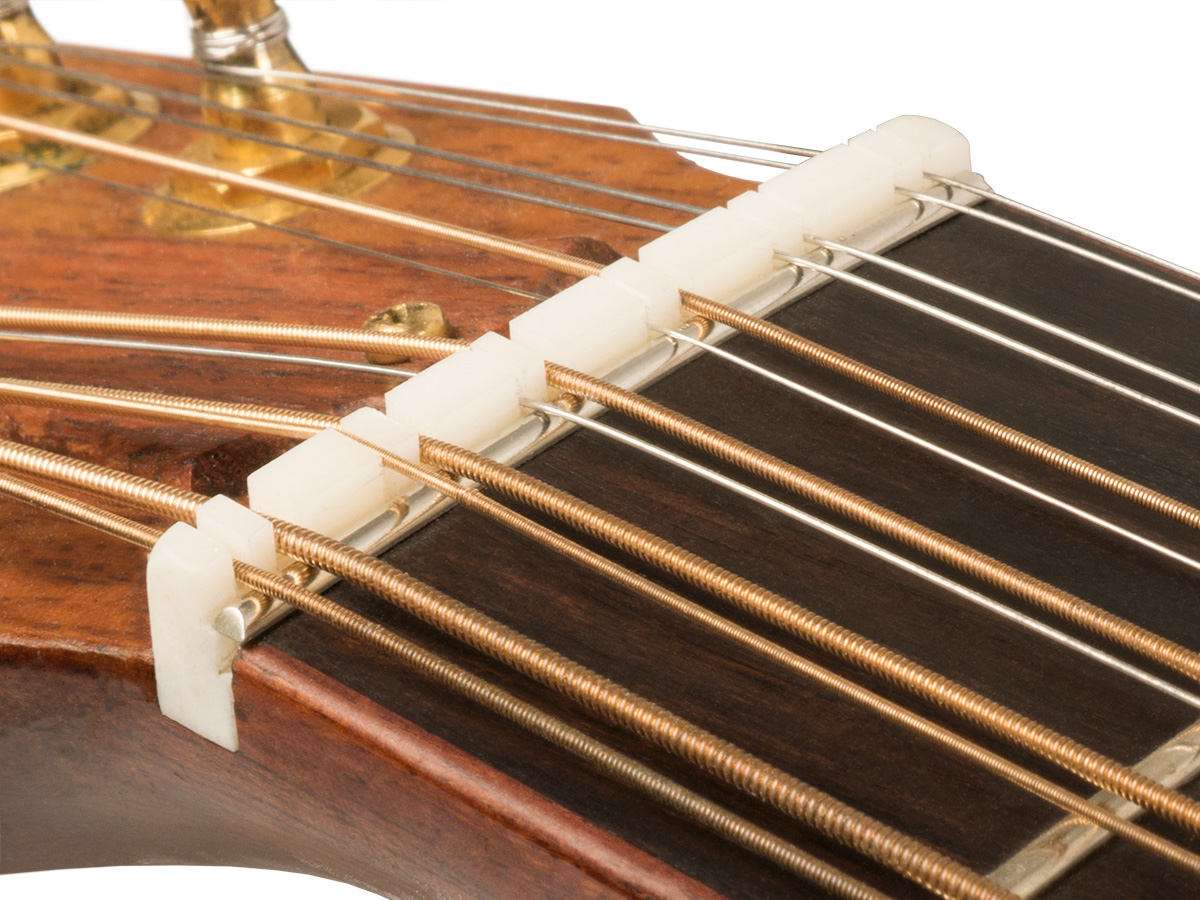
When you hold the guitar in playing position, each course has a thicker and thinner string. The exact physical order can vary by guitar design. Look closely at the bridge saddle, nut slots, and tuning machine layout before removing the old strings.
A useful rule is simple: the thicker string in an octave pair should match the main note, while the thinner string should produce the higher octave. If the octave string is installed in the wrong slot, the guitar may feel awkward and sound unbalanced.

Should You Remove All the Old Strings at Once?
Many players ask how do you string a 12 string guitar without damaging the neck. In most cases, you can remove all the strings at once for cleaning, but replacing them one at a time is the safest choice for beginners.
Changing one string at a time keeps some tension on the neck and bridge. It also helps you remember the correct string order. This method takes longer, but it lowers the chance of mixing up the octave strings.
Removing all 12 strings at once has some benefits:
• You can clean the fretboard properly
• You can inspect the bridge and saddle
• You can polish areas normally covered by strings
• You can replace worn bridge pins or clean the tuning posts
However, a sudden loss of tension can allow the neck to move slightly. That is not usually harmful, but older guitars may react more noticeably. If you remove all the strings, loosen them gradually rather than cutting every string while fully tight.
In my experience, the most common beginner mistake is cutting all 12 strings at once and then feeling rushed during installation. A slower, one-at-a-time approach keeps the work organized.

How Do You String a 12 String Guitar Step by Step?
The best way to learn how do you string a 12 string guitar is to follow the same order every time. Start with the lowest course and work toward the highest course, or replace one pair at a time.
1. Protect the Guitar
Place the guitar on a clean, stable surface. Put a soft cloth under the neck and body to prevent scratches.
Loosen the old string with the tuning key. Do not pull a tight string from the tuning post. Once it is loose, unwind it and remove it from the tuning machine.
2. Remove the String From the Bridge
For a pin-style acoustic bridge, pull the bridge pin straight up. Use a bridge pin puller or the notch in a string winder. Avoid levering the pin against the guitar’s top, since this can leave dents.
For a bridge with tie blocks or through-body holes, follow the guitar maker’s specific instructions. Electric 12-string guitars may use a stop tailpiece, tremolo bridge, or other system.
3. Compare the New String
Find the matching string in the new set. Check the color code, package label, or gauge marking.
Keep the paired strings together. For example, place the low E string beside its octave partner before installation. This simple habit prevents many mix-ups.
4. Insert the Ball End
Insert the ball end into the correct bridge hole. Replace the bridge pin with the slot facing the string.
Push the string down while gently pulling upward on the string. This helps the ball end seat under the bridge plate instead of getting stuck under the bridge pin.
5. Measure the String Slack
Guide the string to its tuning post. Leave enough slack for winding.
For wound bass strings, about two to three inches of slack is often enough. For thinner plain strings, leave about three to four inches. Too little slack can cause poor tuning stability, while too much creates messy coils.
6. Bend the String at the Tuning Post
Make a sharp bend in the string just beyond the tuning post. This bend helps the string stay in place as you wind it.
For guitars with slotted tuning posts, insert the string through the slot, bend it, and wind it in the correct direction. For standard solid posts, pass the string through the hole and begin winding.
7. Wind the String Neatly
Turn the tuning key so the string winds toward the center of the headstock. The coils should sit neatly beside one another, not on top of one another.
Aim for:
• Two to three clean wraps on thick wound strings
• Three to four wraps on lighter wound strings
• Four to five wraps on plain B and high E strings
Do not create a large stack of loose coils. Overlapping wraps can cause slipping, tuning problems, and excess pressure on the tuning post.
8. Repeat With the Paired String
Install the octave or unison partner next. Keep checking the string gauges and pitch names as you work.
This is an important part of how do you string a 12 string guitar because the paired strings often look similar. The thinner octave string belongs beside its matching bass string, not in the next course.
9. Stretch the New String
Once the string is roughly tuned, gently stretch it by lifting it a small amount above the fretboard around the 12th fret. Use light pressure and move along the string’s length.
Do not pull hard. Excessive stretching can damage a thin string or pull a bridge pin loose.

How to Tune a 12-String Guitar After Restringing
Tuning is one of the most important parts of how do you string a 12 string guitar. Twelve strings create more tension, so rushing the process can cause string breakage or make the guitar unstable.
Tune each course in small steps. Start below the target pitch and slowly move upward. If a string goes sharp, tune below the note first and then raise it again.
Use this standard tuning from the lowest course to the highest:
• Low E course: E2 and E3
• A course: A2 and A3
• D course: D3 and D4
• G course: G3 and G3
• B course: B3 and B3
• High E course: E4 and E4
A chromatic tuner may jump between the two strings in one course. Pluck only one string at a time when checking pitch. This is especially helpful for the octave strings, which can confuse some tuners.
Tune the guitar several times. New strings stretch during the first few minutes and may need repeated adjustment. After tuning, play a few chords, check again, and repeat until the pitch settles.
Some players tune a 12-string guitar down one whole step to reduce tension. This can make the neck and fingers feel more comfortable, but it changes the guitar’s standard pitch. Use a capo at the second fret if you want standard chord shapes and concert pitch while tuned down.

How Do You String a 12 String Guitar Without Breaking Strings?
A broken string during restringing is frustrating, but it usually comes from a sharp edge, excessive tension, or a winding error. When learning how do you string a 12 string guitar, inspect the areas where the string bends or rests.
Check these points:
• The bridge pin should hold the ball end firmly below the bridge plate
• The saddle should not have a sharp groove
• The nut slot should allow the string to move smoothly
• The tuning post hole should not have a rough edge
• The string should not cross over itself near the tuning post
If a string repeatedly breaks at the bridge, saddle, or nut, the guitar may need professional attention. Do not keep installing replacement strings without finding the cause.
String breakage can also happen when the wrong octave string is tuned to the wrong pitch. A very thin string tuned too high may fail quickly. Always verify the string’s gauge and target note before turning the tuning key.
Common Mistakes to Avoid
Knowing how do you string a 12 string guitar also means knowing what not to do. Small errors can affect tuning, tone, comfort, and even the guitar’s structure.
Avoid these mistakes:
• Installing a six-string set on a 12-string guitar
• Mixing octave strings between different courses
• Cutting strings before they are fully loose
• Using too many wraps on the tuning post
• Winding coils over one another
• Tuning each course far above its target pitch
• Pulling bridge pins sideways
• Ignoring sharp edges at the nut or saddle
• Adjusting the truss rod without knowing the correct neck relief
• Leaving dirt packed into the nut slots
One major mistake is treating a 12-string guitar like a regular six-string. The extra strings add substantial load to the neck and bridge. If the action becomes high, the bridge lifts, or the neck develops a strong bow, stop and contact a qualified guitar technician.
A truss rod adjustment is not part of normal restringing. It may be needed after changing string gauges, but it should be made in small increments with the correct tools and measurements.

How to Improve Tuning Stability and Tone
After learning how do you string a 12 string guitar, give the instrument time to settle. Fresh strings often sound bright and can drift in pitch during the first playing session.
Use these habits to improve stability:
• Tune from below the note rather than pushing down from above
• Stretch each string gently after installation
• Press the string down behind the nut and bridge
• Keep the winding wraps tight and even
• Tune the two strings in each course several times
• Store the guitar in a stable environment
Humidity also matters for acoustic guitars. Very dry air can shrink the top and fretboard, while high humidity can swell the wood. Many guitar makers recommend keeping an acoustic guitar near 45 to 55 percent relative humidity, though the ideal range may vary by instrument and location.
A 12-string guitar should sound rich and wide, not harsh or out of tune. If one course produces strong buzzing or an odd beating sound, check that both strings are correctly tuned and seated in their slots.
.jpg)
Choosing the Right 12-String Guitar Strings
String choice affects playability, volume, brightness, and tension. Light strings are easier to bend and fret, while heavier strings can produce more volume but place more stress on the guitar.
Consider these factors:
String Gauge
Extra-light strings suit players who want easier fretting and lower tension. Light strings offer a common balance between comfort and acoustic power.
Use heavier gauges only when the guitar maker approves them. Older instruments may not tolerate the added tension.
String Material
Phosphor bronze strings often provide a warm, balanced sound. 80/20 bronze strings tend to sound brighter and more metallic when new. Coated strings may last longer and resist sweat, but some players prefer the feel and tone of uncoated strings.
Acoustic or Electric Design
Acoustic 12-string strings are not interchangeable with electric 12-string strings. Electric sets often use magnetic-friendly materials and lighter gauges. They may also have a different octave-string arrangement.
When uncertain, use the same gauge and type already installed. If you want to change, check the guitar’s specifications or ask a professional technician.
When Should You Ask a Guitar Technician for Help?
Most players can learn how do you string a 12 string guitar at home. However, some signs point to a deeper setup issue.
Ask a qualified guitar technician for help if:
• The bridge is lifting from the guitar top
• The neck has severe forward bow
• The action is suddenly very high
• Strings break at the same spot repeatedly
• The tuning posts wobble or slip
• The saddle or nut has deep damage
• The guitar makes new cracks or loud creaking sounds
• You want to change to a much heavier string gauge
A technician can measure neck relief, action, bridge condition, nut slots, and intonation. This is especially important for vintage or sentimental guitars, where a small mistake can become an expensive repair.
How Long Does Restringing a 12-String Guitar Take?
For a first attempt, how do you string a 12 string guitar may take 45 to 90 minutes. An experienced player can often complete the job in 20 to 40 minutes, including tuning and stretching.
Do not rush. The extra time usually goes into identifying the correct strings, keeping the wraps neat, and tuning each course several times.
Your first few string changes may feel like assembling a small musical puzzle. After two or three attempts, the order becomes familiar, and the process feels much more natural.
Frequently Asked Questions About How Do You String a 12 String Guitar
Can I change all 12 strings at once?
Yes, but replace them one at a time if you are new to the process. Removing all strings is useful for deep cleaning, yet it removes tension from the neck and makes string order easier to confuse.
Which string goes first on a 12-string guitar?
Most players start with the lowest E course and move toward the high E course. You can also replace one course at a time, but always confirm the octave and unison pairs before winding.
Do 12-string guitar strings need to be installed in a special order?
The strings must be installed in the correct six courses, with the correct octave partners. The exact physical order can vary by guitar, so inspect the bridge, nut, and tuning machine layout.
How often should I restring a 12-string guitar?
Restring your guitar when the strings sound dull, feel rough, lose tuning stability, or show rust. Players who perform often may change strings every few weeks, while casual players may wait several months.
Can I use regular six-string guitar strings on a 12-string guitar?
No. A regular six-string set does not contain the six extra octave or unison strings needed for a 12-string guitar. Use a complete 12-string set made for your guitar type.
Why does my 12-string guitar keep going out of tune?
New strings stretch, and poorly seated bridge pins or loose tuning-post wraps can cause slipping. Tune in small steps, stretch the strings gently, and check the nut and bridge if the problem continues.
Should I tune the octave string before the main string?
Either order can work, but many players tune the thicker main string first and then match the octave string. Finish by checking the pair together because tuning one string can slightly affect the other.
Conclusion
Learning how do you string a 12 string guitar becomes much easier when you work slowly and follow the six-course layout. Use the correct string set, install each string neatly, match every octave and unison pair, and tune gradually.
Give the new strings time to stretch, and inspect the bridge, nut, and neck if anything feels unusual. With a little practice, restringing will become a simple part of caring for your instrument. Try the method on your next string change, then share your best 12-string setup tips or explore more guitar maintenance guides.