

Yes, a used guitar can be worth it. In many cases, it gives you more guitar for your money than a new one. You may get a better model, upgraded parts, or a broken-in instrument at a lower price.
But used does not always mean cheap or smart. A guitar with a warped neck, hidden cracks, fake parts, or costly repairs can quickly become more expensive than a new guitar with a warranty.
For buyers in the United States, the best choice depends on the guitar’s condition, fair market price, repair cost, return options, and your ability to inspect it before paying. This guide explains how to judge those factors.

Why Buying a Used Guitar Can Be a Good Idea
A used guitar is often a good buy because the first owner has already absorbed much of the initial value drop. The savings can be meaningful, especially for mid-range and high-end instruments.
A used guitar may also include useful upgrades. The previous owner may have installed better pickups, locking tuners, a new bridge, or a professional setup. These changes can add value if the work was done well and suits your needs.
Other benefits include:
- A wider choice of older models
- Access to discontinued colors and features
- More guitar within a fixed budget
- A chance to buy a professional instrument at a lower price
- Less worry about small marks or normal wear
- A broken-in neck and body that may feel comfortable
Used guitars can also hold their value well. This is not guaranteed, but a fairly priced used guitar may lose less value than a new guitar after you take it home.
The main trade-off is risk. A new guitar usually comes with a return period and a manufacturer warranty. A used guitar may come with neither.
That makes inspection more important than brand name alone.

When Is a Used Guitar Worth the Money?
A used guitar is usually worth it when the total cost is clearly below the cost of a comparable new guitar and the instrument needs no major repair.
Use this simple calculation:
True used cost = purchase price + tax or shipping + repairs + needed parts + setup
For example, imagine a used electric guitar costs $650. Shipping and tax add $75. It needs a setup for $90 and new strings for $15.
- Guitar: $650
- Tax and shipping: $75
- Setup: $90
- Strings: $15
- Total: $830
If the same model sells new for $950, the used guitar may still be a sensible buy. If it sells new for $875 and includes a warranty, the used deal is much weaker.
For an acoustic guitar, also check for repairs to:
- The bridge
- The neck joint
- The top
- The braces under the top
- The bridge plate
- The tuning machines
A low price does not help if a repair shop must remove and reglue the bridge or repair a cracked soundboard.
A simple value guide
| Used price compared with a similar new guitar | General value |
|---|---|
| 80% to 90% of new price | Worth checking closely |
| 65% to 80% of new price | Often attractive if condition is good |
| 50% to 65% of new price | May be a strong deal, but inspect carefully |
| Less than 50% of new price | High risk, unusual model, or possible problem |
These ranges are only a starting point. Exact value depends on the model, year, condition, originality, demand, and local market.
Check recent completed sales rather than only active listings. Sellers can ask any price they want. Completed sales show what buyers actually paid.

Used vs. New Guitar: Which Is Better?
A new guitar is often better for a first-time buyer who wants a simple purchase. A used guitar may be better for a buyer who can inspect the instrument or work with a trusted seller.
| Factor | New guitar | Used guitar |
|---|---|---|
| Price | Usually higher | Often lower |
| Warranty | Usually included | Often limited or absent |
| Condition | Generally predictable | Varies by instrument |
| Setup | May still need adjustment | May need adjustment |
| Choice | Current models | Current and discontinued models |
| Resale value | Often drops after purchase | May already reflect market value |
| Buyer risk | Lower | Higher |
| Negotiation | Limited | Often possible |
A new guitar is not automatically perfect. New instruments can still have fret issues, poor setups, finish flaws, or shipping damage. The difference is that a retailer usually gives you more protection if something goes wrong.
A used guitar is a better fit when:
- You know the model you want
- You can inspect it in person
- The seller has a clear return policy
- You can compare its price with real market sales
- You have money set aside for a setup
- You understand the cost of common repairs
If you are buying your first guitar, consider buying used from a reputable U.S. music store with a return period. This gives you some savings without taking all the risk of a private sale.

What to Check Before Buying a Used Guitar
Inspect the guitar in a set order. Start with structural problems because they can cost the most to fix. Cosmetic wear should come later.
1. Check the neck
Look down the neck from the headstock toward the bridge. The neck should have a small amount of relief, not a severe bow or twist.
A small adjustment may be normal. A twisted neck is more serious.
Check for:
- A sharp upward bow
- A deep dip in the middle
- A twist from one side to the other
- Loose or damaged truss rod parts
- Cracks near the headstock
A truss rod can correct some neck relief problems. It cannot always fix a twisted or badly damaged neck.
2. Inspect the frets
Run a finger lightly along the fret edges. They should not feel sharp or loose.
Look for:
- Deep grooves under common notes
- Flat or uneven fret tops
- Loose frets
- Sharp fret ends
- Frets that buzz badly when you play
A basic setup may solve minor buzzing. Heavy fret wear may require a level and crown job or a full refret.
3. Check the neck joint and headstock
On a bolt-on electric guitar, inspect the area around the neck screws. On a set-neck or acoustic guitar, inspect the joint for cracks or movement.
The headstock deserves special care. A repaired break is not always a reason to reject a guitar. A clean, professional repair can remain strong. However, the repair should be visible, stable, and reflected in the price.
Avoid buying a guitar with a fresh-looking break, open cracks, loose wood, or unclear repair history unless a qualified repair shop has examined it.
4. Inspect the body
Small dents and scratches are normal. Structural cracks are different.
On an electric guitar, check:
- The bridge area
- The neck pocket
- The strap button locations
- The control cavity
- The area around the output jack
On an acoustic guitar, check:
- The top around the bridge
- The sides and back
- The neck block area
- The inside braces
- The bridge and bridge plate
A slight belly on an acoustic guitar can be normal. A lifting bridge, sinking top, or loose brace may need professional work.
5. Test the electronics
Plug an electric guitar into an amplifier. Test every control.
Check:
- Each pickup
- Volume knobs
- Tone knobs
- Pickup selector
- Output jack
- Coil-split or push-pull features
- Tremolo or vibrato system
Move the cable gently in the jack. A little noise may be normal. Loud crackling, signal loss, or a loose jack may point to a repair.
Some electrical issues are cheap to fix. Others may involve poor soldering, damaged pickups, or incorrect modifications.
6. Test the tuning machines and hardware
Turn every tuning key. Each one should move smoothly and hold tension.
Also check:
- Bridge screws
- Saddles
- Nut
- Strap buttons
- Tremolo arm
- Case latches
- Battery compartment on active guitars
Missing parts can cost more than expected, especially on older or uncommon models.

How to Test a Used Guitar in Person
Play the guitar before you buy it. You do not need advanced skill. You only need a basic test that reveals major problems.
First, tune the guitar. Then play:
- Open strings
- Chords near the nut
- Notes on each fret
- The same note at different positions
- Loud and soft picking
- Bends on the higher strings
- Every pickup and control
Listen for:
- Fret buzz
- Dead notes
- Rattling parts
- Weak or intermittent electronics
- Notes that go sharp during bends
- Poor tuning stability
A guitar does not need to feel perfect right away. A setup can improve action, relief, intonation, and pickup height. However, the instrument should show no major structural fault.
Check the action
Action is the distance between the strings and frets. High action can make a guitar hard to play. Very low action can cause buzzing.
Do not reject a guitar only because the action is not set to your taste. Ask whether the bridge, saddle, nut, and truss rod still have useful adjustment range.
If the saddle is already very low and the action remains high, the guitar may have a neck angle problem. This is especially important on acoustic guitars.
Test intonation
Play a harmonic at the 12th fret, then play the fretted 12th-fret note. They should be close in pitch.
A small difference may need a setup. A large difference can point to incorrect bridge placement, damaged hardware, or other problems.

How to Buy a Used Guitar Online in the United States
Online buying can work well, but it requires more questions and stronger buyer protection.
Before paying, ask the seller for:
- Clear photos of the front and back
- Close photos of the frets
- Photos of the headstock and neck joint
- Photos of the bridge and top on an acoustic guitar
- The serial number
- A description of repairs and modifications
- A video showing the guitar being played
- The exact case or gig bag included
Check the serial number against the manufacturer’s records when possible. A serial number can help identify a model or production period, but it does not prove that the guitar is genuine. Counterfeit guitars may carry copied or altered serial numbers.
Use a payment method with buyer protection. Avoid sellers who:
- Demand gift cards
- Ask for cryptocurrency only
- Refuse to share a serial number
- Use stolen-looking photos
- Pressure you to pay quickly
- Offer a price far below normal sales
- Refuse an inspection or return
- Want payment outside the platform
For U.S. marketplace purchases, read the platform’s rules before paying. Policies differ between Reverb, eBay, Facebook Marketplace, Craigslist, and individual store websites.
A local pickup can reduce shipping damage. Meet in a safe public place or inside a reputable music store when possible. For expensive guitars, ask a repair shop to inspect the instrument before the deal becomes final.

Common Repairs and Their Likely Impact
Repair cost varies by region, shop, guitar type, and damage. Ask a local repair shop for a written estimate before making an offer.
| Problem | Possible result |
|---|---|
| Dirty pots or switches | Often a minor service |
| Old strings | Low-cost replacement |
| Poor setup | Usually manageable |
| Sharp fret ends | Often a basic fret service |
| Moderate fret wear | May require leveling |
| Heavy fret wear | May require a refret |
| Loose output jack | Often simple to repair |
| Broken tuning machine | Usually replaceable |
| Cracked acoustic bridge | Repair cost can vary greatly |
| Neck twist | May be difficult or uneconomical |
| Headstock break | Needs careful professional inspection |
| Severe neck angle issue | Can be a major repair |
Do not assume every repair is bad. A guitar with a documented, professional repair may be a better buy than a guitar with no repair history but hidden problems.
The key question is not, “Has this guitar ever been repaired?” It is, “Is the repair stable, well done, and included in the price?”

How to Negotiate the Price of a Used Guitar
Base your offer on facts, not on a general request for a discount.
List each issue and its likely cost:
- Missing case: subtract the replacement cost
- Fret wear: subtract a reasonable repair estimate
- Cracked plastic part: subtract the part and labor
- Non-original pickup: adjust value based on whether you want it
- Needed setup: include a normal setup allowance
- Cosmetic wear: reduce the price only if it affects your use or resale
A useful offer might sound like this:
“The guitar looks good, but it needs a setup and the output jack is loose. If I budget $125 for that work, would you take $700?”
Be polite and specific. Sellers may reject a low offer, but clear reasoning gives them a fair chance to respond.
Do not negotiate a guitar down to a price that ignores a serious repair. If the instrument needs a neck reset or major structural work, get an estimate first.
Used Guitar Red Flags
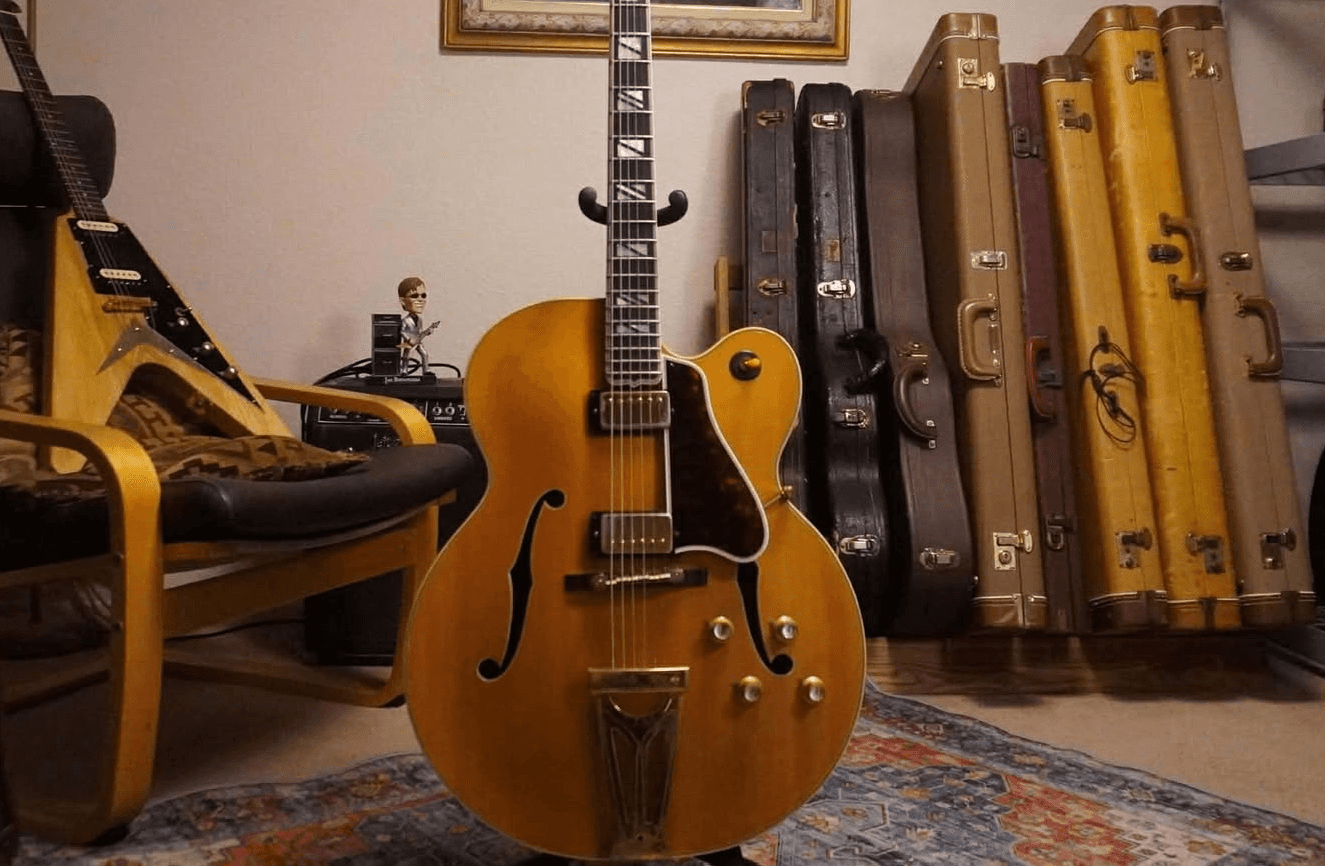
Walk away, or pause the deal, when the seller will not answer basic questions.
Major red flags include:
- A price far below normal market value
- No serial number on a guitar that should have one
- A mismatched logo, hardware set, or font
- Fresh paint around a damaged area
- A neck that visibly twists
- A bridge that is lifting
- An acoustic guitar with a collapsing top
- Electronics that cut out during testing
- A seller who refuses a return or inspection
- Pressure to pay outside a protected platform
- Photos that do not show the actual guitar
- A story that changes when you ask for details
Cosmetic wear alone is not a red flag. Older guitars often have scratches, faded finishes, and replaced parts. The concern is hidden structural damage, unclear ownership, or a price that does not match the risk.
Are Used Guitars Good for Beginners?
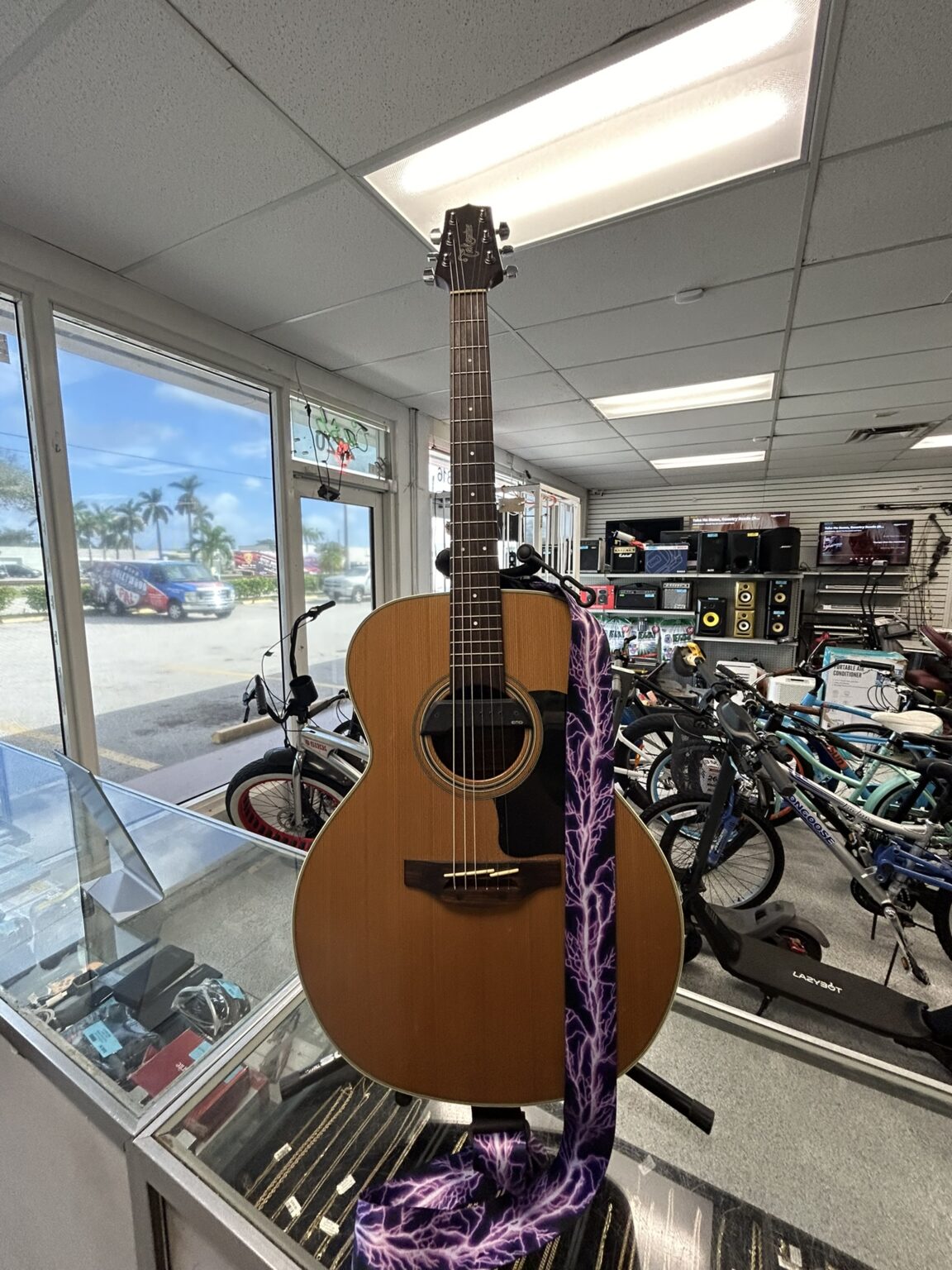
Yes, a used guitar can be excellent for a beginner if it is easy to play and comes from a trustworthy source.
A beginner should favor:
- Comfortable neck shape
- Moderate string height
- Working electronics
- Stable tuning
- No major cracks
- A return period
- A local setup option
Avoid buying the cheapest guitar you can find if it makes learning painful. High action, sharp fret ends, and poor tuning can make a new player think they dislike guitar when the real problem is the instrument.
A modest used guitar that plays well is often a better learning tool than a new guitar with serious setup issues.
If you cannot inspect the instrument, buying used from a music store may be safer than buying from an unknown private seller. The price may be higher, but the store may provide inspection, setup work, and a return window.

Is a Used Acoustic Guitar Worth It?
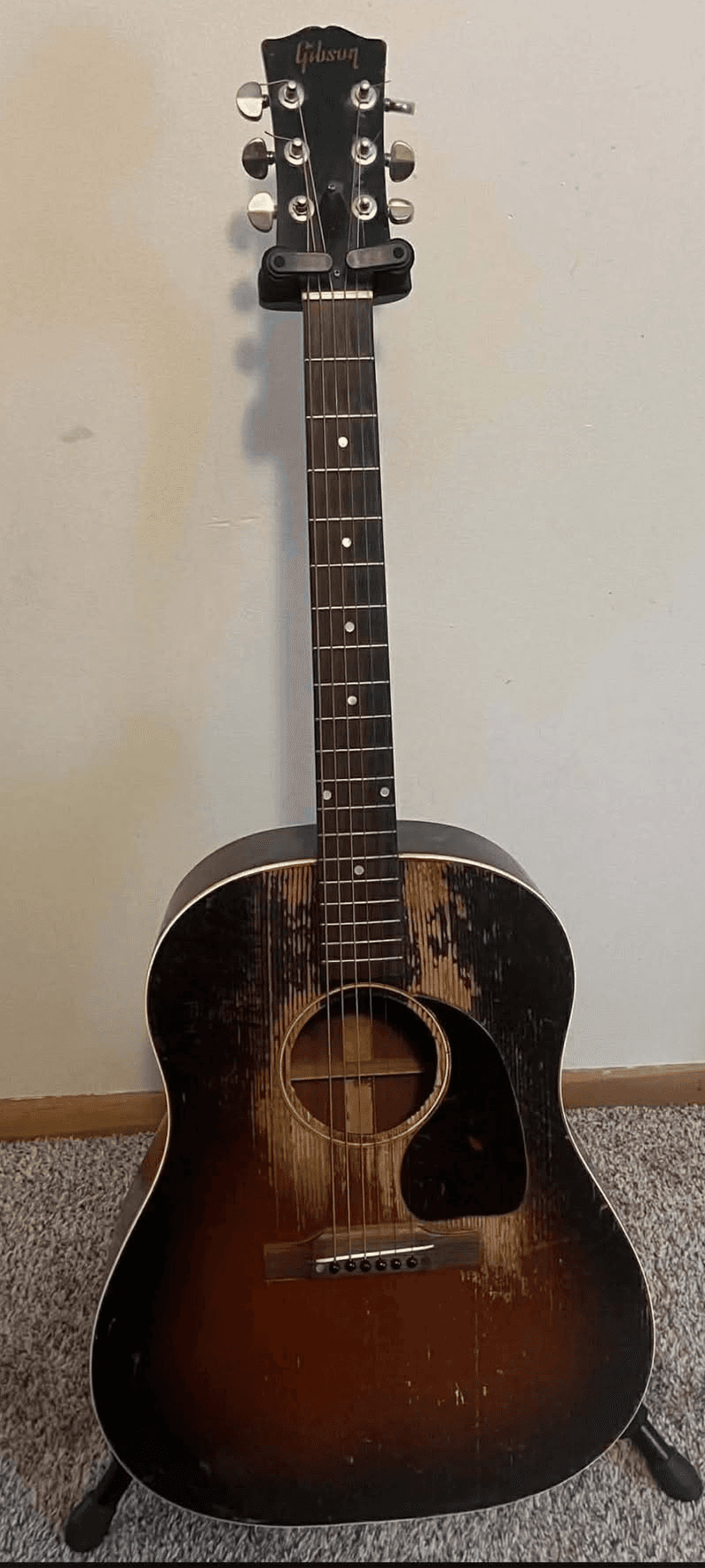
A used acoustic guitar can be a very good value, but structural condition matters more than cosmetic condition.
Wood changes with humidity. Very dry conditions can contribute to cracks, fret-end problems, bridge separation, and other issues. In the United States, this risk can be greater when a guitar moves between dry winter homes, humid summers, and air-conditioned rooms.
Check the guitar in normal playing condition. If possible, let a cold guitar warm gradually before opening its case. Sudden temperature changes can stress wood and finish.
Look for:
- Top cracks
- A lifting bridge
- Loose braces
- Excessive top bulge
- Very high action
- A low saddle with high action
- A separated neck joint
- Signs of poor humidity care
Ask an experienced acoustic repair technician about a used guitar with high action and a questionable neck angle. A setup may solve some problems, but it cannot solve every structural issue.
Is a Used Electric Guitar Worth It?
A used electric guitar is often easier to evaluate and repair than a used acoustic guitar. Many common issues involve replaceable parts or routine setup work.
That does not mean every electric guitar is safe to buy. Check the neck, frets, bridge, electronics, and body carefully.
Modifications can increase or reduce value. A respected pickup upgrade may help. A poorly routed body or messy wiring may hurt value and reliability.
Ask whether the original parts are included. Original pickups, bridges, tuners, and cases can help with future resale, especially for collectible or older instruments.
For a used electric guitar, a small amp or headphone amplifier can help you test the signal before buying. Never judge the guitar only by playing it unplugged.

How Much Should You Spend on a Used Guitar?
Spend based on your full budget, not only the listing price.
Set aside money for:
- A setup
- New strings
- A tuner
- A case or gig bag
- A cable for an electric guitar
- A strap
- Possible repairs
- Sales tax or shipping
For example, if your total budget is $800, you may want to spend $650 to $700 on the guitar and keep the rest for setup and basic gear.
A higher price does not guarantee better value. The best used guitar is the one that fits your needs, plays correctly, and has a fair total cost.
Final Verdict: Should You Buy a Used Guitar?
A used guitar is worth it when you can verify its condition and the total cost gives you a clear advantage over buying new.
Buy used with confidence when:
- The neck is stable
- The frets are usable
- The bridge and body are sound
- The electronics work
- The serial number and ownership story make sense
- The price matches recent sales
- You have a return option or inspection plan
Buy new instead when the used savings are small, the seller is unclear, or the guitar needs a major repair.
The safest next step is simple: choose one or two models, compare completed U.S. sales, inspect the exact guitar, and calculate the repair budget before you pay.
FAQs
Do used guitars sound better than new guitars?
Not always. Age, construction, setup, strings, pickups, room, and player technique all affect sound. Some older guitars have a sound and feel that players enjoy, but age alone does not guarantee better tone.
Is it safe to buy a used guitar from Facebook Marketplace?
It can be, but use caution. Inspect the actual guitar, meet in a safe place, test it with an amplifier when relevant, and avoid payment methods that remove buyer protection. Do not send money before confirming the instrument exists and matches the listing.
How do I know if a used guitar is fake?
Check the logo, serial number, hardware, body shape, electronics, case, and seller history. Compare the guitar with official manufacturer photos and specifications. When the price seems too low, ask a qualified guitar shop or repair technician to inspect it.
Should I get a used guitar professionally set up?
Usually, yes, unless the guitar already plays well and has recently received a documented setup. A professional setup can adjust neck relief, action, intonation, pickup height, and other settings. It cannot repair major structural damage.
Can I return a used guitar?
Only if the seller or platform offers a return policy. Private sales are often final. Read the written terms before paying, including who pays return shipping and what happens if the guitar arrives damaged.
Does a used guitar need a warranty?
A warranty is helpful but not essential. A fair price, sound construction, inspection, and a reliable seller may matter more. For an expensive guitar, warranty coverage or a short return period can reduce your risk.
Conclusion
A used guitar can be one of the best ways to get a quality instrument in the United States. The value comes from the complete deal, not the sticker price.
Inspect the guitar, check its history, compare real sales, estimate repairs, and use buyer protection when buying online. If the guitar passes those checks, buying used may give you more value, more choice, and a better instrument than buying new.