

Introduction
A piano needs three things to stay in good shape: a stable room, gentle cleaning, and regular service. In the United States, dry winter heat, humid summers, air conditioning, and sudden weather changes can affect a piano more than normal playing does.
Keep the piano away from direct sunlight, heat vents, fireplaces, exterior doors, and damp areas. Check the room’s humidity with a digital hygrometer. Dust the outside with a soft cloth, keep liquids away from the keys, and have an acoustic piano tuned by a qualified piano technician on a regular schedule.
This guide explains how to care for an acoustic or digital piano, what you can do at home, and when a professional should help.
Why Piano Care Matters
Piano care protects the instrument’s sound, touch, finish, and value. It also helps prevent small problems from becoming costly repairs.
An acoustic piano contains thousands of parts. Its wooden soundboard, bridges, pinblock, keys, hammers, strings, and action all respond to changes in moisture. The metal strings also create strong tension. A change in the wood can affect tuning and touch.
A digital piano has fewer environmental risks, but it still needs care. Dust, spills, heat, poor power, and rough handling can damage its keys, speakers, controls, or circuit boards.
Acoustic and digital pianos need different care
| Piano type | Main care needs |
|---|---|
| Upright or grand piano | Humidity control, tuning, cleaning, regulation, and pest checks |
| Digital piano | Dust control, spill prevention, safe power, and careful handling |
| Hybrid piano | Digital care plus some service needs found in acoustic actions |
An acoustic piano can go out of tune even when no one plays it. Changes in humidity move the wooden parts that hold the strings and bridge. A digital piano does not need tuning, but its software, power supply, and electronic parts still need protection.
The main goal is stability
A stable room is usually better than a room that moves between very dry and very damp conditions. You do not need to create a perfect climate. You do need to avoid sharp changes.
The best location is usually an inside wall, away from strong heat, cold, sun, and airflow. Leave space behind an upright piano so air can move around it. Follow the maker’s instructions if they differ from general advice.

Where to Place a Piano
Place your piano in a room with steady temperature and moderate humidity. Keep it away from direct sources of heat, cold, moisture, and sunlight.
Avoid these locations
Do not place an acoustic or digital piano:
- Next to a radiator or baseboard heater
- Over or beside a heating vent
- In front of a fireplace
- In direct sunlight
- Against a drafty exterior door
- Near an open window
- In a basement with damp air
- In a garage, porch, or unheated room
- Near a kitchen sink, humidifier, or steamy bathroom
Heat can dry wood and speed up finish damage. Sunlight can fade or warm the case. Moisture can swell wooden parts and may encourage mold or corrosion.
Use a hygrometer
A hygrometer measures relative humidity. Place one near the piano, but not directly on a radiator or in a draft.
Many piano care guides for US homes use a target near 42% to 50% relative humidity for acoustic pianos. The exact safe range depends on the piano, the room, and the manufacturer. Avoid sudden swings and long periods at very low or very high humidity.
A room humidifier or dehumidifier may help. Use a unit with a built-in control, and keep it away from the piano. Do not aim mist or damp air at the instrument.
What to do in a dry or damp season
During a dry winter:
- Check the hygrometer each day for a week.
- Run a room humidifier if the air stays too dry.
- Keep the humidifier clean.
- Do not place a bowl of water inside the piano.
- Ask a piano technician whether an internal humidity system is suitable.
During a humid summer:
- Use air conditioning or a dehumidifier when needed.
- Keep the piano away from damp walls.
- Watch for sticky keys or sluggish action.
- Empty and clean the dehumidifier as directed.
- Arrange service if moisture problems continue.
An internal piano humidity system may help some acoustic pianos. It is not a substitute for room control or professional setup. A technician should choose and install the system.
How to Clean a Piano Safely
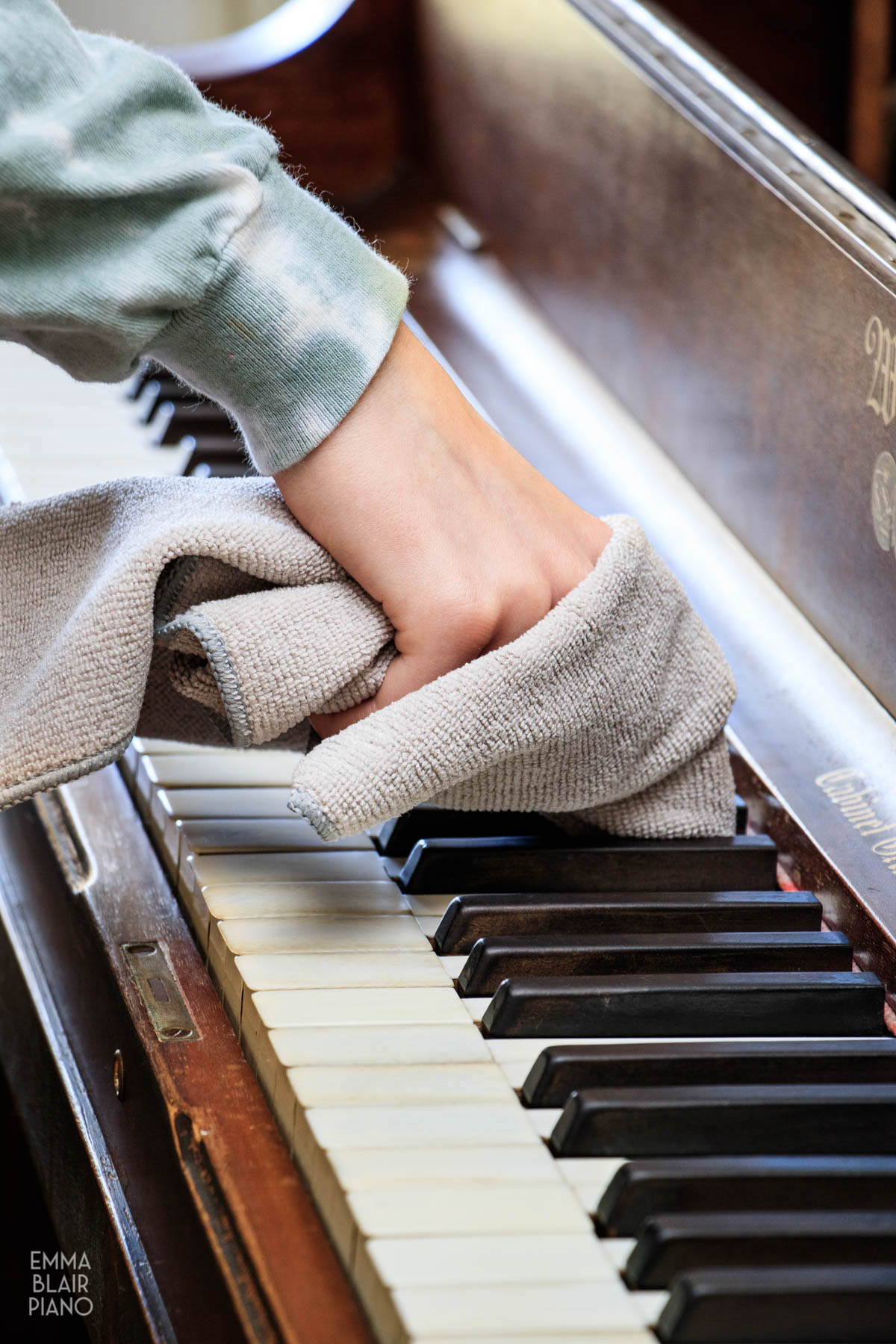
Clean the piano with a soft, dry cloth and very little pressure. For deeper cleaning, use a product approved for the piano’s exact finish.
Clean the case
Use a clean microfiber cloth or another soft, lint-free cloth. Move with the grain when the finish has a visible grain. Fold the cloth often so you do not rub dust across the surface.
For light dust:
- Close the piano.
- Wipe the case gently.
- Use a separate cloth for the keys.
- Remove dust from corners with a soft brush.
- Wash or replace the cloth when it becomes dirty.
Do not spray cleaner onto the piano. Spray can enter seams, hinges, keys, or electronic controls. If the manufacturer allows a cleaner, apply a small amount to the cloth first.
Avoid furniture polish unless the piano maker specifically approves it. Some polishes leave a film, affect the finish, or make later repair work harder.
Clean the keys
The cleaning method depends on the key material.
For modern plastic keytops:
- Turn off and unplug a digital piano.
- Use a slightly damp cloth with clean water.
- Wipe one key at a time.
- Dry the key at once.
- Keep moisture away from gaps between keys.
For ivory keytops found on some older acoustic pianos, ask a piano technician before using water or a cleaner. Ivory can discolor and may need different care. Do not sand, scrape, or bleach the keys.
Do not use alcohol, acetone, strong disinfectant, or abrasive cleaner unless the manufacturer gives clear instructions. These products can damage key surfaces and finishes.
Clean inside an acoustic piano with care
Leave internal cleaning to a piano technician unless the manufacturer gives a simple, approved method. Piano strings can have sharp ends, and internal parts are delicate. A vacuum can pull loose parts or damage felt if used carelessly.
Never place a cloth, liquid, polish, or household cleaner inside the piano.

How Often Should a Piano Be Tuned?
Most acoustic pianos should be tuned at least once or twice a year. A new piano, a heavily used piano, or a piano in a room with large humidity changes may need more frequent tuning.
A practical schedule looks like this:
| Use and condition | A reasonable starting point |
|---|---|
| Occasional home use in a stable room | Once a year |
| Regular family practice | Every 6 to 12 months |
| Daily practice or teaching studio | About every 3 to 6 months |
| Concert, recital, or recording use | Before important events, often with extra checks |
| New or recently moved piano | Tune after settling, then follow the technician’s advice |
These are starting points, not fixed rules. A piano technician can set the right schedule after checking the instrument.
Tune after moving
A move can change a piano’s temperature, humidity, and string stability. Let the piano settle in its new room before tuning. Many technicians wait about two to four weeks, but the timing depends on the move, climate, and piano.
A piano may need more than one tuning after a long move or a major climate change. If the instrument is far below standard pitch, the technician may need a pitch correction before fine tuning.
Do not tune a piano yourself
Piano tuning requires special tools and training. The strings hold high tension, and the tuning pins need controlled force. An incorrect turn can create instability or damage.
A tuning app can show that notes are out of tune, but it does not replace a technician. Use an app only as a general check, not as a repair method.
Tuning is not the same as repair
Tuning adjusts pitch. It does not fix:
- Broken strings
- Sticking keys
- Loose tuning pins
- Worn hammers
- Cracked bridges
- Damaged soundboards
- Noisy pedals
- Poor regulation
A piano may sound wrong because of a mechanical problem, not only because of tuning.

What Other Piano Services Do
A piano technician may provide tuning, regulation, voicing, cleaning, inspection, and repair. Each service solves a different problem.
Regulation
Regulation adjusts the moving parts of the action. It can improve key response, repetition, control, and evenness.
A piano may need regulation when:
- Some keys feel heavier than others
- Notes repeat slowly
- The pedals feel uneven
- The action feels loose or stiff
- The piano has had years of regular use
Voicing
Voicing changes the tone by working on the hammers and related parts. It can make a piano sound softer, brighter, darker, or more even.
Voicing does not correct a piano that is out of tune. The technician may need to tune and regulate the instrument first.
Cleaning and inspection
A technician can safely remove dust from areas that are hard to reach. They can also check for:
- Moth or beetle damage
- Loose screws
- Rust
- Cracked wood
- Loose tuning pins
- Worn felt
- Rodent damage
- Water damage
Ask for an inspection if you see droppings, chewed felt, small holes, rust, or a musty smell.

How to Care for a Piano During a Move
Use professional piano movers for a full-size upright or grand piano. Pianos are heavy, hard to balance, and easy to damage during stairs, tight turns, or truck loading.
Before the move:
- Measure doors, halls, stairways, and elevators.
- Tell the mover the piano type and size.
- Clear the route.
- Protect floors and door frames.
- Remove loose items from the piano.
- Do not lift the piano by its legs or music desk.
Do not move a grand piano by its legs. The legs and pedals can break under the wrong load. A qualified mover uses the right equipment and secures the instrument correctly.
After the move, place the piano in its new location and let it adjust. Check the room humidity. Schedule a tuning after the piano settles.
Storing a piano
Avoid long-term storage in a garage, shed, attic, or unheated warehouse. These spaces often have large temperature and humidity changes.
If storage is necessary, use a climate-controlled facility with stable conditions. Cover the piano with a breathable cover that does not trap moisture. Do not wrap it tightly in plastic for long-term storage.
Ask the storage company how it controls humidity, not just temperature. A climate-controlled label alone does not explain the actual conditions.

Common Piano-Care Mistakes
Small mistakes can cause more harm than normal use. Avoid these common habits.
Using too much water
A wet cloth can let water enter between keys or into the finish. Use a barely damp cloth only when the surface allows it, then dry the area.
Spraying cleaner on the piano
Spray can travel into cracks and moving parts. Apply an approved product to the cloth instead.
Ignoring humidity
A piano can look fine while its wood is changing. Track room humidity before problems appear.
Putting objects on the piano
Plants, drinks, vases, candles, and decorations can scratch the finish or spill. Candles also add heat and soot.
Closing the lid on wet keys
Let cleaned keys dry before closing the key cover. Trapped moisture can affect key surfaces and nearby parts.
Using a household vacuum inside
A vacuum may pull felt, strings, or small parts. Have a technician clean the interior.
Moving the piano without planning
A piano can damage floors, walls, and itself during an improvised move. Plan the route and use trained movers.
Waiting for a serious problem
A broken string, stuck key, or deep rust deserves prompt attention. Early service may prevent a larger repair.

A Simple Piano-Care Schedule
Use this schedule as a starting point. Adjust it to the piano maker’s instructions and your home.
Each week
- Keep drinks and plants away.
- Check for spills or new scratches.
- Wipe visible dust from the case.
- Look for sticking keys or unusual noises.
- Check the room if the weather changes sharply.
Each month
- Read the hygrometer.
- Clean the keys gently.
- Check the piano’s location.
- Look for signs of pests or moisture.
- Inspect digital piano cables and power connections.
Every 6 to 12 months
- Schedule an acoustic piano tuning.
- Ask whether the piano needs regulation or voicing.
- Clean areas that are safe to reach.
- Review humidity control.
After a move or major room change
- Let the piano settle.
- Check humidity often.
- Look for new noises or changes in touch.
- Arrange a professional inspection or tuning.
Signs of successful care include stable tuning, even key response, a clean and dry case, no musty odor, and no sudden changes in touch or tone.

When to Call a Piano Technician
Call a qualified piano technician when the piano has a broken string, a stuck key, a loose tuning pin, a cracked part, water exposure, or a major change in sound.
Seek help quickly if:
- A key stays down
- A pedal stops working
- The piano makes a sharp bang or buzzing sound
- Tuning changes rapidly
- You see rust on strings
- The case is separating
- The piano was exposed to water
- You find insects or rodent damage
- A child has placed an object inside
- The piano was stored in a damp or very dry space
Do not reach into the action or pull on strings. Keep children away from open panels. If water reaches a digital piano, unplug it if you can do so safely and do not turn it back on until it has been inspected.
In the United States, the Piano Technicians Guild directory can help you find technicians in many areas. The piano manufacturer may also provide service guidance or a referral.

Key Takeaways
- Keep the piano away from heat, sunlight, drafts, and moisture.
- Use a hygrometer near an acoustic piano.
- Aim for stable, moderate humidity rather than rapid changes.
- Dust with a soft cloth and keep liquids away.
- Do not spray cleaner on the piano.
- Tune an acoustic piano about once or twice a year as a starting point.
- Use professional movers for large acoustic pianos.
- Call a technician for repairs, internal cleaning, or serious changes.
- Digital pianos do not need tuning, but they still need protection from spills, heat, dust, and poor handling.
FAQs
How often should a piano be cleaned?
Dust the outside and keys as needed, often every few weeks in a normal home. Clean more often if the room has pets, construction dust, or heavy use. Have the inside cleaned by a technician when dust builds up or during scheduled service.
Can I use disinfecting wipes on piano keys?
Do not use disinfecting wipes unless the piano maker approves that exact product for the key material. Many wipes contain alcohol or other chemicals that may damage plastic, ivory, wood, or the finish. A lightly damp, clean cloth is a safer general option for many modern plastic keys.
Should I cover my piano?
A breathable cover can reduce dust when the piano is not used for a long time. Do not use a damp cover or seal the piano in plastic. Remove the cover during normal use so heat and moisture do not collect.
Can a piano sit near a window?
It can, but direct sun and drafts create risks. Use curtains or blinds, leave space from the glass, and check the room’s temperature and humidity. An inside wall is often easier to control.
Does a digital piano need a humidifier?
Usually, no special piano humidifier is needed. Keep the room comfortable and stable, protect the instrument from spills and condensation, and follow the maker’s temperature and humidity limits. A digital piano still should not sit near a heater or in a damp area.
How long can a piano go without tuning?
An acoustic piano may still play after several years without tuning, but its pitch and stability can suffer. Long gaps may require more than one service visit. Regular tuning is usually easier on the instrument and the budget than correcting severe neglect.
Conclusion
Good piano care is mostly about steady conditions and gentle habits. Keep the instrument in a stable room, control humidity, clean only with safe methods, and schedule service before small problems grow.
For an acoustic piano, plan on regular tuning and professional inspections. For a digital piano, focus on clean keys, safe power, spill protection, and careful placement. Start by checking the piano’s location and measuring the room’s humidity today.