

Most mic stands cost between $20 and $200, while premium studio models can cost several hundred dollars.
Knowing how much are mic stands helps you choose the right support without wasting money. A basic stand may work well for home recording, while a stronger boom stand can offer better reach, balance, and durability for live shows or studio work. This guide explains real-world price ranges, stand types, key features, hidden costs, and smart buying tips so you can make a confident choice.

How Much Are Mic Stands on Average?
For most buyers, how much are mic stands depends on the design, build quality, brand, and intended use. In the United States, you can expect to pay about $20 to $200 for a reliable mic stand.
Here is a simple price guide:
- $15 to $30: Basic tripod stands, desktop stands, and entry-level models
- $30 to $70: Better boom stands for home studios, podcasts, and rehearsals
- $70 to $150: Stronger professional stands with better joints and heavier bases
- $150 to $300: Premium studio, broadcast, round-base, and specialty stands
- $300 or more: Heavy-duty broadcast arms, custom studio systems, and high-end brands
The cheapest stand is not always a bad choice. It may be perfect for a child’s room, casual practice, or a spare microphone. However, a low-cost stand can wobble, slip, or develop loose joints sooner than a well-made model.
For many singers, podcasters, and home musicians, the best value sits between $35 and $80. This range often provides a solid tripod base, a useful boom arm, metal fittings, and enough stability for regular use.

Mic Stand Prices by Type
The answer to how much are mic stands becomes clearer when you compare the main types. Each design solves a different problem, much like choosing between a desk lamp, a floor lamp, and a work light.
Straight mic stands
Straight stands usually cost $20 to $80. They have a vertical shaft and a round or tripod base.
These stands work well for:
- Vocal microphones
- Choir performances
- Speech events
- Guitar amplifiers
- Drum room microphones
A straight stand takes up less space than a boom stand. It also has fewer moving parts, which can make it easier to set up and maintain.
Boom mic stands
Boom stands commonly cost $30 to $120. They include a horizontal arm that lets you place the microphone away from the main base.
Boom stands are useful when you need to:
- Sing while keeping the stand away from your instrument
- Record a guitar amp from the side
- Place a microphone over a drum kit
- Move the microphone closer without moving the base
- Position a podcast microphone beside a computer monitor
The boom arm adds flexibility, but it also adds weight and balance concerns. A cheap boom stand may slowly drop when you attach a heavy microphone.
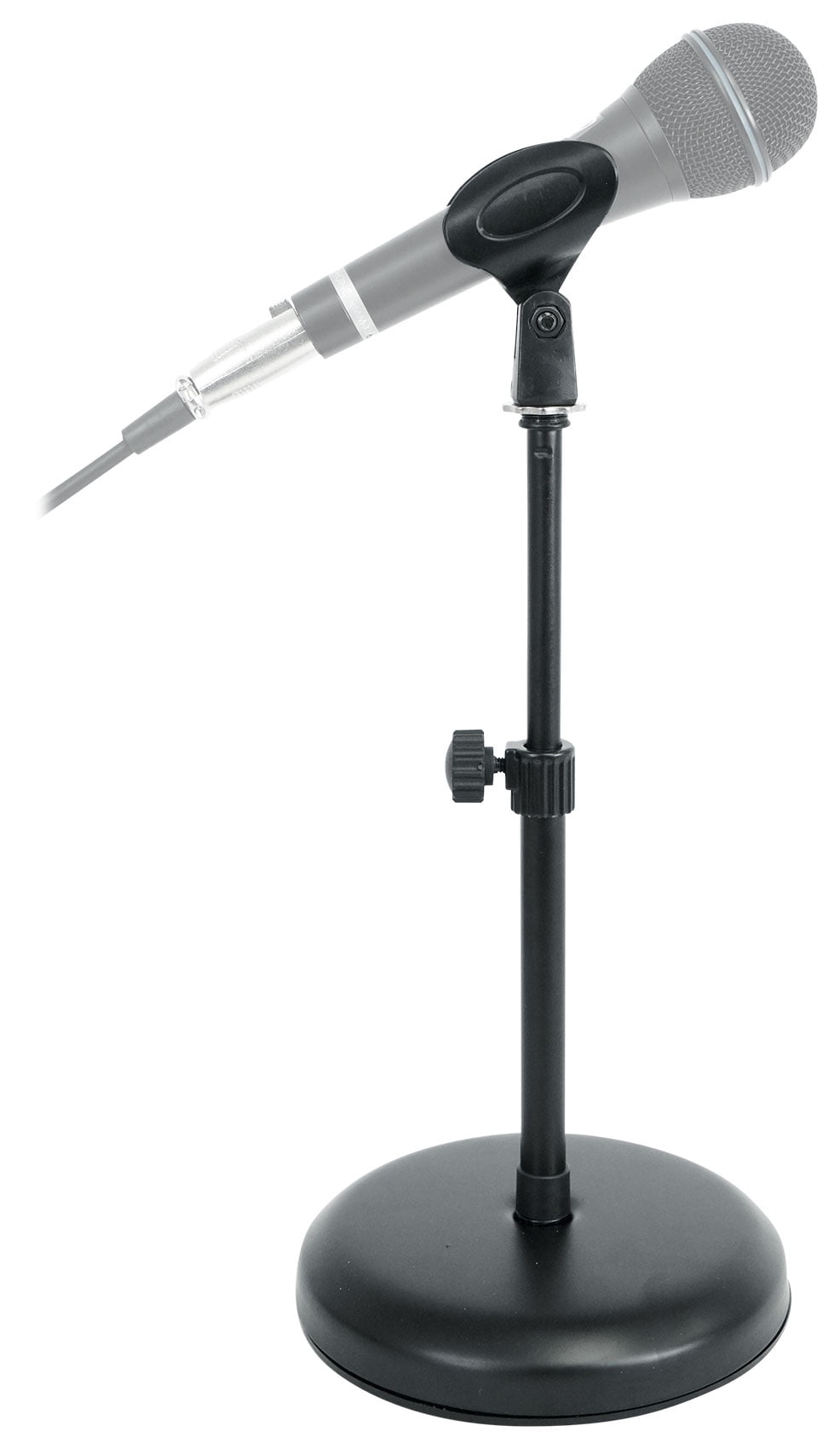
Desktop mic stands
Desktop stands usually cost $15 to $70. They are small and fit on a desk, table, or counter.
They are popular for:
- Podcasts
- Video calls
- Voice-over work
- Streaming
- Online lessons
- Small audio interfaces
A desktop stand is convenient, but it may pick up desk noise. Typing, tapping, and moving a mouse can travel through the table and into the microphone.
Round-base mic stands
Round-base stands often cost $50 to $150. Their heavy metal base takes up less floor space than tripod legs.
These stands are a good fit for:
- Small stages
- Crowded rehearsal rooms
- Churches
- Public speaking
- Vocal performances
The main trade-off is weight. A round-base stand can be harder to carry, but that extra weight helps it stay in place.
Low-profile mic stands
Low-profile stands generally cost $25 to $90. They are designed for microphones placed close to the floor.
Common uses include:
- Kick drums
- Guitar cabinets
- Bass cabinets
- Floor toms
- Low instrument recordings
A low-profile stand should have strong adjustment points. You do not want the microphone to slide toward a loud speaker during a performance.
Broadcast and studio arms
Broadcast arms range from $60 to more than $300. These arms attach to a desk or studio surface and allow smooth microphone movement.
They often include:
- Internal springs
- Cable channels
- Desk clamps
- Adjustable tension
- Quiet joints
- High weight limits
A broadcast arm costs more because it must hold the microphone in a precise position without sagging or creating noise.

What Makes One Mic Stand Cost More Than Another?
When people ask how much are mic stands, they often focus only on height. Height matters, but it is just one part of the price.
Materials and build quality
Steel stands are usually stronger than lightweight plastic models. Aluminum can reduce weight, but the design must still provide enough stiffness.
Look closely at:
- Metal tubing
- Solid clutch knobs
- Reinforced joints
- Strong thread adapters
- Durable base construction
- Smooth height adjustments
A stand with thin tubing may feel fine in a store. After months of use, though, the joints may loosen or the shaft may bend.
Base design
The base has a major effect on stability. Tripod legs fold easily and are simple to carry. Round bases save floor space and often feel more stable around foot traffic.
Some tripod stands include folding legs. Others use fixed legs with rubber feet. Rubber feet help reduce slipping and protect hard floors.
Weight capacity
Every stand has a practical weight limit, even when the seller does not clearly list one. A small condenser microphone may be light, while a broadcast microphone, shock mount, and pop filter can create a much heavier setup.
A stand should support the full load, not just the microphone. Add the weight of:
- The microphone
- Shock mount
- Pop filter
- XLR cable
- Boom arm accessories
- Any clip or adapter
Adjustment hardware
Good knobs and clutches make setup easier. Poor hardware can strip, crack, or slip.
In my experience helping with small recording setups, the adjustment clutch is often the first weak point on a cheap stand. People tighten it too hard because the boom keeps dropping. A better stand may cost more at first, but it saves time and frustration.
Brand and warranty
Well-known audio brands often charge more because they offer better parts, quality control, and support. A warranty can also matter if you use the stand every week.
Still, a famous logo does not guarantee the perfect stand. Check the weight, base type, height range, and user reviews before buying.

Is a Cheap Mic Stand Worth It?
A cheap mic stand can be worth it when your needs are simple. If you record at home, use a light microphone, and rarely move the stand, a $20 to $35 model may do the job.
The risk appears when the stand faces regular stress. Live musicians fold and unfold stands often. Podcasters may move a boom arm daily. A weak joint may become loose at the worst possible time.
Choose a budget stand when:
- You need a backup stand
- You use a lightweight microphone
- You record only from one position
- You are testing a new hobby
- You need a temporary solution
Spend more when:
- You perform in public
- You use a heavy microphone
- You attach a shock mount and pop filter
- You move the stand often
- You need quiet, smooth adjustments
- You want many years of regular use
The main lesson is simple: buy for the pressure the stand will face. A $25 stand can be sensible for light home use. It may be a poor choice for a touring singer.

Best Mic Stand Budget for Different Users
The right answer to how much are mic stands changes with your setup and experience level.
For beginners
A beginner should usually budget $25 to $60. This range offers a stable stand without forcing you to spend heavily before you know your needs.
Look for a tripod boom stand with:
- A metal shaft
- A secure boom clutch
- Adjustable height
- Folding legs
- Rubber feet
- A standard microphone thread
For podcasters
Podcasters often spend $60 to $180. A desktop boom arm can improve comfort and save room on a desk.
Pay attention to desk thickness and clamp design. Some arms fit only certain desks. Also check whether the arm can hold your microphone, shock mount, and pop filter together.
For singers
Singers usually need a stand between $35 and $100. A boom stand gives useful flexibility, while a round-base stand can work well on a crowded stage.
If you move while singing, choose a stand with a wide, stable base. A stand that tips easily can damage the microphone and interrupt a performance.
For home studios
Home studio owners often spend $50 to $150 per stand. A strong stand can support different microphones and recording angles over time.
If you record drums, guitar cabinets, or vocals, you may need several designs. One tall boom stand cannot replace a low-profile stand for every task.
For churches and event venues
Event venues may need stands from $50 to $200 or more. These stands face frequent transport, repeated setup, and many different users.
Durability matters more than saving a few dollars. A stand with strong clutches and replaceable parts can lower long-term costs.
Extra Costs to Include in Your Mic Stand Budget
The question how much are mic stands should include the accessories that make a stand useful. The stand is only one part of the microphone setup.
Possible extra costs include:
- Microphone clip: $5 to $20
- Shock mount: $20 to $150
- Pop filter: $10 to $50
- Boom arm adapter: $5 to $25
- Cable clips: $5 to $20
- Weighted base: $20 to $80
- Stand bag: $15 to $60
- Replacement clutch: $10 to $40
Many microphones include a basic clip, but not all do. Some large microphones need a special shock mount. Others may require a thread adapter because microphone and stand fittings can vary.
You should also consider shipping costs. Heavy round-base stands may cost more to ship than folding tripod stands. Buying locally can sometimes reduce the total price, even when the listed price is slightly higher.

How to Choose the Right Mic Stand
Use this process before you buy:
- Identify where you will use it. A desk, stage, rehearsal room, and studio each need different designs.
- Check your microphone weight. Include the shock mount, pop filter, and cable.
- Measure your space. Make sure the stand can reach the correct height without blocking your movement.
- Choose a base style. Pick tripod legs for portability or a round base for compact floor use.
- Test the boom balance. The arm should stay in place when fully extended.
- Inspect the adjustment points. Knobs should turn smoothly and hold firmly.
- Read recent reviews. Look for comments about wobbling, loose joints, and broken parts.
- Check return terms. This helps if the stand does not fit your desk or microphone.
- Consider replacement parts. A replaceable clutch can extend the life of the stand.
- Buy for long-term use. A small increase in price can prevent repeated replacements.
One mistake I often see is choosing a stand based only on its maximum height. A tall stand may look useful, but its base and boom balance matter just as much. Think of the stand as a small tripod for your microphone: the higher the microphone goes, the more important the foundation becomes.

How to Make a Mic Stand Last Longer
A good stand can last many years with basic care. Always loosen the clutch before changing the height. Forcing a tight knob can damage the threads.
Keep these habits:
- Fold tripod legs before placing the stand in a bag
- Avoid dragging the stand across the floor
- Wipe dust from threaded parts
- Do not over-tighten knobs
- Store the stand in a dry place
- Keep heavy items off the boom arm
- Check loose screws before each performance
- Replace worn rubber feet when needed
Transport is often harder on a stand than normal use. Use a padded bag if you carry it to rehearsals or shows. Put heavier stands at the bottom of a gear case so they do not fall onto delicate equipment.
If a stand begins to sag, do not keep tightening the knob forever. The clutch may need adjustment or replacement. Continuing to force it can turn a small repair into a full replacement.

Common Mic Stand Buying Mistakes
Understanding how much are mic stands also means knowing what can go wrong.
Buying the lightest option
A lightweight stand is easy to carry, but it may tip when the boom extends. This is especially risky with large microphones.
Ignoring desk compatibility
A desk arm may not fit a thick or unusual desk. Measure the desk before ordering and check the clamp opening.
Using a boom without balancing it
A long boom creates leverage. Keep the boom short when possible, and place the counterweight or base where it supports the load.
Forgetting floor space
Tripod legs spread farther than many buyers expect. Check the area around your chair, pedalboard, or drum kit.
Choosing style over function
A sleek stand may look great on camera, but it still needs a strong base and smooth adjustments. Appearance should come after safety and usability.
Frequently Asked Questions About How Much Are Mic Stands
How much does a basic mic stand cost?
A basic mic stand usually costs $15 to $40. It can work well for light microphones, home practice, and occasional use.
How much are mic stands for professional recording?
Professional recording stands often cost $60 to $200. Heavy-duty studio stands and broadcast arms may cost more because they support heavier equipment and offer smoother movement.
Are expensive mic stands worth it?
Expensive mic stands are worth it when you need strong stability, frequent adjustments, quiet operation, or long-term durability. For casual use, a reliable mid-range stand may offer better value.
What is the best mic stand for a podcast?
A desktop boom arm is often the best choice for a podcast. Expect to spend about $60 to $180, depending on the microphone weight, desk clamp, adjustment system, and cable management.
Can one mic stand work for every microphone?
One stand can handle many microphones if it has the right height, base, thread, and weight capacity. However, a low-profile stand, desktop arm, and tall boom stand serve different recording needs.
Why do mic stands wobble?
Mic stands wobble because of a weak base, loose joints, uneven flooring, extended boom arms, or too much weight. Tightening the correct clutch and shortening the boom may solve the issue.
Conclusion
So, how much are mic stands? Most reliable models cost $20 to $200, with the best value for many users falling between $35 and $80. Desktop arms, heavy studio stands, and broadcast systems can cost more, while simple straight stands often cost less.
Choose the stand based on microphone weight, room size, base design, travel needs, and how often you will use it. A stable mid-range stand is usually a smarter investment than the cheapest option. Compare the full setup cost, check the return policy, and choose a stand that will support your recording goals.