

Learning sheet music for piano means learning to read three things at once: pitch, rhythm, and hand movement. Start with the staff and note names, then add rhythm, finger numbers, and short daily practice. Read slowly, count out loud, and use easy pieces instead of trying to memorize everything.
For piano students in the United States, most beginner books use the same standard staff notation taught in American schools, private studios, churches, and community music programs. You do not need to read every note at once. You only need a clear order of steps and regular practice.

What Is Sheet Music for Piano?
Piano sheet music shows which notes to play, when to play them, and how long to hold them. It may also show finger numbers, dynamics, tempo, pedal marks, and other directions.
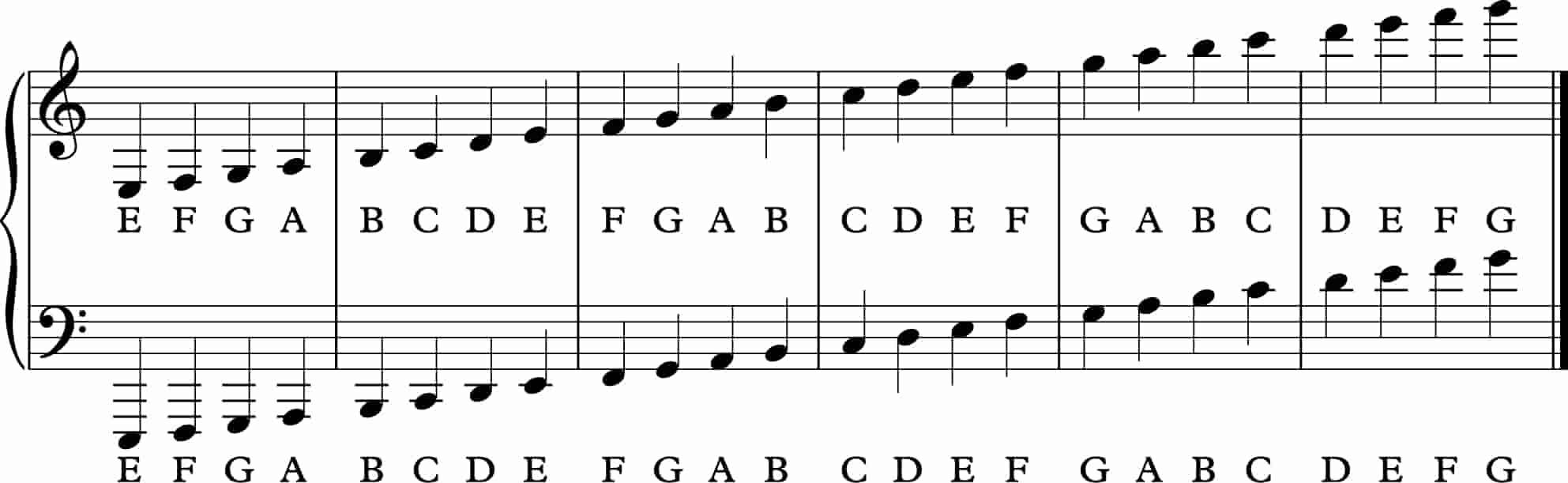
A piano score often uses two staves:
- The treble clef, or G clef, usually guides the right hand.
- The bass clef, or F clef, usually guides the left hand.
- A brace connects both staves.
- The two staves together form the grand staff.
“Usually” matters. A piano part can place either hand in either clef. The clef tells you the pitch area, not which hand must play it.
The staff and its notes
Each staff has five lines and four spaces. Notes can sit on lines, spaces, or short extra lines called ledger lines.
For the treble clef, the line notes from bottom to top are:
E – G – B – D – F
A common memory aid is Every Good Boy Does Fine.
The space notes spell:
F – A – C – E
For the bass clef, the line notes from bottom to top are:
G – B – D – F – A
A common memory aid is Good Boys Do Fine Always.
The space notes are:
A – C – E – G
You can use memory phrases at first, but do not depend on them forever. Experienced readers also recognize the distance between notes, known as intervals.
Middle C is your main landmark
Middle C sits near the center of the piano and between the treble and bass staves. On the grand staff, it is often written on a ledger line:
- Below the treble staff
- Above the bass staff
Find Middle C on your piano. It is the white key near the center of the keyboard, just to the left of a group of two black keys. Use it as a starting point, then learn nearby notes.
Key signatures and accidentals
A key signature appears after the clef. It shows which notes are normally sharp or flat throughout the piece.
An accidental changes a note for a shorter time:
- A sharp raises a note by one half step.
- A flat lowers a note by one half step.
- A natural cancels a prior sharp or flat.
A note’s location on the staff tells you its letter name. The key signature and accidentals tell you how that note is changed.

Learn the Basic Symbols First
Do not try to learn every piano symbol in one sitting. Start with the symbols that affect your next note.
Learn these symbols in this order
1. Staff and clefs
Identify the treble and bass staves.
Note names
Find notes by their line, space, and ledger-line position.Note values
Learn how long notes and rests last.Time signatures
Learn how beats are grouped.Bar lines and measures
See how music is divided into small sections.Dynamics and articulation
Add loudness, softness, smoothness, and attack after the notes and rhythm are secure.
This order helps because pitch and rhythm create the basic structure. Musical expression matters, but it cannot fix incorrect notes or timing.
Understand rhythm before playing
The top number of a time signature tells you how many beats appear in each measure. The bottom number tells you which note value represents one beat.
For example:
- 4/4 has four quarter-note beats per measure.
- 3/4 has three quarter-note beats per measure.
- 2/4 has two quarter-note beats per measure.
- 6/8 often feels like two groups of three eighth notes, though its exact feel depends on the music.
Common note values include:
- Whole note: four beats in 4/4
- Half note: two beats in 4/4
- Quarter note: one beat in 4/4
- Eighth note: one-half beat in 4/4
A rest has the same job as a note value: it tells you how long to remain silent.
Use a steady count
Before you play, say the beat aloud:
“1, 2, 3, 4”
For eighth notes, count:
“1 and 2 and 3 and 4 and”
For more complex rhythms, use a metronome after you understand the pattern. A metronome gives a steady pulse, but it does not explain the rhythm for you.
Add dynamics after the notes are stable
Dynamics tell you how loud or soft to play:
- p means soft.
- f means loud.
- mp means moderately soft.
- mf means moderately loud.
- crescendo means gradually louder.
- diminuendo means gradually softer.
Articulation signs shape the sound:
- A slur often means play smoothly.
- A staccato dot means play short and detached.
- An accent means give a note extra emphasis.

How to Read Piano Sheet Music Step by Step
Use the same reading sequence each time. A repeatable method prevents guesswork.
Step 1: Scan the page
Before touching the keys, check:
- Title and composer
- Clefs
- Key signature
- Time signature
- Tempo marking
- Repeat signs
- Dynamic marks
- Pedal markings
- Difficult-looking measures
This takes less than a minute. It helps you avoid surprises.
Step 2: Find the starting notes
Look at the first notes for both hands. Identify each note by using a landmark such as:
- Middle C
- Treble-clef G
- Bass-clef F
- A nearby five-finger position
- A familiar interval
Do not guess from the shape of the melody. Confirm the note on the staff.
Step 3: Speak the rhythm
Clap or tap the rhythm before playing. Count each measure aloud.
If a measure contains four quarter-note beats, your count should fill all four beats. If it does not, find the missing note or rest.
Step 4: Mark finger numbers when needed
Most beginner music uses numbers from 1 to 5:
- Thumb = 1
- Index finger = 2
- Middle finger = 3
- Ring finger = 4
- Little finger = 5
Finger numbers are suggestions that support a smooth hand position. They are not note names. Use them when a passage feels awkward, but do not change them randomly every time.
Step 5: Practice each hand alone
Play the right-hand part slowly. Then play the left-hand part slowly.
This helps you focus on one clef and one musical line at a time. If one hand is already easy, spend more time on the hand that causes mistakes.
Step 6: Combine the hands in small sections
Start with one measure or one short phrase. Play it slowly until you can repeat it without stopping.
Then connect it to the next measure. Small sections work better than starting at the beginning every time you make a mistake.
Step 7: Keep a slow, even pulse
Slow practice is not a lesser form of practice. It gives your eyes time to read and your hands time to respond.
Increase the tempo only when you can:
- Play the notes correctly
- Keep the rhythm steady
- Avoid repeated stops
- Keep your hands relaxed
Step 8: Add expression
Once the notes and rhythm are reliable, add:
- Dynamics
- Articulation
- Phrasing
- Pedal
- Tempo changes
This order keeps expression from hiding basic reading errors.
Use Intervals Instead of Naming Every Note
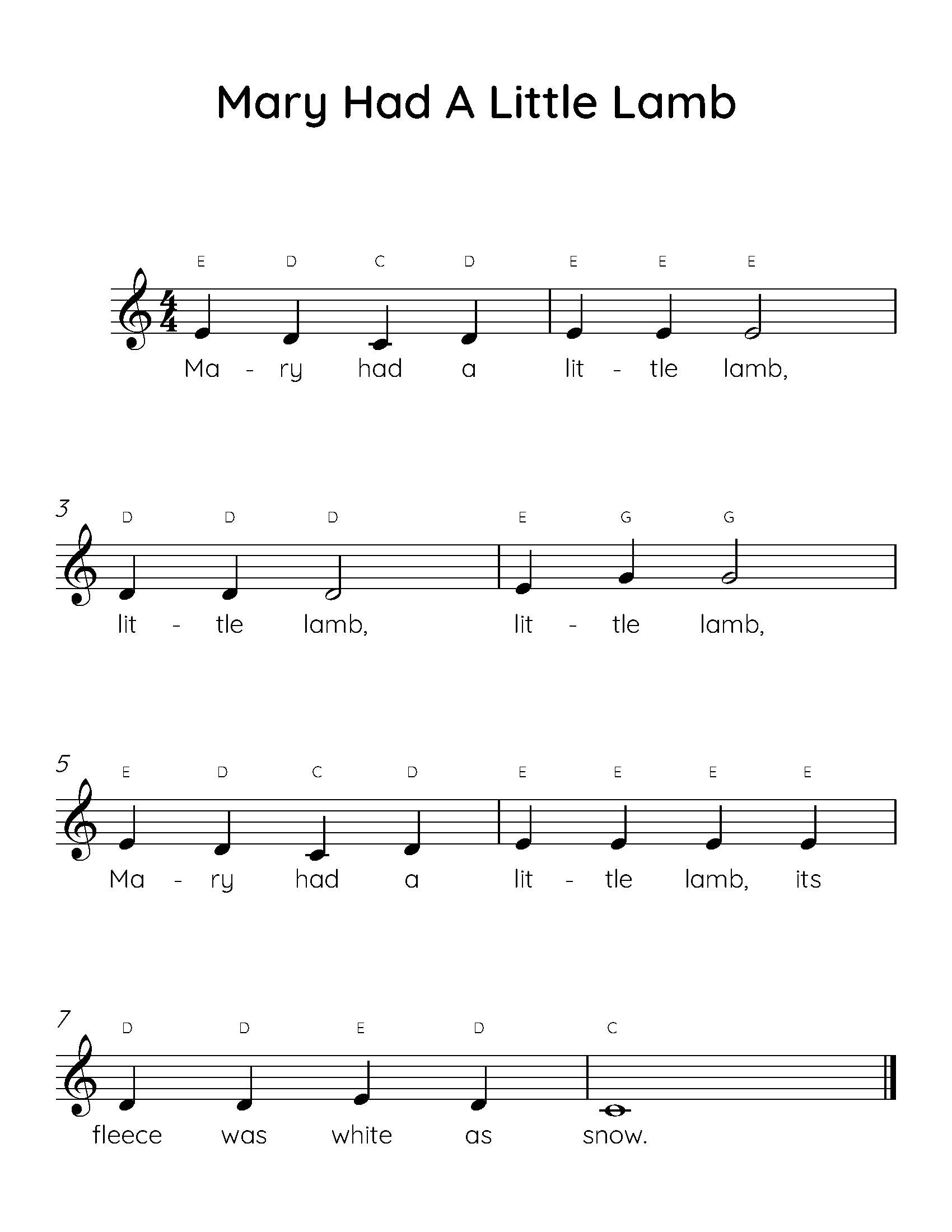
Beginners often read one note at a time. That works, but it becomes slow. A stronger method combines note names with interval reading.
An interval is the distance between two notes. For example:
- A step moves to the next line or space.
- A third skips one staff position.
- A fifth covers five staff positions.
If one note is a G and the next note moves up by a step, the next note is A. You do not need to start from zero each time.
Read patterns, not isolated dots
Look for:
- Repeated notes
- Stepwise motion
- Skips
- Scales
- Chords
- Broken chords
- Repeated rhythmic patterns
This is similar to reading words rather than spelling each letter. Your goal is to recognize small musical shapes.
Learn common five-finger patterns
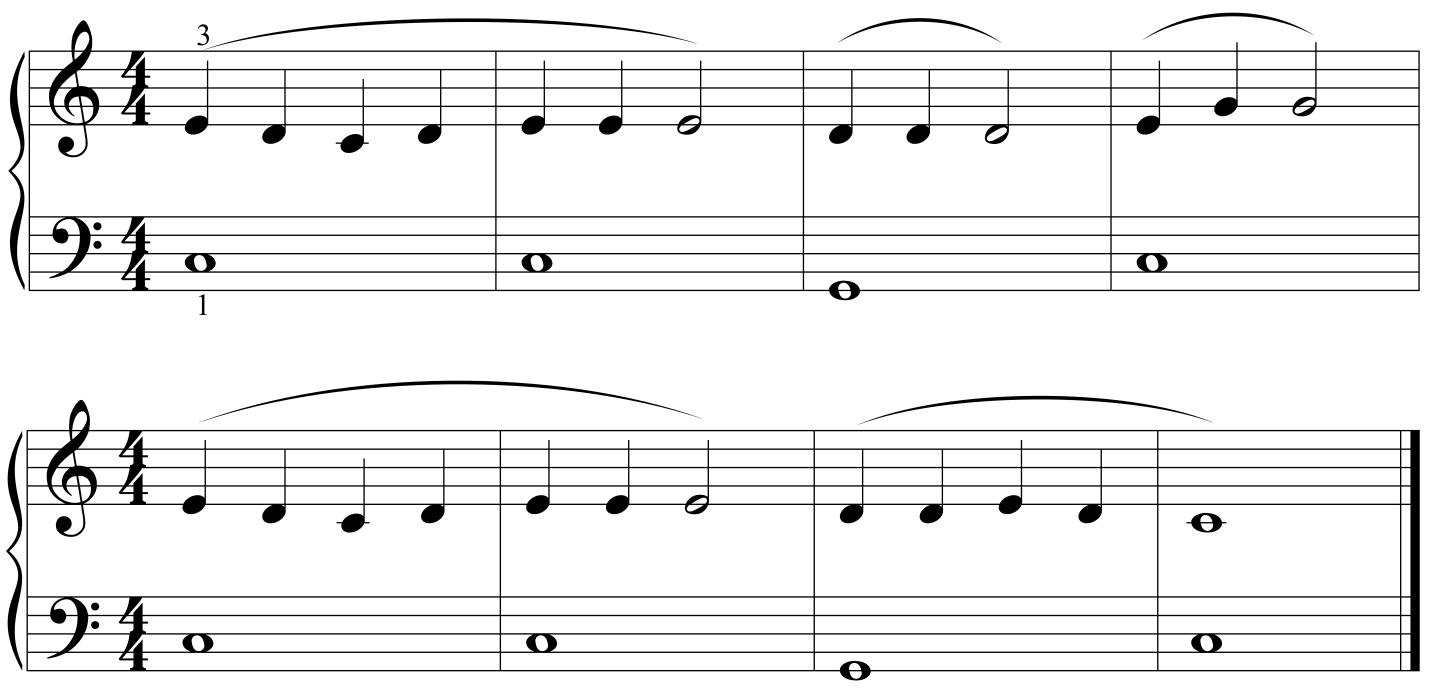
Many beginner pieces use five notes in one hand position. For example, a C five-finger pattern uses:
C – D – E – F – G
Learn the sound and shape of the pattern, but still read the staff. A familiar hand position can help you start, yet it can also lead to guessing if you stop checking the notes.
A Simple Daily Practice Plan
A short daily plan is easier to maintain than a long session once a week.
Try this 20-minute routine:
| Time | Task | Purpose |
|---|---|---|
| 3 minutes | Name notes on the page | Build visual recall |
| 4 minutes | Clap and count rhythms | Improve timing |
| 5 minutes | Practice one hand | Fix note and finger errors |
| 5 minutes | Combine hands slowly | Build coordination |
| 3 minutes | Play an easy piece | Improve confidence and flow |
If you have 30 minutes, add five minutes of sight-reading and five minutes of review.
What to practice for sight-reading
Choose music that is easier than your hardest study piece. Play without stopping, even when you make a small error.
Sight-reading practice should teach you to continue through the music. Repeating one difficult bar until it is perfect is useful, but that is a different task from sight-reading.
When to increase the tempo
Use a small increase, such as 4 to 8 beats per minute, when the passage feels controlled. If errors return, lower the tempo again.
Do not measure progress only by speed. A slower, accurate performance is better training than a fast performance built on guesses.
Common Problems When Learning Piano Sheet Music
Most reading problems come from a small number of habits.
“I can name the notes, but I cannot play them”
This often means the eyes and hands are working separately. Practice short groups of notes. Say the note names, then play them. Next, read the group without speaking.
Also check your posture and hand position. Tension can slow movement, especially when you try to play too fast.
“I keep looking down at my hands”
Some looking is normal, but constant checking breaks your connection with the page.
Try this:
- Find the starting position.
- Look at the music.
- Play a short phrase.
- Look down only when you need to move.
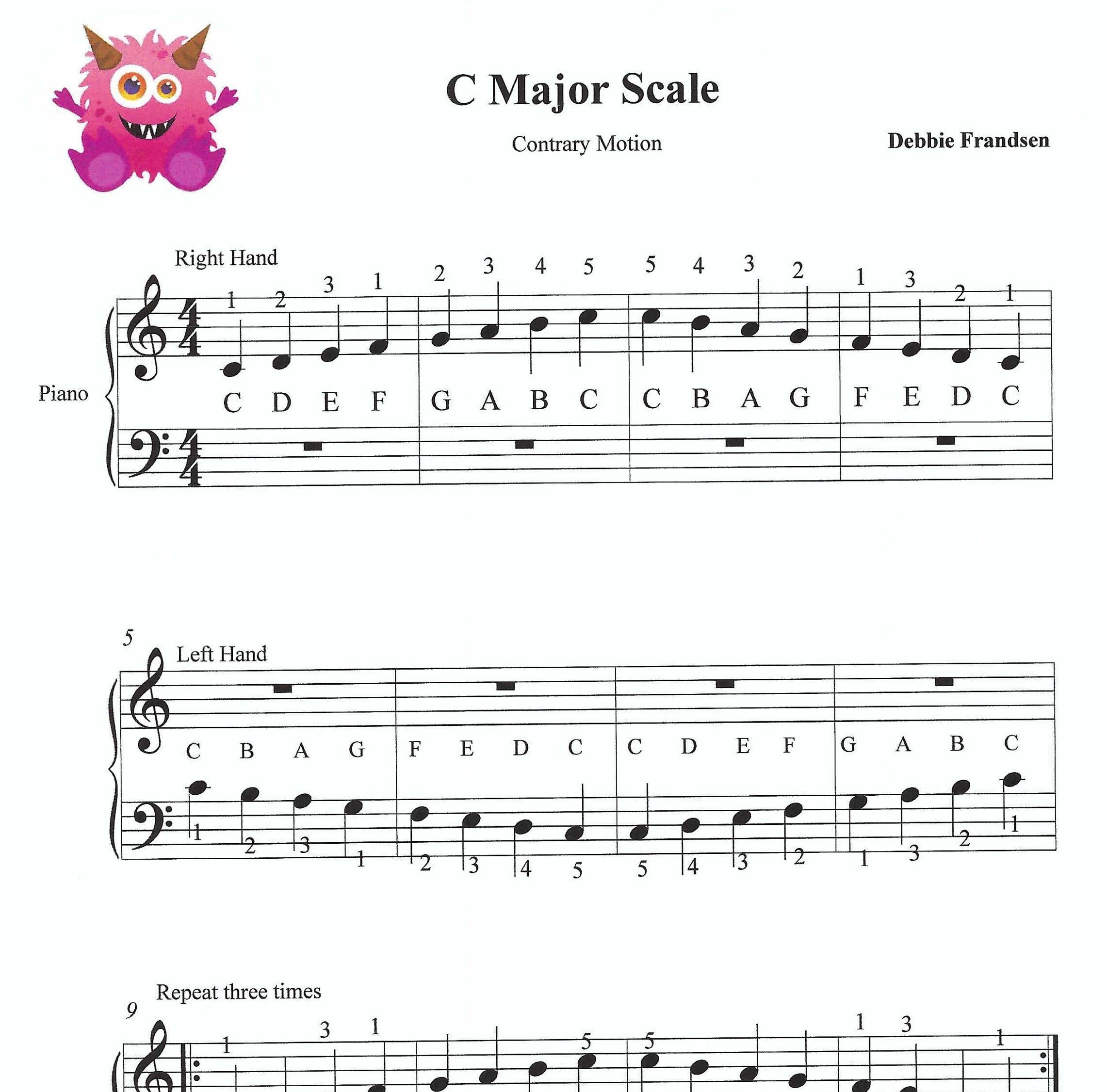
Practice easy scales and five-finger patterns to make basic movements more familiar.
“I confuse the treble and bass clefs”
Study one clef at a time for a few minutes. Use landmark notes rather than trying to memorize every line and space at once.
Then mix the clefs with very short examples. Piano reading requires both clefs, so avoid staying with treble clef forever.
“My rhythm falls apart when I use both hands”
Separate the jobs:
- Tap the right-hand rhythm.
- Tap the left-hand rhythm.
- Tap both rhythms together.
- Play one hand.
- Play the other hand.
- Combine them slowly.
You can also play only the first note of each beat. Then fill in the remaining notes once the pulse is stable.
“I memorize the piece instead of reading it”
Memory is useful, but it can hide reading gaps. Test yourself by starting from the middle, playing hands separately, or reading a new piece at an easy level.
A strong reader can perform familiar music from memory and still understand the written score.
“I make the same mistake every time”
Stop repeating the full piece. Isolate the error.
Play the problem notes:
- Very slowly
- Three to five times correctly
- Starting from different nearby notes
- With the correct rhythm
- Without adding speed too soon
Then reconnect the small section to the music around it.

Should You Learn Piano Sheet Music With an App, Book, or Teacher?
Each learning method solves a different problem.
| Method | Useful for | Main limit |
|---|---|---|
| Beginner method book | Clear order and steady lessons | Feedback is limited |
| Piano app | Rhythm drills and instant prompts | Some apps may not explain errors well |
| Private teacher | Posture, fingering, and tailored feedback | Cost and scheduling |
| Group class | Structure and social support | Less individual attention |
| Self-study | Flexible timing and low cost | Easy to build poor habits |
A method book can give you a path. An app can make repetition easier. A teacher can spot tension, poor fingering, or rhythm issues that are hard to notice alone.
If you feel pain, numbness, or persistent strain while playing, stop and seek guidance from a qualified piano teacher or health professional. Normal effort is not the same as pain.
How to choose beginner music
Choose a piece with:
- A steady and familiar rhythm
- A limited range of notes
- Few accidentals
- Short phrases
- Manageable hand positions
- Clear finger numbers when needed
Music that is too hard can train you to guess, stop, and memorize without understanding. Music that is slightly easy can build reading speed and control.

How Long Does It Take to Learn Piano Sheet Music?
There is no fixed timetable. Progress depends on practice frequency, prior music experience, reading level, and the difficulty of the music.
A beginner who practices often may learn basic note names and rhythms in the first stage of study. Reading fluently across both clefs takes longer because it depends on many linked skills:
- Visual recognition
- Rhythm control
- Hand coordination
- Pattern awareness
- Finger movement
- Attention
Measure progress by what you can do, not by a promised number of days. Useful signs of progress include:
- You identify common notes with less delay.
- You keep a steady beat while reading.
- You make fewer stops.
- You can start from different measures.
- You can read a new, easy piece without first hearing it.
- You can correct an error without losing your place.
Trusted Resources for Learning Piano Reading
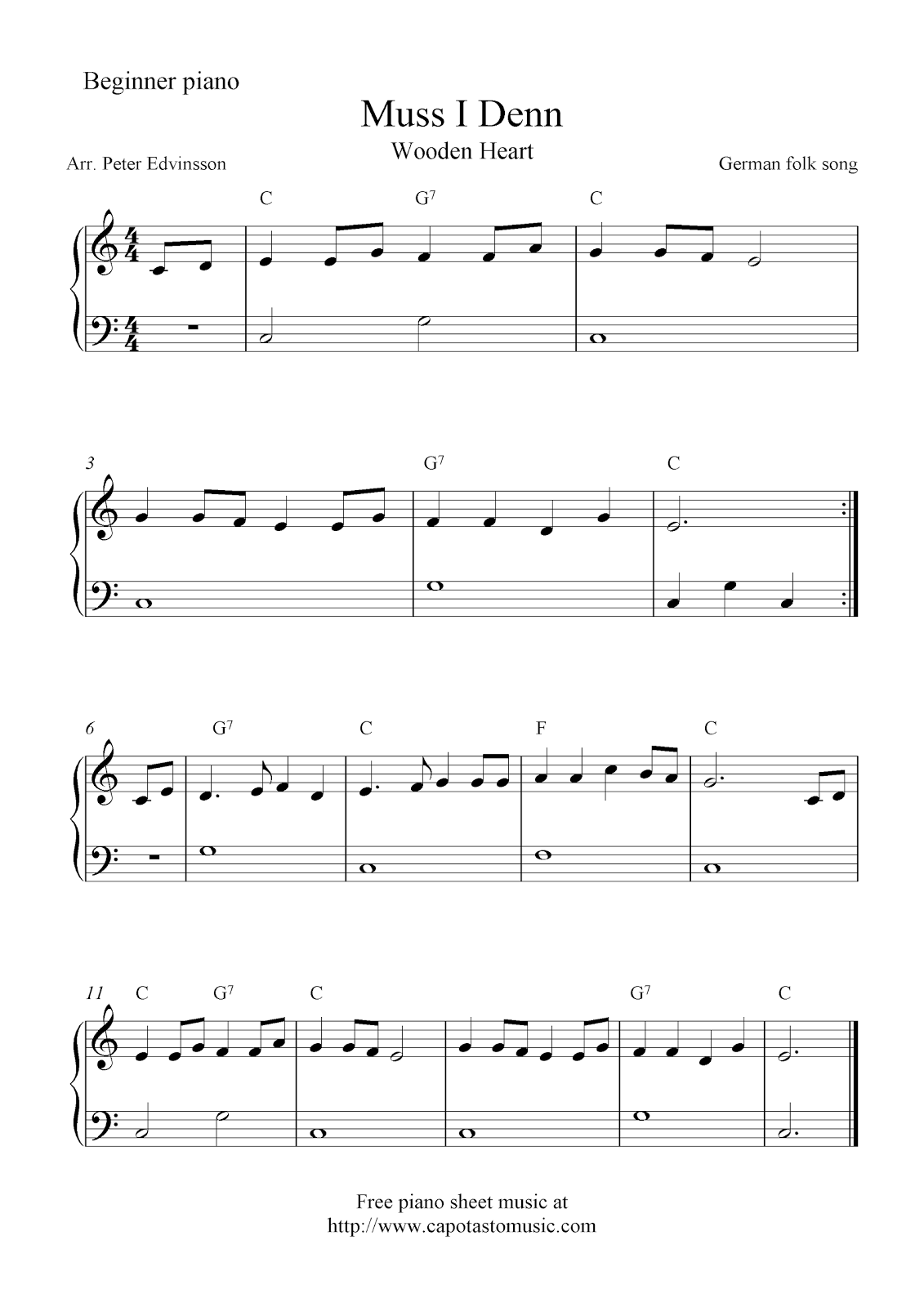
Use resources that explain standard notation and give you music at a suitable level.
- Open Music Theory explains staff notation, rhythm, clefs, intervals, and key signatures.
- Music Educators National Conference provides information about music education in the United States.
- The Library of Congress National Jukebox offers historical music resources, though it is not a substitute for a method book.
- A local teacher directory, such as MTNA Find a Teacher, can help you look for a qualified piano teacher in the United States.
Check that any method book or app matches your current level. A polished interface does not guarantee that the lessons use a sound order or explain mistakes clearly.
Frequently Asked Questions
Is it better to learn note names or intervals first?
Learn both, but begin with note names and landmark notes. Then add intervals and patterns. Note names confirm accuracy, while intervals help you read faster.
Can I learn piano sheet music without knowing music theory?
Yes. You can begin with basic notation and learn theory as it appears. Still, understanding rhythm, keys, intervals, and chords will make reading easier over time.
Should I learn both clefs at the same time?
Learn them in small, separate steps, then combine them early. Piano music normally uses both clefs, so delaying one for too long can create a later gap.
Do I need to use a metronome?
No, but a metronome can help you build a steady pulse. First understand the rhythm. Then use the metronome at a slow tempo. Do not let it force you to play faster than you can control.
Is reading sheet music the same as playing by ear?
No. Reading uses written symbols. Playing by ear uses listening and memory. Both are useful skills, and learning one does not prevent you from learning the other.
Conclusion: Start Small and Read Every Day
To learn sheet music for piano, begin with the grand staff, Middle C, basic note values, and simple rhythms. Read each piece in order: scan the page, identify the notes, count the rhythm, practice each hand, combine the hands, and then add expression.
Use short sessions and easy music. The goal is not to rush through a page. The goal is to make accurate reading feel more natural each time you sit at the piano.
Your next step is simple: choose an easy piece, mark its clefs and time signature, clap the first four measures, and play them slowly without guessing.