

For guitarists in the United States, the safest fretboard cleaner depends on the wood and finish. Use a soft, dry microfiber cloth for routine cleaning. For an unfinished rosewood, ebony, or pau ferro fretboard, use a small amount of naphtha or a guitar-safe fretboard cleaner on the cloth. For a finished maple fretboard, use a slightly damp cloth, then dry it at once.
Avoid soaking the wood, household cleaners, furniture polish, alcohol, and excess lemon oil. When in doubt, check your guitar maker’s care guide before applying any liquid.

Quick Answer: What Is Safe to Use?
Use this simple guide:
| Fretboard type | Best cleaning choice | Avoid |
|---|---|---|
| Unfinished rosewood | Dry microfiber cloth; a little naphtha for grime | Water, excess oil, abrasive pads |
| Unfinished ebony | Dry cloth; small amount of naphtha if needed | Heavy oil, soaking, harsh cleaners |
| Pau ferro | Dry cloth; guitar-safe cleaner or limited naphtha | Too much moisture or oil |
| Finished maple | Slightly damp microfiber cloth, then dry | Naphtha unless the maker allows it |
| Lacquered or painted fretboard | Damp cloth only, unless the manual says otherwise | Solvents, polish, strong cleaners |
A clean, dry cloth handles most routine dirt. You only need a liquid when sweat, oil, or built-up grime will not lift with gentle wiping.
For an unfinished fretboard, a dedicated guitar fretboard cleaner is the easiest choice. Some players also use naphtha, often sold in the United States as lighter fluid. Naphtha can cut through sticky residue and dries fast, but it is flammable and must be used with care.
A fretboard conditioner is different from a cleaner. Conditioner adds a small amount of oil to unfinished wood. It does not replace cleaning, and most guitars do not need frequent conditioning.

First Identify Your Fretboard
The finish matters more than the guitar brand. The same cleaning product can be suitable for one fretboard and wrong for another.
Unfinished rosewood, ebony, and pau ferro
Most rosewood, ebony, and pau ferro fretboards have no thick finish over the wood. These boards can collect sweat, skin oil, and dirt around the frets.
Start with a dry microfiber cloth. If grime remains, put a small amount of naphtha or guitar-safe cleaner on the cloth—not directly on the fretboard. Wipe a small area first, then dry it with another clean cloth.
These woods may look lighter or dry after cleaning. That does not always mean they need oil. The key question is whether the surface looks excessively dry, feels rough, or shows small cracks. If you see cracks, loose frets, or serious shrinkage, stop and ask a guitar repair technician for help.
Finished maple fretboards
Maple fretboards are often sealed with lacquer, polyurethane, or another finish. The finish acts as a barrier, so oil should not soak into the wood.
Clean finished maple with a soft cloth. If needed, lightly dampen the cloth with water and wipe a small section. Dry the surface right away.
Do not use fretboard oil on finished maple unless the guitar maker specifically approves it. Oil can leave a cloudy or greasy film on the finish.
How to tell whether maple is finished
A finished maple fretboard usually has a smooth, sealed feel. The wood may have a glossy or satin surface, and the grain will not feel open.
An unfinished maple fretboard feels more like bare wood. Some vintage-style instruments use a thin finish that can be hard to identify. If you are unsure, treat it as finished and use only a dry or barely damp cloth until you confirm the finish.
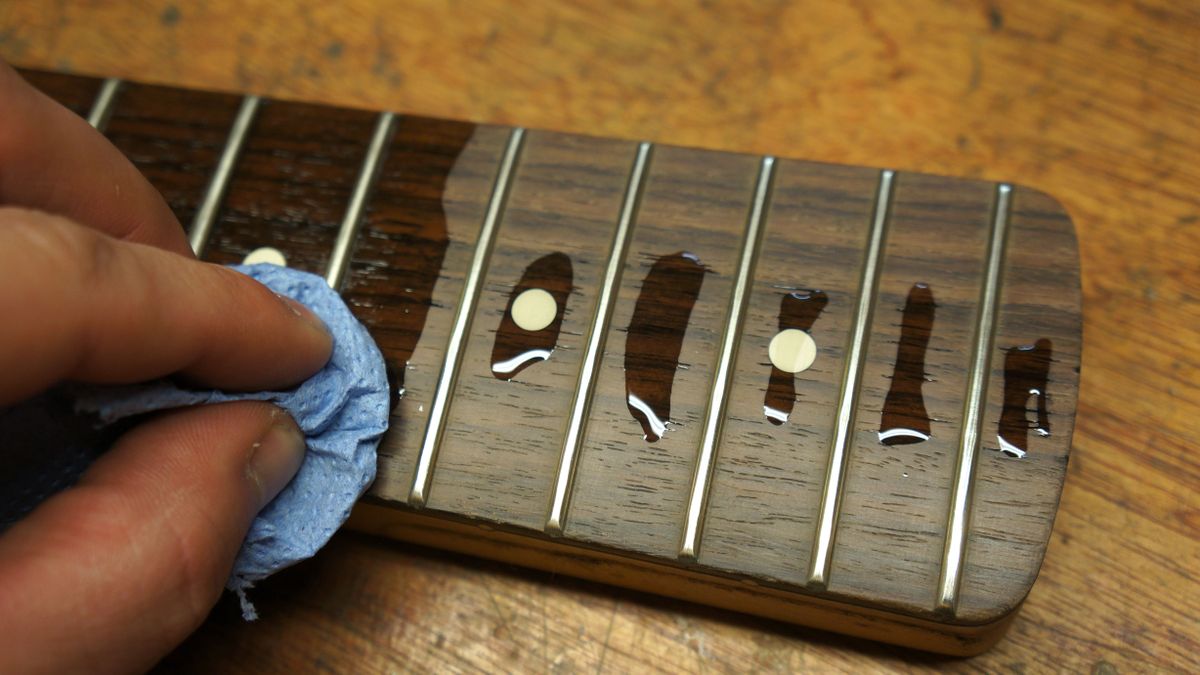
The Best Cleaning Supplies
You do not need a large kit. Gather these supplies:
- Two clean microfiber or soft cotton cloths
- Painter’s tape or fretboard guards
- A soft toothbrush for dry dust
- Guitar-safe fretboard cleaner, if needed
- Naphtha, only for suitable unfinished boards and heavy grime
- Fretboard conditioner, used sparingly and only when appropriate
- A well-ventilated work area
- A container for removed strings
A microfiber cloth is useful because it picks up dirt without leaving much lint. Avoid rough paper towels, old shirts with metal parts, and abrasive scrub pads.
A soft toothbrush can clean around fret edges. Use it dry and gently. Do not press hard, since aggressive brushing can push dirt into small gaps or damage a weak finish.
Steel wool is usually not worth the risk. Fine metal fibers can lodge near frets, pickups, and hardware. If a fretboard needs polishing or fret work, use products and methods made for that job.

How to Clean a Guitar Fretboard Step by Step
1. Prepare the guitar
Place the guitar on a stable, padded surface. Wash and dry your hands before you begin.
You can clean the fretboard during a string change. If the guitar has a floating tremolo, remove the strings only if you know how to support and reset the bridge. Otherwise, clean one section at a time with the strings loosened or work around them.
Keep liquids away from the pickups, bridge, controls, and soundhole. Do not spray cleaner onto the guitar.
2. Remove loose dirt
Use a dry microfiber cloth to wipe along the length of the fretboard. Work between the frets and around the fret ends.
For dry dust, use a soft toothbrush with light strokes. This step often removes more dirt than expected and reduces the need for liquid.
3. Protect the guitar
If you are using a liquid cleaner, cover nearby finished areas with a cloth. You can also use fretboard guards around the fret you are cleaning.
Do not flood the fretboard. A wet surface means you used too much product.
4. Apply cleaner to the cloth
For unfinished rosewood, ebony, or pau ferro, put a few drops of guitar-safe cleaner on the cloth. If using naphtha, dampen only a small part of the cloth.
Never pour liquid onto the wood. Never leave a soaked cloth on the fretboard.
5. Wipe one section at a time
Clean between the frets with gentle strokes. Let the cloth lift the grime rather than scraping it away.
For stubborn buildup, hold the damp cloth on the area for a few seconds, then wipe. Repeat if needed. Do not use a knife, screwdriver, credit card, or other hard object to scrape the wood.
6. Dry the fretboard
Use a second clean cloth to remove all remaining cleaner. Pay close attention to the fret edges and the area near the nut.
The fretboard should feel clean and dry, not oily or slippery.
7. Condition only when needed
If the unfinished fretboard looks unusually dry after cleaning, apply a very small amount of suitable conditioner. Spread a thin coat, wait only as long as the product label says, and wipe away all residue.
More oil is not better. A heavy coat can attract dust, create a sticky feel, and make later cleaning harder.
8. Restring and check the guitar
Install fresh strings, tune the guitar, and inspect the fretboard under good light. Look for leftover grime, oily patches, raised fret ends, cracks, or finish damage.
If the board feels rough or the frets catch your fingers, cleaning may not be the real problem. The guitar may need fret leveling, fret-end work, or repair.
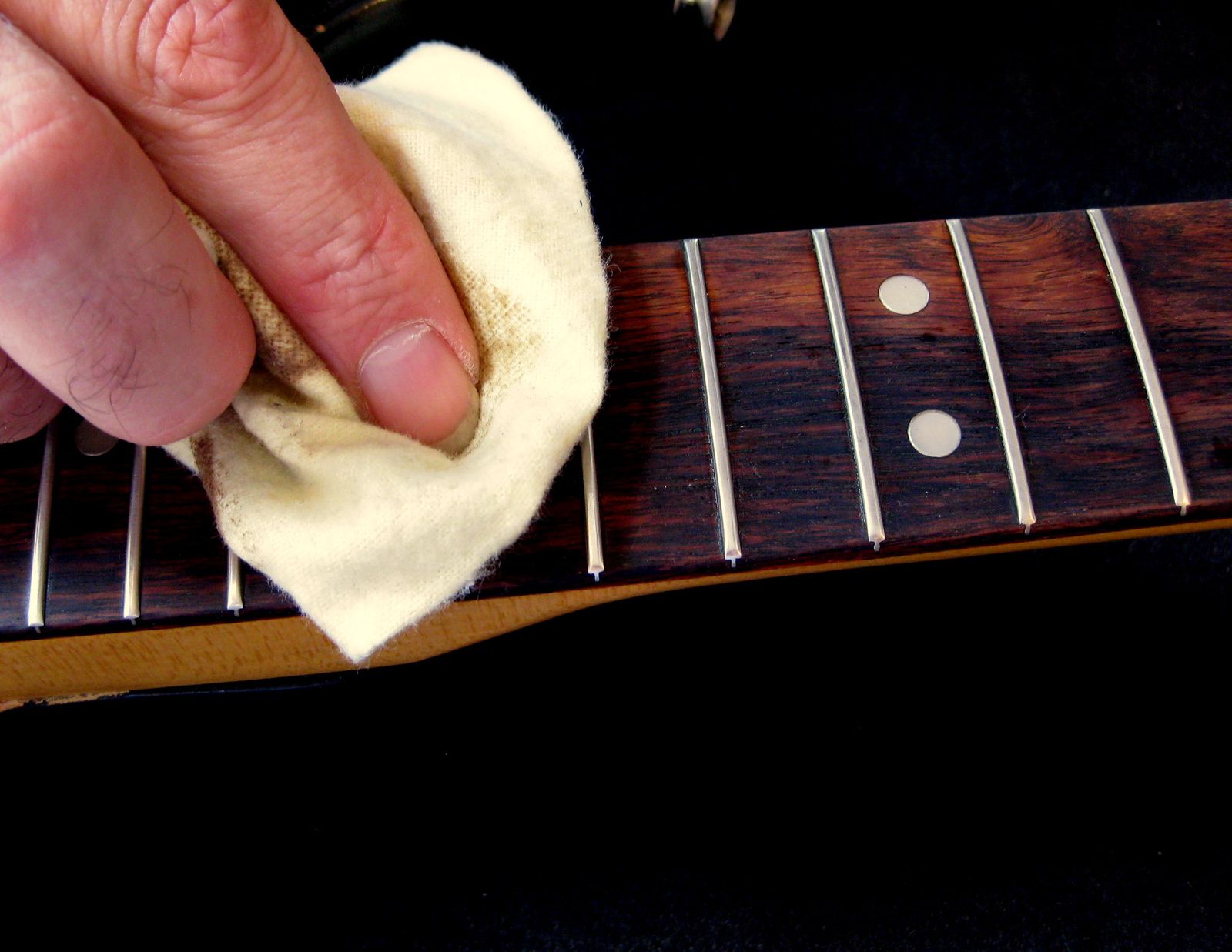
Naphtha, Lemon Oil, and Guitar Cleaners Compared
Naphtha
Naphtha is a strong solvent that can remove sticky dirt and skin oil from many unfinished fretboards. It evaporates quickly and usually leaves little residue.
Use it only in a well-ventilated area. Keep it away from flames, sparks, cigarettes, and hot equipment. Wear gloves if the product label recommends them, and follow the label’s storage and disposal instructions.
Naphtha may affect some finishes, plastics, decals, or old coatings. Test a hidden area first, or use a cleaner approved by the guitar manufacturer.
Lemon oil
The term “lemon oil” can be confusing. Some products sold for guitars are mineral-oil-based conditioners with lemon scent. Household lemon oil or citrus furniture polish may contain solvents, waxes, or other ingredients that are not suitable for a guitar.
Never use lemon juice. It is acidic and can leave moisture and residue on the wood.
If you use a guitar-branded lemon-oil product, read the label and confirm that it is meant for an unfinished fretboard. Apply very little and wipe it off fully.
Dedicated guitar fretboard cleaner
A guitar-specific cleaner is often the safest practical choice because the label states the intended surfaces. Some products clean only. Others clean and condition.
Read the instructions carefully. A product made for unfinished rosewood may not be suitable for finished maple, lacquer, painted surfaces, or synthetic fretboards.
Water
A barely damp cloth is suitable for many finished surfaces, especially finished maple. Water is not a good choice for soaking an unfinished fretboard.
Use as little as possible, wipe quickly, and dry the surface at once. Do not let water collect near fret slots, the nut, inlays, or exposed wood.

What Should You Avoid?
Avoid these common mistakes:
- Do not use household glass cleaner. It may contain ammonia, alcohol, or other chemicals that can dull or damage a finish.
- Do not use furniture polish. Waxes and silicone can leave residue and make future repairs harder.
- Do not use alcohol unless the guitar maker permits it. Alcohol can damage some lacquer and finish systems.
- Do not soak the fretboard. Wood can absorb moisture and swell.
- Do not oil the board every time you change strings. Frequent oiling can leave buildup.
- Do not scrape dirt with metal tools. You can gouge the wood or chip the finish.
- Do not use steel wool near pickups. Metal fibers can cause trouble around magnetic parts and electronics.
- Do not use abrasive pads to make the wood look darker. Color change is not proof that the board is cleaner.
- Do not use a product just because it says “natural.” Natural ingredients can still stain, soften, or damage a finish.
- Do not ignore cracks or loose frets. Cleaning will not repair structural problems.
If you spill a product, wipe it up at once with a clean cloth. If the finish turns cloudy, sticky, or soft, stop cleaning and contact a qualified guitar repair shop.

How Often Should You Clean a Fretboard?
Clean the fretboard when it looks dirty or feels sticky, not on a fixed schedule. Many players clean it during a string change, but the right interval depends on how much you play, how much you sweat, and where you store the guitar.
A quick dry wipe after playing can reduce buildup. Focus on the strings and the back of the neck as well as the fretboard. Sweat left on metal parts can speed corrosion.
Conditioning is less frequent than cleaning. Unfinished wood may need occasional conditioning, but the interval is not universal. A dry climate, heavy playing, and an older instrument may change the need. Your guitar maker’s instructions should take priority.
Stable indoor humidity also helps. Very dry conditions can contribute to shrinking wood, fret-end problems, and cracks. If the fret ends feel sharp or the wood has split, use a repair professional instead of adding more oil.

What If the Fretboard Is Very Dirty?
For heavy grime, remove the strings if your bridge system allows it, protect the guitar, and clean small sections at a time.
Start with a dry cloth. Then use a small amount of cleaner on the cloth. Give the product time to loosen the grime, but do not let it sit longer than the label allows.
If dirt remains packed against the frets, a repair technician may need to clean and polish the frets separately. Fret polishing is different from fretboard cleaning. It can involve specialized abrasives and should not be treated as a routine wipe-down.
Stop if you see:
- Cracks in the wood
- Loose or lifting frets
- Flaking lacquer
- A soft or sticky finish
- Deep grooves under the strings
- A lifted inlay
- A loose nut
- Sharp fret ends
These signs point to a setup or repair issue, not a need for stronger cleaner.

Best Choice by Situation
| Your situation | Use this approach |
|---|---|
| Light dust after playing | Dry microfiber cloth |
| Sticky unfinished rosewood | Guitar-safe cleaner or a little naphtha on a cloth |
| Finished maple with fingerprints | Barely damp cloth, followed by a dry cloth |
| Very dry-looking unfinished wood | Clean first, then use a small amount of approved conditioner |
| Vintage guitar with unknown finish | Dry cloth first; ask a repair technician before using solvent |
| Cracks or sharp fret ends | Stop and seek professional service |
| Heavy dirt around frets | Gentle cleaning; professional fret work if it does not lift |
The safest rule is simple: start dry, use the mildest product that works, and stop before the wood becomes wet.

Frequently Asked Questions
Can I use a damp cloth on my guitar fretboard?
Yes, a barely damp cloth is often suitable for a finished maple fretboard. Use very little water, wipe a small area, and dry it at once. For unfinished wood, use a dry cloth first and avoid adding water unless the manufacturer allows it.
Can I use household lemon oil on an unfinished fretboard?
It is better not to. Household lemon oil may contain solvents, waxes, or additives that are not designed for guitar wood. Use a product labeled for unfinished guitar fretboards instead, and apply it sparingly.
Is mineral oil safe for a guitar fretboard?
Some guitar conditioners use mineral oil, but not every mineral-oil product is suitable. Choose one labeled for unfinished fretboards. Do not apply it to finished maple unless the manufacturer specifically approves it.
Should I remove the strings before cleaning?
Removing the strings gives you better access, especially during a full clean. However, guitars with floating tremolos may need special support and setup after string removal. If you are unsure, loosen the strings and clean around them or ask a repair technician.
How do I clean a synthetic fretboard?
Use the care instructions for the specific material. Many synthetic fretboards can be cleaned with a soft cloth and mild cleaner, but solvents and oil may still cause damage. Do not assume that synthetic wood responds exactly like rosewood or maple.
Final Recommendation
For most guitars, begin with a clean, dry microfiber cloth. Use a small amount of guitar-safe cleaner on unfinished rosewood, ebony, or pau ferro only when dry wiping is not enough. Use a barely damp cloth for finished maple, then dry it immediately.
Avoid household cleaners, excess oil, soaking, and abrasive tools. If you cannot identify the fretboard finish or see cracks and finish damage, pause the job and check the maker’s care guide or contact a qualified guitar repair technician.