

Stevie Ray Vaughan mainly played customized Fender Stratocaster electric guitars, especially his famous 1963 sunburst Strat, “Number One.”
If you ask what kind of guitar did Stevie Ray Vaughan play, the short answer is Fender Stratocasters with strong Texas blues character. His sound came from more than the logo on the headstock. It came from a powerful mix of vintage guitars, heavy strings, loud tube amps, strong hands, and a personal style that made each note feel alive.
This guide explains Stevie Ray Vaughan’s main guitars, the history of Number One, his other important instruments, and what modern players can learn from his setup. It also separates documented facts from stories that have grown around his legendary gear.
What kind of guitar did Stevie Ray Vaughan play?
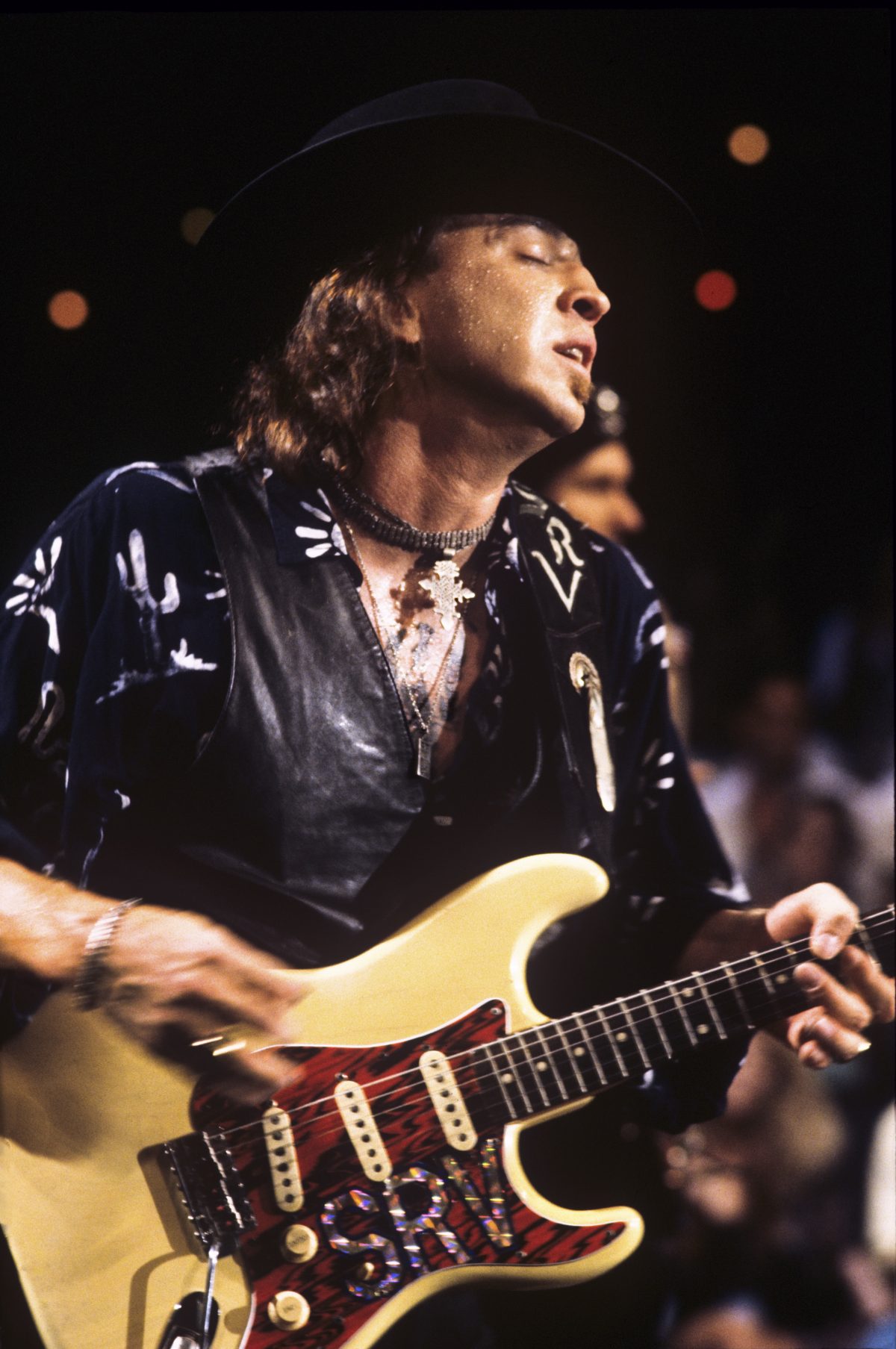
Stevie Ray Vaughan mainly played Fender Stratocaster guitars. His best-known instrument was a worn 1963 Fender Stratocaster finished in three-color sunburst, known as “Number One” or “First Wife.”
The Stratocaster suited Vaughan for several clear reasons:
• Its three single-coil pickups produced a sharp, open tone.
• Its tremolo bridge allowed expressive pitch movement.
• Its contoured body was comfortable during long performances.
• Its 25.5-inch scale helped create strong string tension and snap.
• Its design responded well to loud Fender tube amplifiers.
Vaughan did not use a Stratocaster in a quiet or delicate way. He attacked the strings with force, used thick picks, bent notes with control, and often played heavy-gauge strings. The result was a tone that sounded broad and vocal, almost like a singer shouting through a loud band.
When people ask what kind of guitar did Stevie Ray Vaughan play, they often expect one exact model name. The more accurate answer is that he played several Fender Stratocasters, but Number One remained the central instrument of his career.
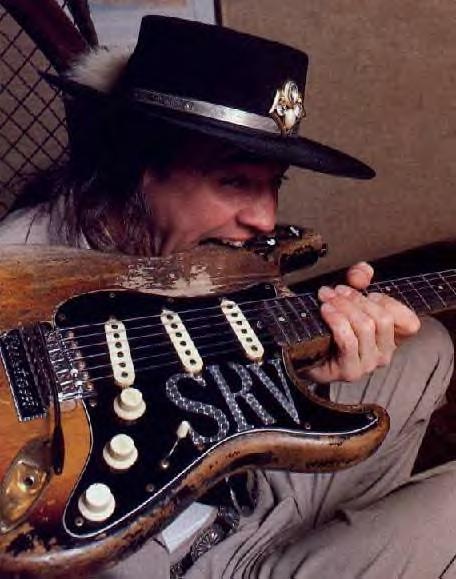
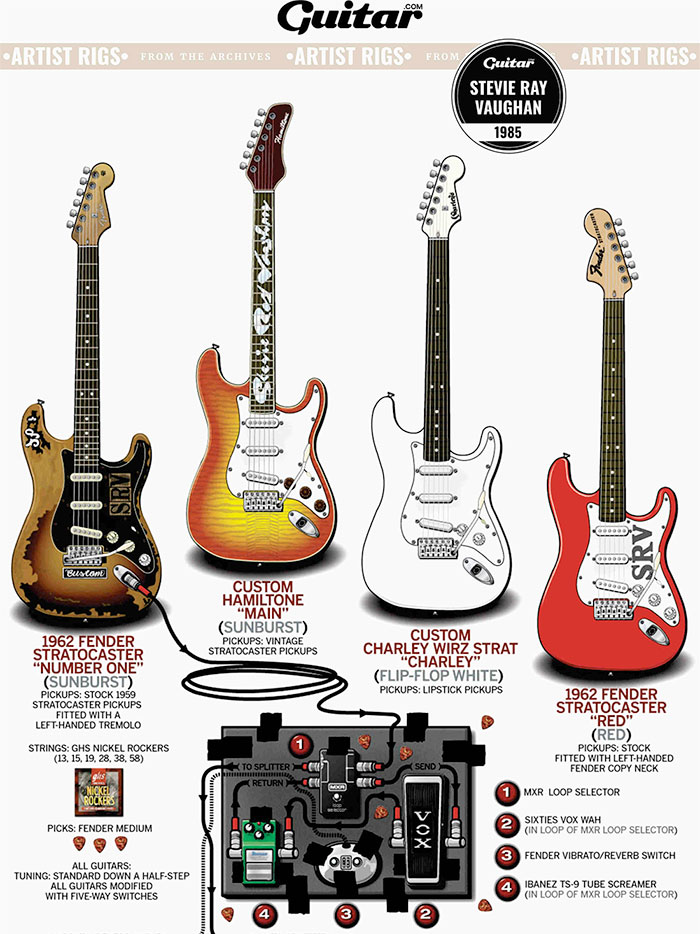
Stevie Ray Vaughan’s famous “Number One” Stratocaster
Number One was a 1963 Fender Stratocaster with a three-color sunburst finish. Vaughan bought it in the mid-1970s at a music store in Austin, Texas, according to widely repeated accounts from interviews and gear histories.
The guitar had a left-handed tremolo unit installed on a right-handed body. This detail helped give the bridge a different feel and became part of the guitar’s identity. Vaughan also used a replacement neck at different points, and the instrument went through many repairs during years of heavy touring.
Number One was not valuable to Vaughan only because of its age. It was valuable because he knew it deeply. He understood how it reacted to hard picking, wide bends, aggressive vibrato, and changes in amplifier volume.
That is an important lesson for guitar players. A great guitar is not always the most expensive guitar in the room. Often, it is the guitar that fits your hands, your timing, and your musical voice.
Why was it called Number One?
The name “Number One” came from the fact that Vaughan considered it his main guitar. He also called it “First Wife,” a nickname that reflected how important the instrument was to him.
The guitar’s body became heavily worn over time. The finish showed the marks of constant use, sweat, travel, and stage work. Some players mistake this wear for a special factory feature, but much of it came from Vaughan’s years of playing.
The neck and other parts were replaced or repaired more than once. This means the guitar seen in photographs was not always made of the exact same parts throughout its life. That is one reason it is difficult to describe every detail with complete certainty.
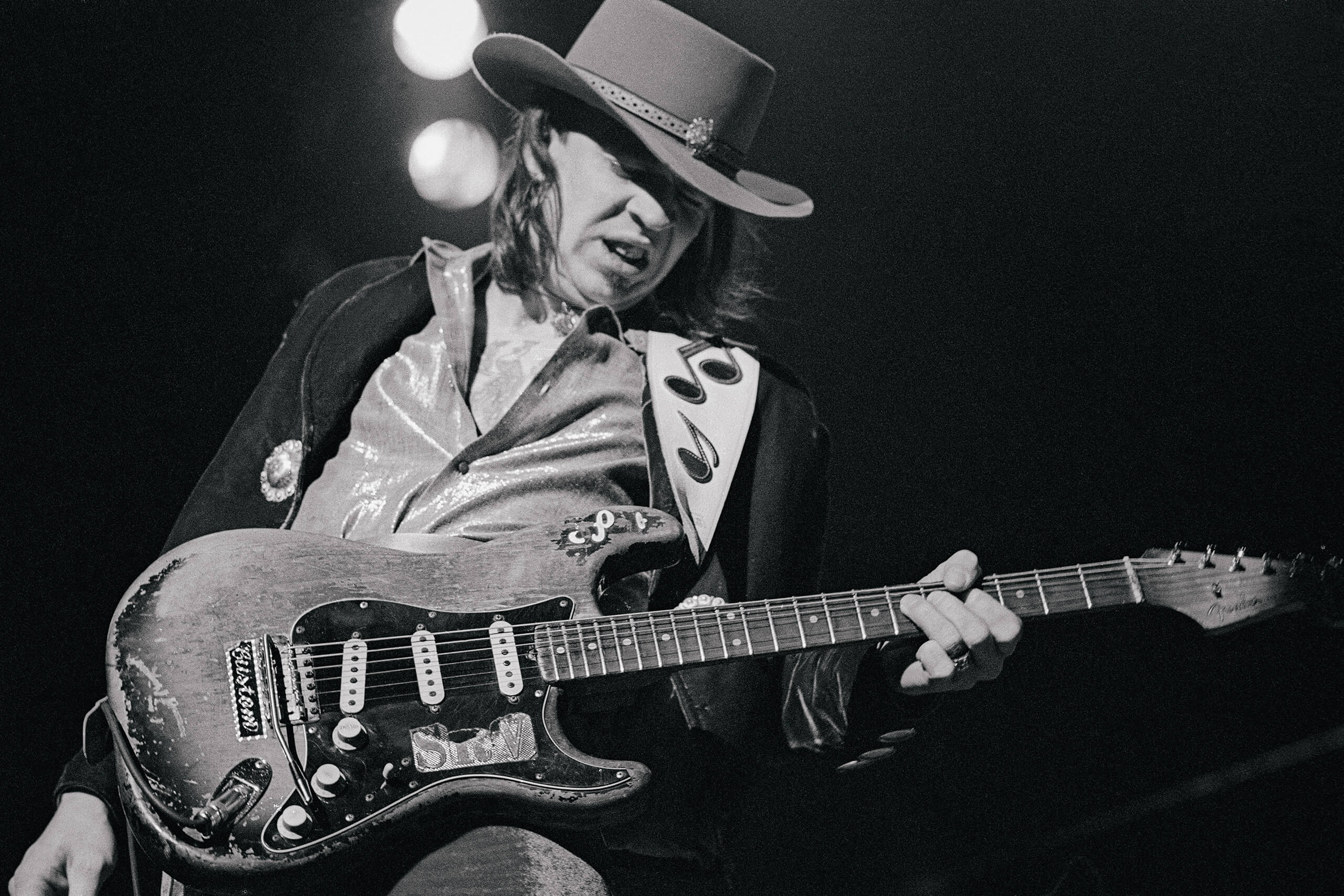
What made Stevie Ray Vaughan’s Stratocaster sound different?
The answer involved the whole signal chain, not just the guitar. Vaughan’s tone came from the relationship between his Stratocasters, strings, picks, amplifiers, effects, and playing technique.
His main sound often included:
• Fender Stratocaster single-coil pickups
• Heavy strings, often associated with gauges around .013 to .058
• Strong finger pressure and wide bends
• Fender tube amplifiers, especially large Super Reverb and Vibroverb-style rigs
• Tube overdrive from high volume
• A wah pedal and other effects used with care
• Heavy attack from a thick guitar pick
The exact string gauges and setups could change. Touring conditions, broken strings, repairs, and song requirements all affected his equipment. It is safer to describe his setup as heavy and demanding rather than claim one permanent gauge for every performance.
This explains why copying the guitar alone rarely produces the same tone. A modern Stratocaster through a small clean amp will not react like Vaughan’s heavily played instrument through multiple loud tube amps.
Pickups and electronics
Vaughan’s Stratocasters used traditional single-coil pickup designs. Some guitars were modified, rewound, or repaired over time, so the exact pickup specifications may differ from one instrument to another.
His pickups were often associated with a strong midrange and clear attack. However, the sound was also shaped by his touch. The same pickup can sound soft in one player’s hands and aggressive in another’s.
When studying what kind of guitar did Stevie Ray Vaughan play, it helps to focus on the instrument’s role rather than chase one mythical specification. A vintage-style Strat with the right setup can move you toward the sound, but it cannot replace the player.
Neck shape and string tension
Vaughan was known for using guitars with substantial necks and heavy strings. A thick neck can feel stable during hard bends, while heavier strings can produce resistance and a firm note center.
That setup is not ideal for everyone. Players with smaller hands, joint pain, or a lighter style may find it uncomfortable. It is better to build strength slowly than to copy a professional player’s string gauge overnight.
I have found that players often make a common mistake here: they install very heavy strings before improving their setup and technique. The guitar becomes hard to play, and they blame the instrument. A good setup matters more than simply choosing the thickest strings available.

Other guitars Stevie Ray Vaughan played
Although the Fender Stratocaster defined his image, Vaughan played other guitars as well. His equipment changed for different songs, recordings, tunings, and performance needs.
“Lenny”
“Lenny” was another important Fender Stratocaster associated with Vaughan. It was named after his wife, Lenora, and had a natural or modified finish that made it visually different from Number One.
The guitar is often described as a 1963 Stratocaster, though public descriptions of vintage instruments can vary because parts may be replaced or changed. Vaughan used Lenny for its smooth, expressive quality, especially on the instrumental song named after it.
The song “Lenny” shows a gentler side of his playing. The guitar sounds warm and singing, proving that Vaughan’s tone was not only about volume and distortion.
“Charley”
“Charley” was another modified Stratocaster linked to Vaughan. It was associated with a white finish and a distinctive pickguard and pickup arrangement.
Unlike a standard three-single-coil Stratocaster, Charley included a humbucker-style pickup modification. This gave Vaughan access to a thicker and more forceful sound for certain musical situations.
This guitar shows that Vaughan was not trapped by tradition. He loved the Stratocaster platform, but he was willing to change it when a song or sound required something different.
Gibson ES-335 and other guitars
Vaughan also used Gibson instruments, including semi-hollow and hollow-body guitars. These guitars could provide a rounder, thicker voice than a standard Stratocaster.
He used different instruments for studio work, special songs, and certain tonal colors. Still, Fender Stratocasters remained the strongest part of his public identity.
So, what kind of guitar did Stevie Ray Vaughan play across his full career? Mostly Fender Stratocasters, but not exclusively. A complete answer must include his modified Strats and his occasional use of Gibson guitars.
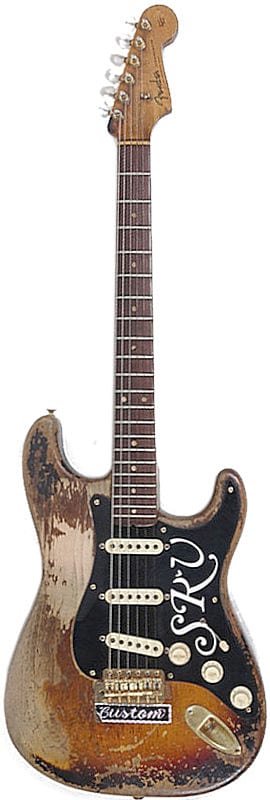
Stevie Ray Vaughan guitar models and names
The following table summarizes the best-known guitars connected with Vaughan.
| Guitar | Common description | Importance |
|---|---|---|
| Number One | 1963 Fender Stratocaster, heavily modified and worn | His main and most famous guitar |
| Lenny | Vintage Fender Stratocaster with a natural-style appearance | Known for warm, expressive tones |
| Charley | Modified Fender Stratocaster with a thicker pickup setup | Used for a more powerful sound |
| Gibson guitars | Semi-hollow and hollow-body instruments | Added contrast to his Stratocaster tones |
| Other Fender Strats | Various vintage and replacement instruments | Used for touring, backup, and different tunings |
The names and specifications of Vaughan’s guitars are sometimes reported differently. Vintage instruments often receive replacement necks, bridges, pickups, and hardware. Photographs may also show a guitar after it has been repaired or modified.
For that reason, collectors should check provenance carefully. A guitar described as “Number One style” is not automatically the original instrument. Authenticity requires reliable documentation, not only a sunburst finish or a large neck.
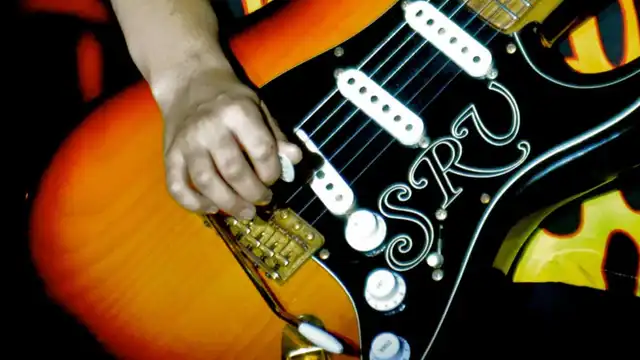
Why Stevie Ray Vaughan preferred the Stratocaster
The Stratocaster gave Vaughan a broad range of tones. Its neck pickup could sound smooth and round, while the bridge pickup could cut through a loud blues-rock band.
The middle and combined pickup settings also helped create the glassy sounds heard in many blues recordings. Its tremolo system allowed Vaughan to add movement without changing instruments.
The guitar’s physical design mattered, too. The contoured body helped during long shows, and the bolt-on neck made repairs and replacements practical. Vaughan played with enough force to damage or wear parts, so serviceability was useful.
More than anything, the Stratocaster responded clearly to his hands. He could make a note bark, cry, whisper, or scream without relying on many effects. That direct response was central to his style.
The role of amplification
Vaughan often used powerful Fender amplifiers, including Super Reverb and Vibroverb models. These amps provided clean headroom, strong low end, and natural tube compression when pushed hard.
He also used multiple amplifiers and effects in different periods. His rigs were not identical for every show or recording. That matters because online discussions often treat his equipment as one permanent formula.
A practical lesson is simple: start with a good guitar, a responsive amp, and a clear signal path. Add effects later. Many players spend too much time buying pedals when their main problem is weak technique, poor setup, or an unsuitable speaker.
How to get a Stevie Ray Vaughan-style guitar tone
You do not need an original vintage Stratocaster to explore Vaughan’s sound. A well-built modern Stratocaster can work very well if it has good pickups, stable tuning, and a comfortable setup.
Try this practical approach:
Use a Stratocaster with three single-coil pickups.
Start with the neck or bridge pickup, depending on the song.
Set the amp mostly clean with moderate treble and strong mids.
Raise the volume until the amp begins to respond dynamically.
Use a light amount of overdrive rather than heavy distortion.
Try thicker strings only if your hands can handle them comfortably.
Practice wide bends, controlled vibrato, and strong rhythm accents.
Keep the guitar tuned accurately and check the intonation.
Record yourself instead of trusting only what you hear while playing.
Vaughan’s sound was bold because his notes had weight. The goal is not to play every note as loudly as possible. The goal is to control the force of each note.
A useful starter setup
A reasonable modern setup might include:
• A Fender Stratocaster or similar S-style guitar
• .010 or .011 strings for a balanced starting point
• A clean tube-style amp or modeling amp
• A low-gain overdrive pedal
• A thick pick
• Moderate reverb
• A guitar setup by a qualified technician
Do not begin with .013-gauge strings just because Vaughan used heavy strings. Your hands need time to adapt, and your guitar may need a new nut, truss rod adjustment, or intonation check.
The best way to learn from what kind of guitar did Stevie Ray Vaughan play is to copy the principles first. Use a responsive Stratocaster, develop strong dynamics, and build a reliable setup around your own hands.
Common mistakes when copying Stevie Ray Vaughan’s gear
Many players focus on famous equipment while ignoring the habits that made the equipment work. That can lead to frustration and unnecessary spending.
Avoid these mistakes:
• Buying an expensive vintage guitar before learning basic setup skills
• Using strings that are too heavy for your hands
• Turning every control to maximum
• Adding too much distortion
• Ignoring clean tone and picking dynamics
• Copying a famous rig without considering room size
• Assuming one guitar specification explains an entire recorded sound
Vaughan played at high volume in large venues. A rig that sounds powerful on a concert stage may sound harsh in a bedroom. Start at a manageable volume and listen for clarity.
It is also wise to protect your hearing. Loud amplifiers can cause permanent hearing damage. Use sensible volume levels, take breaks, and wear high-fidelity ear protection when needed.
How accurate are the stories about Stevie Ray Vaughan’s guitars?
Many details about Vaughan’s guitars are well documented through interviews, photographs, auction records, museum displays, and long-standing gear research. However, some details remain uncertain because his instruments changed over time.
A guitar can receive a new neck, pickup, bridge, or finish while keeping the same nickname. Tour photographs may show different stages of repair. Public accounts can also repeat small errors until they appear to be fact.
The most reliable facts are these:
• Vaughan was strongly associated with Fender Stratocaster guitars.
• Number One was his most famous instrument.
• He used modified guitars rather than untouched collector pieces.
• He played other Fender and Gibson instruments.
• His tone depended on technique, strings, amplifiers, and volume as well as the guitar.
This balanced view is more useful than treating every online specification as certain. When researching vintage gear, look for multiple independent records and separate confirmed details from fan speculation.
Frequently Asked Questions About What Kind of Guitar Did Stevie Ray Vaughan Play
What was Stevie Ray Vaughan’s main guitar?
Stevie Ray Vaughan’s main guitar was a customized 1963 Fender Stratocaster called Number One. It had a sunburst finish and was heavily worn and repaired through years of use.
Did Stevie Ray Vaughan only play Fender Stratocasters?
No. He was best known for Fender Stratocasters, but he also played other Fender models and Gibson guitars. He used different instruments to create varied tones and cover specific performance needs.
What color was Stevie Ray Vaughan’s famous guitar?
Number One had a three-color sunburst finish. Its worn appearance became one of the most recognizable visual features of Vaughan’s stage equipment.
What strings did Stevie Ray Vaughan use?
Vaughan was known for using heavy-gauge strings, often associated with sets around .013 to .058. The exact gauges could vary, so players should choose strings based on comfort, tuning, and proper setup.
Was Stevie Ray Vaughan’s Number One Stratocaster stock?
No. Number One was modified and repaired over time. Its parts included changes to the neck, tremolo system, pickups, and other hardware, so it should not be viewed as a completely untouched vintage Stratocaster.
Can a modern Stratocaster sound like Stevie Ray Vaughan’s guitar?
A modern Stratocaster can help you approach his tonal character, especially with single-coil pickups and a responsive amplifier. However, his touch, heavy strings, loud amp settings, phrasing, and vibrato were just as important as the guitar.
Why did Stevie Ray Vaughan use a left-handed tremolo?
A left-handed tremolo was installed on his right-handed Stratocaster, giving the bridge arm a different position and feel. The modification became part of Number One’s distinctive setup.
Conclusion
Stevie Ray Vaughan mainly played customized Fender Stratocasters, with Number One, his worn 1963 sunburst Strat, standing as the most famous. He also used guitars such as Lenny, Charley, and several Gibson instruments, but the Stratocaster remained the heart of his sound.
The real lesson is that Vaughan’s tone did not come from one magic guitar. It came from the combined effect of a responsive instrument, heavy strings, powerful amps, careful setup, and extraordinary control.
If you want to explore his sound, start with a comfortable Stratocaster, a clear amp, and focused practice on bends, vibrato, rhythm, and dynamics. Try the ideas that fit your hands, protect your hearing, and keep learning from Vaughan’s recordings and live performances.